Electronic thin films are specialized material layers—often composed of aluminum, copper, or alloys—that provide significantly greater versatility and efficiency than thicker alternatives. These films are engineered to enhance sensor sensitivity, improve heat transfer through superior insulation, and minimize power loss in integrated circuits and semiconductors.
By replacing bulkier materials with precision-engineered layers, thin films not only conserve scarce resources but also unlock critical performance gains in conductivity, thermal management, and miniaturization that are impossible with standard coating methods.
The Engineering Advantages
Superior Electrical Performance
In the realm of circuitry, thin films are essential for maximizing efficiency. By utilizing materials like aluminum and copper, these films reduce overall power loss within a system.
They also drastically enhance sensor sensitivity. This allows for the creation of highly responsive components that require less energy to operate, making them ideal for modern integrated circuits.
Thermal Efficiency and Insulation
One of the most distinct advantages of electronic thin films is their ability to provide superior insulation.
Contrary to what one might expect from a "thin" material, this specific insulation property facilitates more efficient heat transfer. This is critical for preventing overheating in dense electronic environments like semiconductors.
Resource Conservation and Sustainability
Moving beyond performance, thin films offer substantial ecological benefits. They allow manufacturers to conserve scarce materials by using only what is strictly necessary for the active layer.
This process reduces effluent output during manufacturing and lowers the overall power consumption of the final product.
Key Applications in Modern Technology
Microelectronics and Data Storage
Thin films are the backbone of the microelectronic components that power mobile devices and everyday appliances. They are highly compatible with surfaces like integrated circuits and insulators.
In the realm of computing, they are utilized in magnetic storage media and computer memory (ferromagnetic and ferroelectric films), enabling high-density data storage.
Energy Generation and Storage
The energy sector relies heavily on this technology. Applications include thin-film photovoltaic cells (solar panels) and dye-sensitized solar cells.
They are also pivotal in the production of thin-film batteries, offering a lightweight power source for portable electronics.
Optical and Protective Coatings
Beyond active electronics, these films serve as critical protective barriers. They provide resistance against wear, corrosion, dust, and moisture.
In optics, they are used to create anti-reflective coatings for lenses and mirrors. They improve transmission and reduce scattering, ensuring high performance in everything from household mirrors to high-refractive-index lenses.
Understanding the Trade-offs
Precision and Control Requirements
While thin films offer superior versatility, their effectiveness relies entirely on precision manufacturing.
The properties of the film—such as conductivity or optical transmission—are dictated by exact control over thickness and composition. Slight deviations during the deposition process can lead to significant performance failures, requiring advanced and often costly manufacturing environments.
Surface Compatibility
Thin films are highly compatible with semiconductors and insulators, but they are not a universal fix.
The substrate surface must be meticulously prepared. Imperfections in the underlying material can disrupt the nanostructured coating, potentially compromising the film's protective or electrical integrity.
Making the Right Choice for Your Goal
To determine if thin film technology is the right solution for your specific engineering challenge, consider your primary objectives:
- If your primary focus is Circuit Efficiency: Prioritize thin films for their ability to enhance sensor sensitivity and reduce power loss in integrated circuits.
- If your primary focus is Thermal Management: Utilize these films to leverage their superior insulation properties for more efficient heat transfer in semiconductors.
- If your primary focus is Sustainability: Choose thin films to reduce the consumption of scarce raw materials and lower the effluent output of your manufacturing process.
Thin films represent a shift from bulk material dependence to precision surface engineering, offering a definitive solution for high-efficiency, low-waste electronic design.
Summary Table:
| Feature | Key Advantages | Typical Applications |
|---|---|---|
| Electrical | Enhanced sensor sensitivity & reduced power loss | Integrated circuits, Microelectronics |
| Thermal | Superior insulation & efficient heat transfer | Semiconductors, Thermal management |
| Physical | Resource conservation & miniaturization | Magnetic storage, Batteries |
| Protective | Resistance to wear, corrosion & moisture | Optical coatings, Protective barriers |
| Optical | Anti-reflective properties & high transmission | Lenses, Mirrors, Solar cells |
Elevate Your Lab Research with KINTEK Precision Solutions
Unlock the full potential of electronic thin film technology with KINTEK. Whether you are developing next-generation semiconductors, advanced photovoltaics, or high-performance batteries, our specialized equipment is designed to meet the rigorous demands of precision manufacturing.
From high-temperature vacuum and CVD furnaces to advanced crushing systems and high-pressure reactors, KINTEK provides the tools needed for superior material deposition and surface engineering. We empower laboratory researchers and industrial manufacturers to achieve unmatched thermal efficiency and electrical performance.
Ready to optimize your thin film production? Contact us today to discover how our comprehensive range of laboratory equipment and consumables can accelerate your innovation.
Related Products
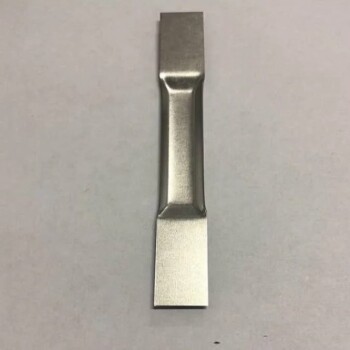
- Electron Beam Evaporation Coating Oxygen-Free Copper Crucible and Evaporation Boat
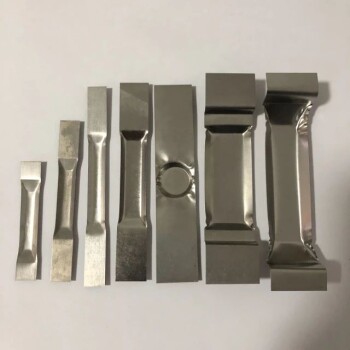
- Molybdenum Tungsten Tantalum Evaporation Boat for High Temperature Applications
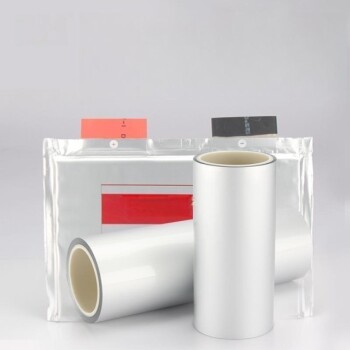
- Aluminum-Plastic Flexible Packaging Film for Lithium Battery Packaging
- Tungsten Evaporation Boat for Thin Film Deposition
People Also Ask
- What is the container that holds the metal source material called in e-beam evaporation? Ensure Purity and Quality in Your Thin-Film Deposition
- What is e-beam evaporation? Achieve High-Purity Thin Film Deposition for Your Lab
- What is the voltage of e-beam evaporation? Achieve Precise Thin-Film Deposition
- What is the current of e-beam evaporation? A Guide to High-Purity Thin Film Deposition
- What are the applications of e-beam evaporation? Achieve High-Purity Coatings for Optics & Electronics