Integrating electric heating cartridges with thermocouple control systems primarily provides exceptional thermal agility and stability. By embedding heating elements directly into the reactor shell and utilizing immediate feedback, this configuration leverages the low thermal inertia of microreactors to deliver rapid thermal response and precise isothermal control.
The combination of shell-embedded heating and thermocouple feedback counteracts the natural volatility of low-inertia systems, ensuring the strict thermal balance required to suppress unwanted byproducts like dimethyl ether.
Engineering Thermal Stability
Leveraging Low Thermal Inertia
Microreactors possess very low thermal inertia, meaning they hold very little stored heat energy relative to their surface area.
This allows the system to change temperature rapidly, but it also makes it susceptible to rapid cooling if heat is not maintained.
The Role of Rapid Response
Electric heating cartridges are embedded directly into the reactor shell to provide immediate energy transfer.
When paired with thermocouple feedback, the system detects minute temperature changes instantly and adjusts the heating power without lag.
Minimizing Temperature Fluctuations
The primary engineering advantage of this integration is the minimization of temperature fluctuations.
By creating a tight feedback loop, the system prevents the temperature spikes and drops that commonly occur in systems with slower heating methods.
Optimizing Chemical Performance
Ensuring Isothermal Control
High-temperature reactions often require a consistent temperature profile across the entire reaction zone, known as isothermal control.
This setup ensures that the reactor shell acts as a uniform heat source, eliminating cold spots or hot spots that could alter reaction kinetics.
Maintaining Thermal Balance
For specific processes, such as the methanol hydrochlorination reaction, maintaining a precise thermal balance is critical.
The integration of electric heating allows the system to input exactly enough energy to sustain the reaction without overheating the reactants.
Suppressing Byproduct Formation
Precise temperature control is directly linked to product purity.
In the context of methanol hydrochlorination, preventing temperature fluctuations is vital to suppressing the formation of dimethyl ether, a common unwanted byproduct.
Operational Dependencies
The Critical Role of Feedback
It is important to recognize that the low thermal inertia of microreactors creates a dependency on the control system.
Because the reactor does not "hold" heat well, the thermocouple feedback loop must be continuous and accurate.
If the control system fails or lags, the temperature will deviate almost immediately, risking the thermal balance of the reaction.
Making the Right Choice for Your Goal
To maximize the benefits of this heating configuration, consider your specific processing objectives:
- If your primary focus is Product Purity: Prioritize the precision of the thermocouple placement to prevent temperature fluctuations that lead to byproducts like dimethyl ether.
- If your primary focus is Process Stability: Leverage the rapid thermal response of the cartridges to maintain strict thermal balance during variable flow rates or startup phases.
Precision heating is not just about reaching a temperature; it is about maintaining the stability required for complex chemical selectivity.
Summary Table:
| Feature | Advantage in Microreactors | Impact on Chemical Performance |
|---|---|---|
| Low Thermal Inertia | Enables rapid heating and cooling cycles | Quick adaptation to varying process conditions |
| Direct Shell Integration | Immediate energy transfer to the reaction zone | Eliminates cold/hot spots for isothermal control |
| Thermocouple Feedback | Real-time detection of minute fluctuations | Prevents side reactions like dimethyl ether formation |
| Tight Feedback Loop | Maintains strict thermal balance | Ensures high product purity and process repeatability |
Elevate Your Reaction Precision with KINTEK
Achieving the perfect thermal balance is critical for chemical selectivity and high-purity yields. KINTEK specializes in advanced laboratory solutions, including high-temperature high-pressure reactors and autoclaves, precisely engineered to integrate seamlessly with our sophisticated heating and control systems.
Whether you are conducting methanol hydrochlorination or complex battery research, our comprehensive range of muffle and tube furnaces, crushing systems, and specialized consumables like PTFE and ceramics ensure your lab operates at peak performance.
Ready to optimize your process stability? Contact us today to discover how KINTEK’s expert engineering can transform your research outcomes.
References
- Sabrina A. Schmidt, Tapio Salmi. Microreactor technology for on-site production of methyl chloride. DOI: 10.1515/gps-2014-0039
This article is also based on technical information from Kintek Solution Knowledge Base .
Related Products
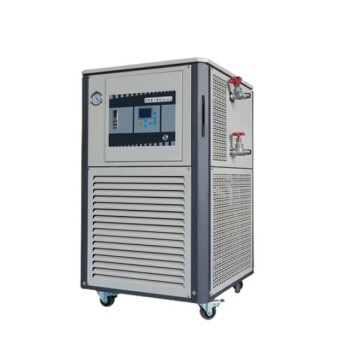
- 100L Heating Chilling Circulator Cooling Water Bath Circulator for High and Low Temperature Constant Temperature Reaction
- 20L Heating Chilling Circulator Cooling Water Bath Circulator for High and Low Temperature Constant Temperature Reaction
- 5L Heating Chilling Circulator Cooling Water Bath Circulator for High and Low Temperature Constant Temperature Reaction
- 30L Heating Chilling Circulator Cooling Water Bath Circulator for High and Low Temperature Constant Temperature Reaction
- High Temperature Constant Temperature Heating Circulator Water Bath Chiller Circulator for Reaction Bath
People Also Ask
- What is the necessity of a circulating water bath in chlorate production? Optimize Yield & Purity with Precision
- How does a constant temperature circulator support the leaching reaction of gold scrap? Optimize Gold Recovery Results
- How do constant temperature circulators impact weight-loss immersion tests? Ensure Precision in Corrosion Analysis
- What function does a circulating cooling chiller perform during the gas adsorption isotherm testing of nanoporous carbon?
- What is the importance of a circulating water cooling system? Key to Protecting Your High-Temperature Lab Equipment