Knowledge What are the advantages of using a Glassy Carbon Crucible for fluoride salts? Ensure Purity up to 1000°C
Author avatar

Tech Team · Kintek Solution

Updated 17 hours ago

What are the advantages of using a Glassy Carbon Crucible for fluoride salts? Ensure Purity up to 1000°C


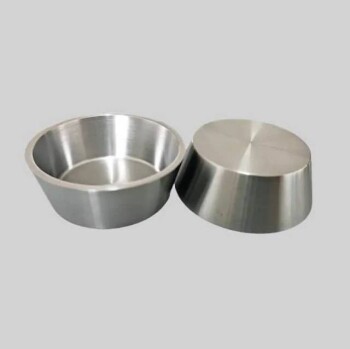
The primary advantages of using a Glassy Carbon Crucible for fluoride salts are its exceptional chemical inertness and reliable thermal stability. Specifically, it prevents the leaching of crucible components into the molten salt, ensuring the purity of the mixture during heating processes up to 1000 °C.

Core Takeaway For experiments requiring high-precision chemical composition, such as corrosion studies, Glassy Carbon is the superior choice because it acts as a neutral vessel. Unlike other materials, it ensures the experimental medium remains chemically unaltered by the container itself.

The Critical Role of Chemical Inertness

Preventing Material Leaching

When preparing salt mixtures like FLiNaK eutectic salts, the container must not react with the contents.

Glassy carbon offers a distinct advantage here: it does not release crucible components into the molten salt. This eliminates the risk of cross-contamination that often occurs with less inert materials.

Maintaining Precise Composition

The integrity of your experiment relies on knowing the exact makeup of your medium.

By preventing leaching, glassy carbon ensures the composition of the salt remains chemically precise. This is essential when the baseline chemistry must be strictly controlled to isolate variables.

Thermal Performance and Stability

Operating at High Temperatures

Fluoride salts require significant heat to melt and bake effectively.

Glassy carbon crucibles provide excellent thermal stability, allowing researchers to operate confidently at temperatures up to 1000 °C. This thermal range covers the necessary melting points for common fluoride salt mixtures used in research.

Stability During Phase Changes

The material maintains its structural and chemical integrity throughout the heating process.

Whether you are in the baking phase or the melting phase, the crucible remains stable, providing a consistent environment for the salts as they transition from solid to liquid.

Ensuring Experimental Integrity

Facilitating Micro-Element Studies

In advanced material science, researchers often study the specific effects of micro-elements, such as EuF3.

Because the glassy carbon crucible introduces no foreign contaminants, you can attribute observed changes—such as corrosion behavior in alloys—solely to the micro-elements you introduced, rather than impurities from the pot.

Accurate Corrosion Analysis

The study of how alloys corrode in molten salts requires a pristine environment.

Any contamination from a crucible could skew corrosion rates or alter surface interactions. Glassy carbon creates a "blank slate" environment, making it vital for validating corrosion mechanisms in sensitive alloys.

Understanding the Operational Limits

Adhering to Temperature Boundaries

While glassy carbon is highly stable, it is not infinitely resistant.

The primary reference specifies a maximum operational threshold of 1000 °C. Exceeding this limit may compromise the structural integrity of the crucible or its chemical inertness.

Application Specificity

This material is engineered for precision, not necessarily for general-purpose rough handling.

Its value is maximized in controlled experimental setups (like FLiNaK preparation) where purity is the priority, rather than in industrial bulk processing where cost or extreme durability against physical impact might be the main drivers.

Making the Right Choice for Your Goal

When deciding if a glassy carbon crucible is the right tool for your specific application, consider the level of chemical precision required.

  • If your primary focus is experimental precision: Choose glassy carbon to ensure that absolutely no container components leach into your salt mixture, preserving the validity of micro-element studies.
  • If your primary focus is thermal capacity: verify that your required melting and baking temperatures stay strictly within the 1000 °C limit to maintain the vessel's stability.

Glassy carbon is the definitive standard for researchers who cannot afford to let their equipment dictate their results.

Summary Table:

Feature Advantage for Fluoride Salt Research
Chemical Inertness Zero leaching of crucible components into molten salts like FLiNaK.
Temperature Range Stable performance for high-temperature baking and melting up to 1000°C.
Purity Maintenance Ensures precise chemical composition for sensitive micro-element studies.
Corrosion Research Provides a neutral environment to isolate alloy corrosion variables.
Phase Stability Maintains structural integrity during solid-to-liquid transitions.

Elevate Your Laboratory Precision with KINTEK

Don't let container contamination compromise your research integrity. KINTEK specializes in high-performance laboratory solutions, providing the premium glassy carbon crucibles, ceramics, and high-temperature furnaces needed for advanced material science and fluoride salt studies.

Whether you are conducting complex corrosion analysis or refining battery research, our comprehensive portfolio—from vacuum and tube furnaces to precision crushing and milling systems—is designed to meet the most rigorous experimental standards.

Ready to ensure the purity of your results? Contact KINTEK today to discuss your custom laboratory equipment and consumable needs with our experts!

References

  1. Weiyue Zhou, Michael P. Short. Proton irradiation-decelerated intergranular corrosion of Ni-Cr alloys in molten salt. DOI: 10.1038/s41467-020-17244-y

This article is also based on technical information from Kintek Solution Knowledge Base .

Related Products

People Also Ask

Related Products

Alumina Al2O3 Ceramic Crucible Semicircle Boat with Lid for Engineering Advanced Fine Ceramics

Alumina Al2O3 Ceramic Crucible Semicircle Boat with Lid for Engineering Advanced Fine Ceramics

Crucibles are containers widely used for melting and processing various materials, and semicircular boat-shaped crucibles are suitable for special smelting and processing requirements. Their types and uses vary by material and shape.

Custom Machined and Molded PTFE Teflon Parts Manufacturer with PTFE Crucible and Lid

Custom Machined and Molded PTFE Teflon Parts Manufacturer with PTFE Crucible and Lid

PTFE crucibles, made from pure Teflon, offer chemical inertness and resistance from -196°C to 280°C, ensuring compatibility with a wide range of temperatures and chemicals. These crucibles feature machine-finished surfaces for easy cleaning and prevention of contamination, making them ideal for precise laboratory applications.

Electron Beam Evaporation Coating Tungsten Crucible and Molybdenum Crucible for High Temperature Applications

Electron Beam Evaporation Coating Tungsten Crucible and Molybdenum Crucible for High Temperature Applications

Tungsten and molybdenum crucibles are commonly used in electron beam evaporation processes due to their excellent thermal and mechanical properties.

Arc-Shaped Alumina Ceramic Crucible High Temperature Resistant for Engineering Advanced Fine Ceramics

Arc-Shaped Alumina Ceramic Crucible High Temperature Resistant for Engineering Advanced Fine Ceramics

In the journey of scientific exploration and industrial production, every detail is crucial. Our arc-shaped alumina ceramic crucibles, with their excellent high temperature resistance and stable chemical properties, have become a powerful assistant in laboratories and industrial fields. They are made of high-purity alumina materials and manufactured through precision processes to ensure excellent performance in extreme environments.

Engineering Advanced Fine Ceramics Alumina Crucibles (Al2O3) for Thermal Analysis TGA DTA

Engineering Advanced Fine Ceramics Alumina Crucibles (Al2O3) for Thermal Analysis TGA DTA

TGA/DTA thermal analysis vessels are made of aluminum oxide (corundum or aluminum oxide). It can withstand high temperature and is suitable for analyzing materials that require high temperature testing.

Engineering Advanced Fine Alumina Al2O3 Ceramic Crucible for Laboratory Muffle Furnace

Engineering Advanced Fine Alumina Al2O3 Ceramic Crucible for Laboratory Muffle Furnace

Alumina ceramic crucibles are used in some materials and metal melting tools, and flat-bottomed crucibles are suitable for melting and processing larger batches of materials with better stability and uniformity.

Evaporation Crucible for Organic Matter

Evaporation Crucible for Organic Matter

An evaporation crucible for organic matter, referred to as an evaporation crucible, is a container for evaporating organic solvents in a laboratory environment.

Electron Beam Evaporation Coating Oxygen-Free Copper Crucible and Evaporation Boat

Electron Beam Evaporation Coating Oxygen-Free Copper Crucible and Evaporation Boat

Electron Beam Evaporation Coating Oxygen-Free Copper Crucible enables precise co-deposition of various materials. Its controlled temperature and water-cooled design ensure pure and efficient thin film deposition.

Electron Beam Evaporation Coating Gold Plating Tungsten Molybdenum Crucible for Evaporation

Electron Beam Evaporation Coating Gold Plating Tungsten Molybdenum Crucible for Evaporation

These crucibles act as containers for the gold material evaporated by the electron evaporation beam while precisely directing the electron beam for precise deposition.

High Temperature Muffle Oven Furnace for Laboratory Debinding and Pre Sintering

High Temperature Muffle Oven Furnace for Laboratory Debinding and Pre Sintering

KT-MD High temperature debinding and pre-sintering furnace for ceramic materials with various molding processes. Ideal for electronic components such as MLCC and NFC.

Electron Beam Evaporation Coating Conductive Boron Nitride Crucible BN Crucible

Electron Beam Evaporation Coating Conductive Boron Nitride Crucible BN Crucible

High-purity and smooth conductive boron nitride crucible for electron beam evaporation coating, with high temperature and thermal cycling performance.

Boron Nitride (BN) Crucible for Phosphorous Powder Sintered

Boron Nitride (BN) Crucible for Phosphorous Powder Sintered

Phosphorus powder sintered boron nitride (BN) crucible has a smooth surface, dense, pollution-free and long service life.

Laboratory Sterilizer Lab Autoclave Pulsating Vacuum Desktop Steam Sterilizer

Laboratory Sterilizer Lab Autoclave Pulsating Vacuum Desktop Steam Sterilizer

The pulsating vacuum desktop steam sterilizer is a compact and reliable device used for rapid sterilization of medical, pharmaceutical, and research items.

Custom PTFE Teflon Parts Manufacturer for PTFE Measuring Cylinder 10/50/100ml

Custom PTFE Teflon Parts Manufacturer for PTFE Measuring Cylinder 10/50/100ml

PTFE measuring cylinder are a rugged alternative to traditional glass cylinders. They are chemically inert over a wide temperature range (up to 260º C), have excellent corrosion resistance and maintain a low coefficient of friction, ensuring ease of use and cleaning.

Shaking Incubators for Diverse Laboratory Applications

Shaking Incubators for Diverse Laboratory Applications

Precision lab shaking incubators for cell culture & research. Quiet, reliable, customizable. Get expert advice today!

Molybdenum Disilicide (MoSi2) Thermal Elements Electric Furnace Heating Element

Molybdenum Disilicide (MoSi2) Thermal Elements Electric Furnace Heating Element

Discover the power of Molybdenum Disilicide (MoSi2) Heating Element for high-temperature resistance. Unique oxidation resistance with stable resistance value. Learn more about its benefits now!

Custom PTFE Teflon Parts Manufacturer for Hydrothermal Synthesis Reactor Polytetrafluoroethylene Carbon Paper and Carbon Cloth Nano-growth

Custom PTFE Teflon Parts Manufacturer for Hydrothermal Synthesis Reactor Polytetrafluoroethylene Carbon Paper and Carbon Cloth Nano-growth

Acid and alkali resistant polytetrafluoroethylene experimental fixtures meet different requirements. The material is made of brand new polytetrafluoroethylene material, which has excellent chemical stability, corrosion resistance, airtightness, high lubricity and non-stickiness, electrical corrosion and good anti-aging ability, and can work for a long time at temperatures from -180℃ to +250℃.

Automatic Lab Cold Isostatic Press CIP Machine Cold Isostatic Pressing

Automatic Lab Cold Isostatic Press CIP Machine Cold Isostatic Pressing

Efficiently prepare samples with our Automatic Lab Cold Isostatic Press. Widely used in material research, pharmacy, and electronic industries. Provides greater flexibility and control compared to electric CIPs.

Twin Screw Extruder Plastic Granulation Machine

Twin Screw Extruder Plastic Granulation Machine

Twin screw extruder plastic granulation machine is designed for the mixing and processing experiments of engineering plastics, modified plastics, waste plastics and masterbatches.

Custom PTFE Teflon Parts Manufacturer for Acid and Alkali Resistant Chemical Powder Material Scoops

Custom PTFE Teflon Parts Manufacturer for Acid and Alkali Resistant Chemical Powder Material Scoops

Known for its excellent thermal stability, chemical resistance and electrical insulating properties, PTFE is a versatile thermoplastic material.


Leave Your Message