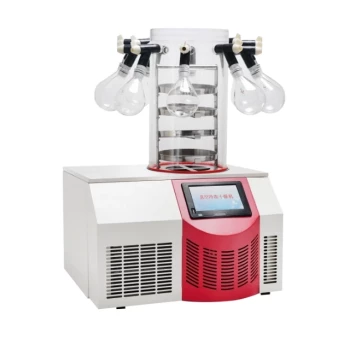
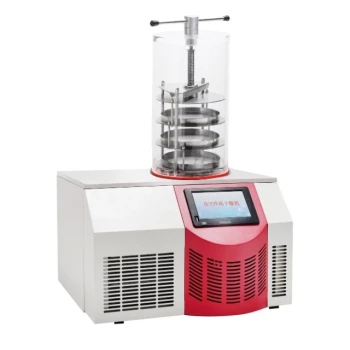
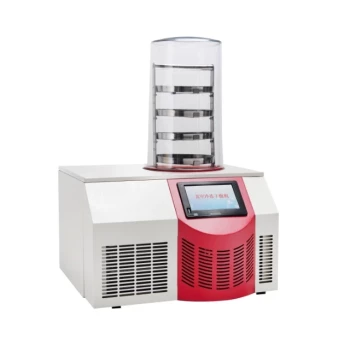
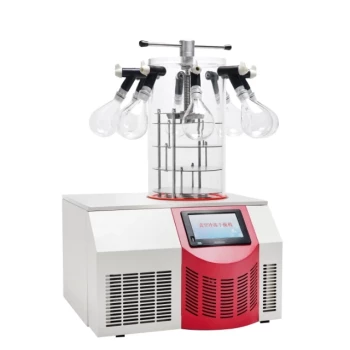
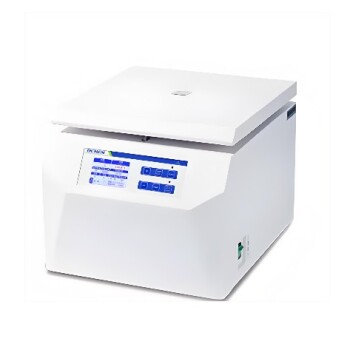
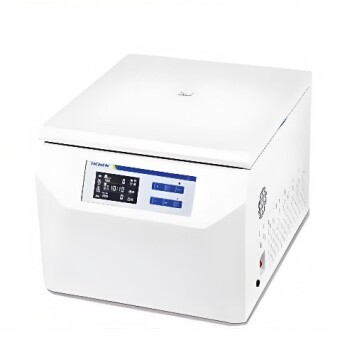
High-performance freeze drying is the superior method for preparing Chlorella sp. biomass because it removes moisture through sublimation rather than evaporation. Unlike hot air drying, this low-temperature, vacuum-sealed process bypasses the damaging liquid phase and high-heat environments, ensuring the final powder retains the biological potency and structural integrity of the wet biomass.
By eliminating thermal stress and oxidation, freeze drying preserves critical bioactive components like volatile oils and phenolic substances. This results in a dry powder that maintains the same antibacterial properties and physical accessibility as the original fresh biomass.
Preserving Chemical Integrity and Bioactivity
Protecting Heat-Sensitive Components
Hot air drying exposes biomass to temperatures that degrade fragile chemical compounds.
High-performance freeze drying operates under extremely low temperatures. This environment preserves heat-sensitive bioactive components within Chlorella sp. cells, specifically volatile oils and phenolic substances, which are often lost during thermal processing.
Preventing Oxidative Damage
Traditional drying methods often expose the biomass to oxygen, leading to chemical changes that alter the material's properties.
Freeze drying occurs in a vacuum environment. This eliminates exposure to oxygen during the drying process, effectively preventing chemical oxidation and ensuring the biomass retains its original chemical profile.
Retaining Antibacterial Properties
The ultimate measure of a drying method's success is the functional performance of the resulting powder.
Because the process avoids high heat and oxidation, the dry Chlorella sp. powder maintains antibacterial properties comparable to wet biomass. This functional equivalence is rarely achievable with hot air drying.
Maintaining Physical Structure
Avoiding "Hornification"
Thermal drying methods often cause a phenomenon known as hornification.
This occurs when the microporous structures of the biomass collapse and the surfaces harden due to the evaporation of liquid water. This collapse permanently alters the physical texture and density of the powder.
Preserving Porosity through Sublimation
Freeze drying removes moisture by converting ice directly into vapor (sublimation), skipping the liquid water phase entirely.
This prevents the structural collapse associated with liquid evaporation. The result is a loose physical structure that retains high surface area and prevents the material from becoming dense or hard.
Ensuring Accessibility
The preservation of this loose structure has practical implications for downstream use.
By maintaining high porosity, the biomass ensures that substrates remain accessible. This allows for full bonding with enzyme molecules in subsequent applications, leading to more accurate assessments of efficiency and better reactivity.
Understanding the Trade-offs
Operational Intensity
While the quality of freeze-dried biomass is superior, it comes at a cost.
Freeze drying is a time-intensive and energy-demanding process compared to hot air drying. It requires specialized vacuum equipment and longer processing times to achieve sublimation, making it less efficient for low-value commodities where bioactivity is not a priority.
Making the Right Choice for Your Goal
To select the correct drying method, you must evaluate the intended application of your Chlorella sp. powder.
- If your primary focus is bioactivity: Choose freeze drying to strictly preserve volatile oils, phenolics, and the inherent antibacterial properties of the cells.
- If your primary focus is structural reactivity: Select freeze drying to prevent pore collapse (hornification) and ensure the biomass remains accessible for enzymatic bonding.
Ultimately, while freeze drying requires more resources, it is the only viable option when the chemical and structural fidelity of the Chlorella sp. biomass is non-negotiable.
Summary Table:
| Feature | High-Performance Freeze Drying | Hot Air Drying |
|---|---|---|
| Mechanism | Sublimation (Ice to Vapor) | Evaporation (Liquid to Vapor) |
| Temperature | Extremely Low (Vacuum) | High Heat |
| Bioactive Retention | High (Volatile oils & Phenolics) | Low (Thermal degradation) |
| Physical Structure | Loose, Porous, High Surface Area | Dense, Hardened (Hornification) |
| Functional Quality | Maintains Antibacterial Properties | Significant Loss of Function |
| Energy & Time | High Intensity | Lower Cost/Faster |
Elevate Your Biomass Research with KINTEK Precision
Don't compromise the biological integrity of your samples with inferior drying methods. KINTEK specializes in advanced laboratory solutions, offering high-performance freeze dryers and cold traps designed to protect heat-sensitive compounds and maintain structural porosity in Chlorella sp. and other delicate microorganisms.
From high-temperature furnaces and vacuum systems to specialized bioprocessing equipment, our comprehensive portfolio ensures your lab achieves repeatable, high-quality results. Whether you are scaling up biofuel research or developing pharmaceutical-grade powders, our experts are here to provide the cooling solutions and consumables your facility needs.
Ready to optimize your drying process? Contact KINTEK today to find the perfect freeze dryer for your application!
References
- E Ameri, Amrei HD. The Effect of Different Light Conditions on Antimicrobial Activity of the Microalgae Chlorella sp. Ethanolic Extract Against Streptococcus mutans. DOI: 10.37871/jbres1272
This article is also based on technical information from Kintek Solution Knowledge Base .
Related Products
- High Performance Laboratory Freeze Dryer
- High Performance Laboratory Freeze Dryer for Research and Development
- Benchtop Laboratory Vacuum Freeze Dryer
- Benchtop Laboratory Freeze Dryer for Lab Use
- 158L Precision Vertical Ultra Low Freezer for Laboratory Applications
People Also Ask
- What role does a laboratory freeze dryer play in the synthesis of graphene-based electrocatalysts? Preserve 3D Structures
- What are the technical advantages of using a laboratory freeze dryer for porous carbon precursors? Preserve 3D Networks
- What types of liquid samples can be processed using a laboratory freeze dryer? Preserve Your Sensitive Materials
- How do laboratory freeze dryers support scientific research? Preserve Sample Integrity for Reproducible Results
- Why is a laboratory freeze dryer preferred over traditional heating? Preserve Biochar Structure & Maximize Porosity