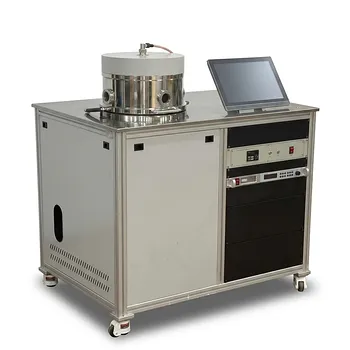
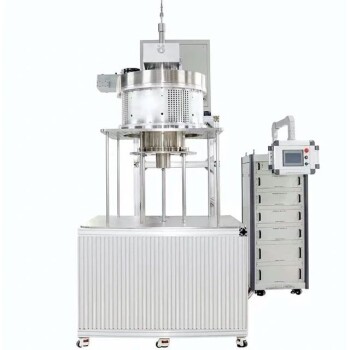
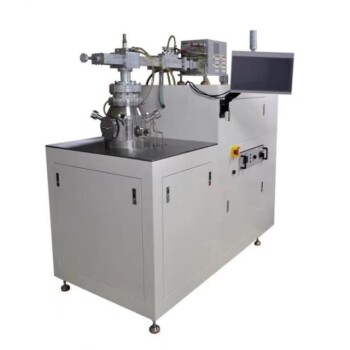
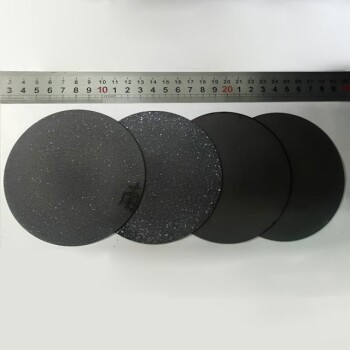
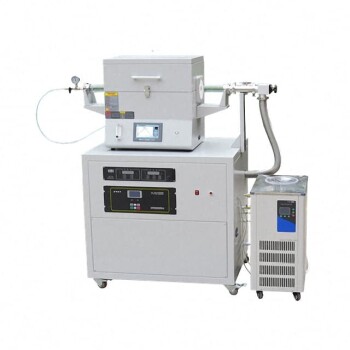
The definitive advantage of Plasma Enhanced Chemical Vapor Deposition (PECVD) is its ability to deposit high-quality films at significantly lower temperatures than traditional methods. By utilizing plasma energy rather than thermal energy to excite precursor gases, PECVD enables the creation of dense, hard, and biocompatible diamond-like carbon (DLC) films without compromising the structural integrity of temperature-sensitive substrates.
Core Insight: PECVD decouples chemical reaction requirements from high heat. This allows you to engineer precise surface properties—such as specific sp2/sp3 hybridization ratios—on delicate materials like titanium alloys that would otherwise degrade under the intense heat of standard Chemical Vapor Deposition.
Preserving Substrate Integrity
The Low-Temperature Advantage
Traditional Chemical Vapor Deposition (CVD) typically requires temperatures around 1,000°C to initiate the necessary chemical reactions.
In contrast, PECVD systems operate effectively at temperatures below 200°C. This drastic reduction imposes significantly less thermal stress on the components being coated.
Protecting Mechanical Properties
This low-temperature operation is critical for substrates like titanium alloys, often used in medical or aerospace applications.
Because the process does not subject the substrate to extreme heat, the underlying mechanical properties of the titanium remain unaltered during the coating process.
Achieving Superior Film Characteristics
Density and Biocompatibility
The ionization facilitated by plasma energy results in the growth of films that are exceptionally dense and hard.
Furthermore, PECVD allows for the production of biocompatible DLC films, making this method ideal for medical implants where surface interaction with biological tissue is a priority.
Uniformity and Stress Control
Beyond hardness, the PECVD process supports the creation of highly uniform films.
It also offers the ability to manage internal film characteristics, such as stress control and refractive index tunability, ensuring the coating performs reliably under load.
Precision and Tunability
Controlling the Hybridization Ratio
The most sophisticated advantage of PECVD is the ability to manipulate the sp2/sp3 hybridization ratio.
By adjusting specific process parameters, you can fine-tune the chemical structure of the DLC film. This allows you to dictate how "diamond-like" (sp3) or "graphite-like" (sp2) the final coating behaves, directly influencing its hardness and lubricity.
Understanding the Trade-offs
Process Complexity
While PECVD offers superior control, it introduces more variables than simple thermal deposition.
Achieving the exact sp2/sp3 ratio requires precise management of process parameters. Slight deviations in the plasma environment can alter the film's properties, requiring a rigorous approach to system calibration and monitoring.
Making the Right Choice for Your Goal
To determine if PECVD is the correct solution for your specific application, consider your primary constraints:
- If your primary focus is Substrate Preservation: Choose PECVD to coat temperature-sensitive materials like titanium without risking thermal degradation or warping.
- If your primary focus is Film Customization: Leverage PECVD to fine-tune the sp2/sp3 ratio, allowing you to balance hardness with friction coefficients precisely.
- If your primary focus is Medical Application: Rely on PECVD to generate biocompatible, high-density coatings that will withstand biological environments.
PECVD transforms the coating process from a blunt thermal application into a precision engineering tool, allowing for high-performance surfaces on complex substrates.
Summary Table:
| Feature | Traditional CVD | PECVD System |
|---|---|---|
| Deposition Temp | High (Approx. 1,000°C) | Low (Below 200°C) |
| Substrate Stress | High thermal stress/warping | Minimal thermal stress |
| Film Properties | Limited by thermal limits | High density & biocompatibility |
| Customization | Basic chemical control | Precise sp2/sp3 ratio tuning |
| Best For | Heat-resistant materials | Titanium, sensitive alloys, medical implants |
Elevate Your Material Science with KINTEK Precision
Unlock the full potential of your coatings with KINTEK’s advanced PECVD systems. Whether you are developing biocompatible medical implants or high-performance aerospace components, our technology ensures superior film density and precise sp2/sp3 ratio control without compromising your delicate substrates.
Beyond PECVD, KINTEK specializes in a comprehensive range of laboratory equipment, including:
- High-Temperature Furnaces: Muffle, tube, vacuum, and CVD systems.
- Sample Preparation: Crushing, milling, and hydraulic presses (pellet, hot, isostatic).
- Advanced Research Tools: High-temperature high-pressure reactors, autoclaves, and electrolytic cells.
- Lab Essentials: ULT freezers, freeze dryers, and high-quality ceramic crucibles.
Ready to optimize your thin-film deposition process? Contact KINTEK today to consult with our experts and find the perfect solution for your laboratory needs.
References
- Milagros del Valle El Abras Ankha, Yasmin Rodarte Carvalho. Effect of DLC Films with and without Silver Nanoparticles Deposited On Titanium Alloy. DOI: 10.1590/0103-6440201902708
This article is also based on technical information from Kintek Solution Knowledge Base .
Related Products
- RF PECVD System Radio Frequency Plasma-Enhanced Chemical Vapor Deposition RF PECVD
- Chemical Vapor Deposition CVD Equipment System Chamber Slide PECVD Tube Furnace with Liquid Gasifier PECVD Machine
- Microwave Plasma Chemical Vapor Deposition MPCVD Machine System Reactor for Lab and Diamond Growth
- Inclined Rotary Plasma Enhanced Chemical Vapor Deposition PECVD Equipment Tube Furnace Machine
- Custom CVD Diamond Coating for Lab Applications
People Also Ask
- What is plasma enhanced chemical vapour deposition PECVD used for? Enable Low-Temp Thin Films for Electronics & Solar
- What is an example of PECVD? RF-PECVD for High-Quality Thin Film Deposition
- What is the role of RF-PECVD in VFG preparation? Mastering Vertical Growth and Surface Functionality
- What is plasma enhanced chemical Vapour deposition process used for fabrication of? A Guide to Low-Temperature Thin Films
- What is plasma CVD? Unlock Low-Temperature Thin Film Deposition for Sensitive Materials