Precision and purity are the twin pillars of reliable electrochemical data. A three-electrode system using a graphite counter electrode offers distinct advantages for hydrogen peroxide fuel cell research: it decouples potential measurement from current flow to eliminate resistance errors, and it utilizes a chemically inert material to prevent sample contamination. This configuration ensures that the observed electrocatalytic activity is intrinsic to your working electrode material, rather than an artifact of the testing environment.
By isolating the reference potential from the current path and utilizing a chemically inert counter electrode, this configuration eliminates common sources of experimental error—specifically voltage drops (iR) and metallic contamination—to yield high-fidelity data on electrocatalytic performance.
Achieving Accurate Potential Measurement
Decoupling Current and Voltage
In a standard two-electrode system, the same electrodes carry the current and measure the voltage. This creates a conflict where the measurement is distorted by the current flow.
A three-electrode system separates these functions. The current circuit flows between the working electrode and the counter electrode. The potential measurement circuit operates independently between the working electrode and the reference electrode.
Eliminating the Voltage Drop (iR)
Electrolytes possess inherent resistance. When current flows through this resistance, it creates a voltage drop known as the iR drop.
In a two-electrode setup, this drop is included in your measurement, obscuring the true potential applied to the reaction. The three-electrode system effectively removes this interference. It allows you to measure the exact potential at the electrode interface, uncorrupted by the resistance of the solution.
Ensuring Material Purity with Graphite
Chemical Inertness in Harsh Environments
Fuel cell research frequently requires strong acidic or alkaline electrolytes to test performance limits. Standard metal counter electrodes (such as platinum wire) can degrade or dissolve under these aggressive conditions.
A high-purity graphite rod provides a robust, stable alternative. It maintains a consistent current circuit without reacting chemically with strong acids or bases, ensuring the counter electrode does not become a variable in your experiment.
Preventing "False Positive" Activity
The most critical advantage of graphite is the prevention of metallic impurities. If a metal counter electrode dissolves, metal ions can migrate through the electrolyte and deposit onto your working electrode.
This contamination can artificially boost the performance of your sample. By using graphite, you eliminate this risk. You can be certain that the measured activity is derived solely from your specific material (such as tantalum-based nanomaterials) and not from dissolved trace metals acting as accidental catalysts.
Understanding the Trade-offs
Porosity and Cleaning Requirements
While graphite avoids metallic contamination, the material itself is porous. This porosity means graphite rods can absorb species from the electrolyte or previous experiments if not cleaned rigorously.
Physical Stability
Unlike metal wires, graphite rods can be brittle. Over time or under extreme physical stress, they may release carbon dust into the solution. While usually chemically inert, this particulate matter can physically interfere with sensitive measurements if the rod is of low quality.
Making the Right Choice for Your Goal
To ensure your hydrogen peroxide fuel cell research yields publishable, high-integrity data, consider how this setup aligns with your specific objectives.
- If your primary focus is kinetic accuracy: The three-electrode configuration is essential to remove iR drop errors, ensuring your voltage readings reflect the true thermodynamic conditions.
- If your primary focus is characterizing novel catalysts (e.g., Tantalum): The graphite counter electrode is non-negotiable to prevent metal deposition that could mimic or mask the true activity of your nanomaterials.
Ultimately, this system provides the isolation necessary to attribute performance strictly to your material design.
Summary Table:
| Feature | Advantage | Impact on Research |
|---|---|---|
| Three-Electrode Setup | Decouples current from potential measurement | Eliminates iR drop errors for kinetic accuracy |
| Graphite Counter Electrode | High chemical inertness | Prevents metallic contamination of the working electrode |
| Independent Reference | Isolated potential circuit | Ensures exact potential measurement at the interface |
| Purity Control | Non-metallic composition | Confirms catalytic activity is intrinsic to your material |
Elevate Your Electrochemical Research Precision
At KINTEK, we understand that high-fidelity data depends on high-quality tools. Whether you are characterizing novel tantalum catalysts or optimizing hydrogen peroxide fuel cell performance, our premium laboratory equipment ensures your results are never compromised by contamination or measurement error.
Our specialized portfolio for electrochemical research includes:
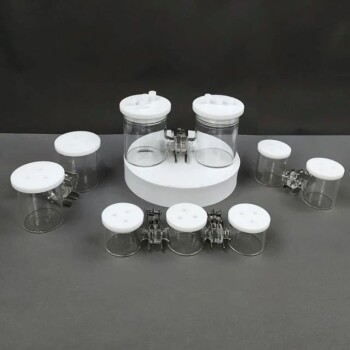
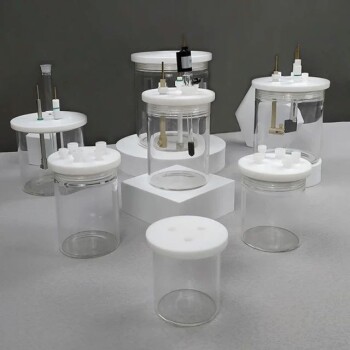
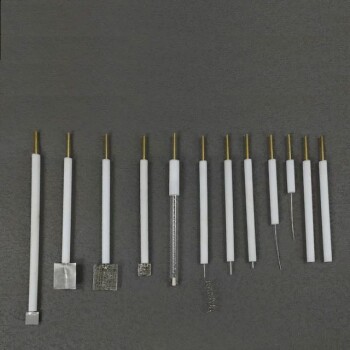
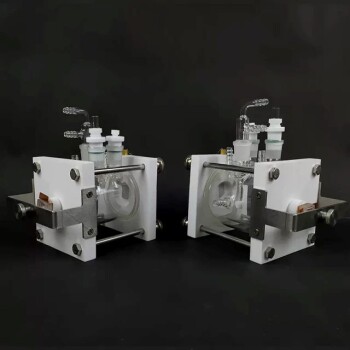
- Precision Electrolytic Cells & Electrodes (Graphite, Platinum, and Reference types)
- Advanced Battery Research Tools & Consumables
- High-Temperature Vacuum & Atmosphere Furnaces
- Crushing, Milling, and Pelletizing Hydraulic Presses
- Precision Cooling Solutions & Essential Lab Ceramics
Don't let experimental artifacts mask your breakthroughs. Contact KINTEK today to equip your lab with the precision components required for publishable, high-integrity research.
References
- Xiaoyong Mo, Edmund C. M. Tse. Rapid laser synthesis of surfactantless tantalum‐based nanomaterials as bifunctional catalysts for direct peroxide–peroxide fuel cells. DOI: 10.1002/smm2.1181
This article is also based on technical information from Kintek Solution Knowledge Base .
Related Products
- H Type Electrolytic Cell Triple Electrochemical Cell
- PTFE Electrolytic Cell Electrochemical Cell Corrosion-Resistant Sealed and Non-Sealed
- Graphite Disc Rod and Sheet Electrode Electrochemical Graphite Electrode
- Electrolytic Electrochemical Cell with Five-Port
- Electrolytic Electrochemical Cell for Coating Evaluation
People Also Ask
- What is a H type cell? A Guide to Divided Electrochemical Cells for Accurate Experiments
- How should the electrolyte be prepared and added to the H-type electrolytic cell? Best Practices for Purity and Safety
- What is the technical necessity of using an H-type electrolytic cell for NO3RR tests? Protect Your Ammonia Yields
- How does the design of an H-type electrolytic cell benefit the neutral water electrolysis process for metal recovery?
- What is the primary function of an H-type electrolytic cell in NitRR? Ensure Accurate Product Yields