Deionized water serves as a superior pressure transmission medium in Hydrothermal Hot Isostatic Pressing (HHIP) primarily due to its quasi-incompressibility. This physical property allows it to transmit extremely high isostatic pressure efficiently while maintaining relatively low operating temperatures, offering a distinct advantage over traditional gas-based methods like argon.
By leveraging deionized water, engineers can achieve the high pressures necessary to close internal material pores without exposing components to the extreme heat that typically degrades microstructure.
Preserving Microstructural Integrity
Decoupling Pressure from Heat
In traditional Hot Isostatic Pressing, achieving sufficient pressure often requires temperatures that can negatively alter the material's properties.
Deionized water changes this equation. It allows the system to generate sufficient pressure to induce plastic flow within a temperature range of just 250 to 350 degrees Celsius.
Preventing Grain Coarsening
One of the most critical challenges in material processing is grain coarsening, a phenomenon where the crystalline grains in a metal grow larger due to high heat, weakening the material.
Because HHIP with deionized water operates at lower temperatures, it avoids this issue entirely. It maintains the stability of the original microstructure, which is essential for high-performance applications.
Enhancing Material Performance
Efficient Pore Closure
Despite the lower temperatures, the quasi-incompressible nature of water ensures that pressure is transmitted uniformly and forcefully.
This pressure induces plastic flow, specifically in materials like aluminum alloys. This flow effectively collapses and closes internal voids (pores) that would otherwise act as failure points.
Improved Fatigue Life
The combination of eliminating porosity and preserving a fine grain structure directly translates to better mechanical properties.
Components processed this way exhibit significantly improved fatigue performance, meaning they can withstand cyclic stress for longer periods without failure.
Operational Considerations
Comparison to Argon Gas
While argon gas is the traditional standard for isostatic pressing, it often requires higher thermal energy to achieve similar densification results.
Deionized water offers a more environmentally friendly and efficient alternative, specifically optimized for applications where keeping the temperature moderate is as critical as applying pressure.
Material Specificity
The benefits of this process are particularly highlighted in aluminum alloys.
When working with these materials, the balance of inducing plastic flow while avoiding high-temperature damage makes deionized water the optimal transmission medium.
Making the Right Choice for Your Goal
To determine if HHIP with deionized water is the correct approach for your project, consider your primary constraints:
- If your primary focus is fatigue resistance: The elimination of pores without grain growth will provide the structural durability required for cyclic loading.
- If your primary focus is microstructural stability: The ability to process at 250-350°C ensures the material properties remain consistent and grains do not coarsen.
- If your primary focus is environmental efficiency: Deionized water provides a cleaner, more efficient alternative to traditional argon gas environments.
By utilizing deionized water, you are effectively prioritizing the long-term structural integrity of your component without sacrificing the density required for high-performance engineering.
Summary Table:
| Feature | Traditional Gas (Argon) HIP | Deionized Water HHIP |
|---|---|---|
| Operating Temp | High (Potential for grain coarsening) | Low (250–350°C) |
| Pressure Medium | Compressible Gas | Quasi-incompressible Water |
| Microstructure | Risk of thermal degradation | Preserved stability & fine grain |
| Material Focus | Broad applications | Specialized for Aluminum Alloys |
| Key Benefit | General densification | Maximum fatigue resistance |
Elevate Your Material Performance with KINTEK Precision
Unlock the full potential of your high-performance alloys by eliminating internal porosity without compromising microstructural integrity. KINTEK specializes in advanced laboratory solutions, including high-pressure reactors, autoclaves, and hydraulic presses designed for the most demanding research and production environments.
Whether you are refining aluminum alloys or pioneering new material composites, our comprehensive range of high-temperature furnaces, cooling solutions, and specialized consumables like PTFE and ceramics ensure your lab achieves consistent, repeatable results. Contact us today to optimize your HIP process and enhance your component fatigue life!
References
- Yaron Aviezer, Ori Lahav. Hydrothermal Hot Isostatic Pressing (HHIP)—Experimental Proof of Concept. DOI: 10.3390/ma17112716
This article is also based on technical information from Kintek Solution Knowledge Base .
Related Products
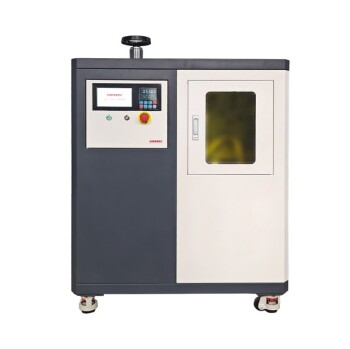
- Warm Isostatic Press for Solid State Battery Research
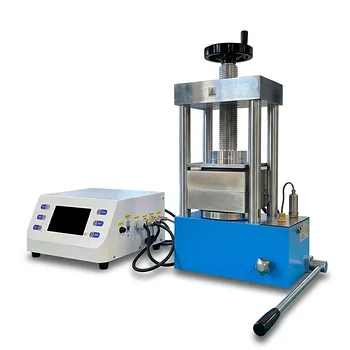
- Automatic High Temperature Heated Hydraulic Press Machine with Heated Plates for Lab
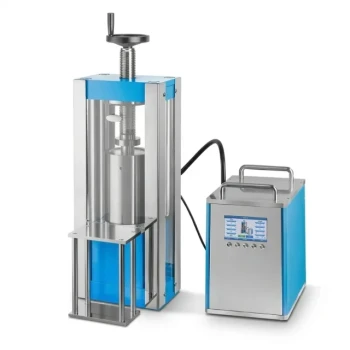
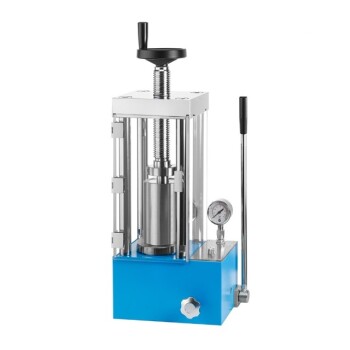
- Manual High Temperature Heated Hydraulic Press Machine with Heated Plates for Lab
- Customizable Laboratory High Temperature High Pressure Reactors for Diverse Scientific Applications
- 600T Vacuum Induction Hot Press Furnace for Heat Treat and Sintering
People Also Ask
- What is the temperature of a warm isostatic press? Achieve Optimal Densification for Your Materials
- What is the function of a Warm Isostatic Press (WIP) in all-solid-state pouch cells? Optimize Battery Density
- Why are Warm Isostatic Presses (WIP) necessary for solid-state batteries? Achieve Atomic-Level Contact
- What advantages does a warm isostatic press offer over a traditional uniaxial press for Li6PS5Cl electrolyte sheets?
- How do warm isostatic presses improve dry electrode performance? Enhance ASSB Conductivity with Heat & Pressure