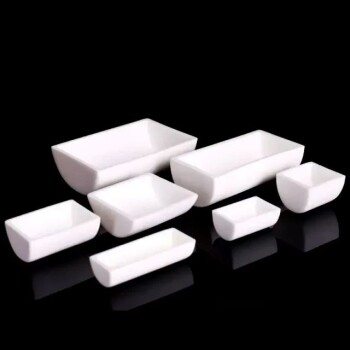
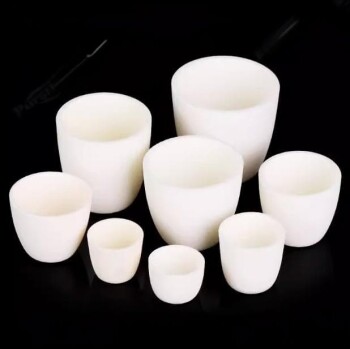
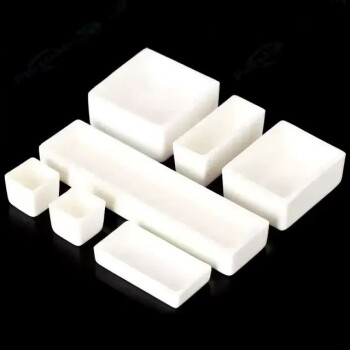
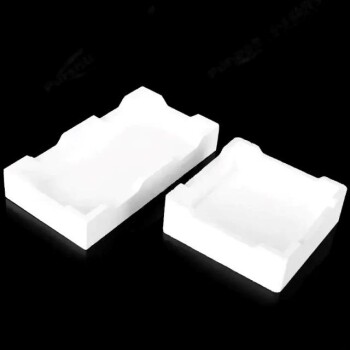
High-purity alumina boats are the preferred choice for gradient boat testing because they provide a chemically inert and thermally stable environment essential for pinpointing the exact temperature at which crystals form. These boats maintain their structural integrity at temperatures up to 1200°C and resist corrosion from glass melts, ensuring that the liquidus temperature measurement is dictated solely by the glass composition rather than a reaction with the container.
The primary advantage of high-purity alumina is its ability to serve as a "neutral" carrier. By eliminating chemical interference and resisting thermal deformation, it allows researchers to establish a precise temperature gradient for accurate devitrification analysis.
Superior Thermal and Mechanical Integrity
Stability at Extreme Temperatures
High-purity alumina (Al2O3) maintains its mechanical strength even as temperatures approach 1200°C. This is critical in gradient furnace applications where the boat must remain perfectly level and rigid to hold the glass melt in a fixed position across the temperature profile.
Resilience Against Thermal Shock
These ceramic boats are designed to withstand frequent thermal cycling. In liquidus testing, samples are often moved between high-temperature zones and room temperature; alumina's resistance to cracking ensures the boat survives repeated use without compromising the sample.
Uniform Heat Distribution
The material properties of high-purity alumina facilitate uniform heating within the constant temperature zone of a tube furnace. This uniformity is vital for ensuring that the temperature measured by external thermocouples accurately reflects the temperature of the glass inside the boat.
Chemical Inertness and Sample Purity
Resistance to Glass Corrosion
Alumina does not react significantly with soda-lime-silica glass melts, which are common in commercial manufacturing. Because the boat remains chemically passive, it prevents the leaching of elements that could alter the glass composition and lead to an incorrect liquidus reading.
Elimination of Cross-Contamination
Using high-purity consumables prevents cross-contamination between different glass batches. The dense, non-porous surface of the alumina ensures that residues from previous tests do not penetrate the material, maintaining the reliability of subsequent measurements.
Shielding from Furnace Impurities
The boat acts as a protective barrier, shielding the glass fragments from impurities within the furnace chamber. This isolation ensures that the onset of crystal growth is a result of the glass's inherent properties and not triggered by external contaminants or atmospheric particulates.
Understanding the Trade-offs
Material Fragility
While alumina is exceptionally hard and heat-resistant, it is also brittle. It lacks the impact resistance of metal alloys, meaning it must be handled with extreme care to avoid mechanical fracturing during loading or cleaning.
Cost vs. Performance
High-purity alumina (typically >99%) is more expensive than lower-grade ceramics or quartz. However, for liquidus measurements, the investment in purity is necessary to avoid the measurement errors caused by the lower softening point of quartz or the chemical reactivity of cheaper refractory materials.
Specific Glass Compatibility
While excellent for most silicate glasses, certain highly aggressive or specialized glass compositions may still interact with alumina over long durations. It is essential to verify that the chemical compatibility of the alumina matches the specific chemistry of the precursors being tested.
Making the Right Choice for Your Goal
How to Apply This to Your Project
To ensure the most accurate liquidus temperature measurements, consider the following recommendations based on your specific testing requirements:
- If your primary focus is absolute measurement accuracy: Always utilize boats with at least 99% alumina purity to prevent any chemical interaction from shifting the observed liquidus point.
- If your primary focus is high-throughput testing: Invest in alumina boats with high thermal shock resistance to allow for faster cooling and heating cycles without risking structural failure.
- If your primary focus is budget-conscious research: Reserve high-purity alumina for final verification stages and use lower-grade ceramics for preliminary temperature scouting, provided the temperatures remain below 1000°C.
Selecting high-purity alumina boats provides the technical foundation necessary for reproducible, high-confidence glass stability data.
Summary Table:
| Key Feature | Advantage for Liquidus Testing | Technical Impact |
|---|---|---|
| Chemical Inertness | Prevents reaction with glass melts | Ensures results depend only on glass composition |
| Thermal Stability | Maintains integrity up to 1200°C | Prevents boat deformation during high-heat cycles |
| Thermal Shock Resistance | Withstands rapid temperature changes | Extends consumable life during frequent cycling |
| High Purity (>99%) | Eliminates cross-contamination | Guarantees sample purity and reproducible data |
| Uniform Heating | Facilitates even temperature distribution | Aligns internal melt temp with furnace thermocouples |
Elevate Your Material Research with KINTEK Precision
Precise results in glass stability and devitrification analysis require high-performance consumables. KINTEK specializes in premium laboratory equipment and specialized ceramics, providing the high-purity alumina boats and crucibles necessary for critical liquidus temperature measurements.
Whether you are utilizing high-temperature tube furnaces, CVD/PECVD systems, or specialized crushing and milling equipment, we offer a comprehensive range of solutions—from durable PTFE and ceramic consumables to advanced hydraulic presses and cooling systems—designed to meet the rigorous demands of your lab.
Ensure absolute measurement accuracy and enhance your lab's efficiency today.
Contact KINTEK Experts to discuss your specific application and find the perfect material solutions for your next project.
References
- Erhan Kilinc, Paul A. Bingham. Dynamic high‐temperature crystallization and processing properties of industrial soda–lime–silica glasses. DOI: 10.1111/jace.19602
This article is also based on technical information from Kintek Solution Knowledge Base .
Related Products
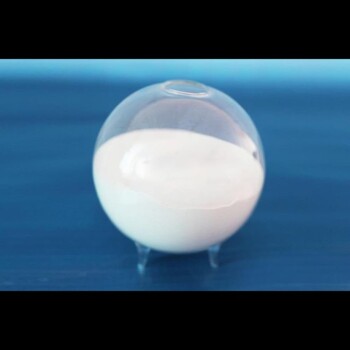
- High Purity Alumina Granulated Powder for Engineering Advanced Fine Ceramics
- Alumina Al2O3 Ceramic Crucible Semicircle Boat with Lid for Engineering Advanced Fine Ceramics
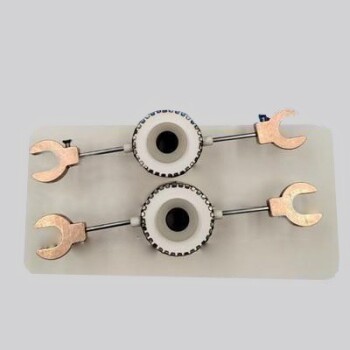
- Aluminized Ceramic Evaporation Boat for Thin Film Deposition
- Ceramic Evaporation Boat Set Alumina Crucible for Laboratory Use
- High Purity Pure Graphite Crucible for Evaporation
People Also Ask
- What is the function of high-purity alumina powder in pack cementation? Ensure Uniform Aerospace Blade Coatings
- How should alumina powder be selected for polishing a disc electrode, and what is the procedure for removing scratches? Achieve a Perfect Mirror Finish
- What are the properties and handling precautions for alumina powder as a polishing material? Achieve a Flawless Finish with Precision
- Why is it necessary to apply alumina powder to graphite molds for TiC10/Cu-Al2O3? Ensure Smooth Release.
- What measures should be taken to prevent cross-contamination when using different sizes of alumina powder?