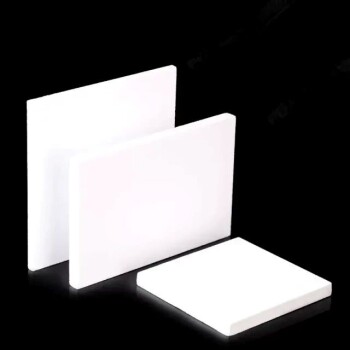
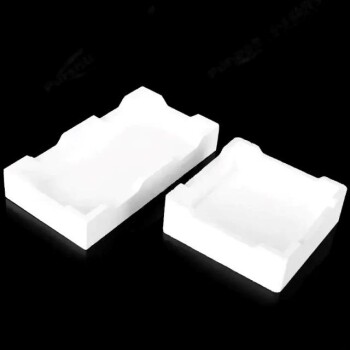
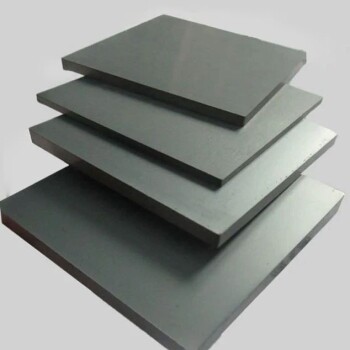
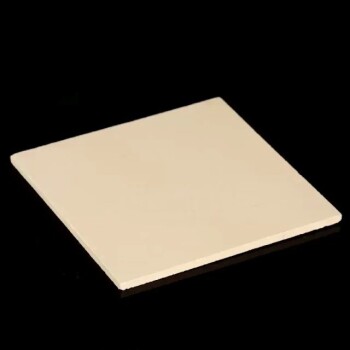
Ensuring geometric precision and chemical purity. High-purity alumina plates are used during the sintering of Aluminum Nitride (AlN) nanofiber mats to provide a weighted physical constraint that suppresses warping and shrinkage. By sandwiching the mats, these plates apply uniform gravitational pressure to maintain a flat macroscopic morphology while acting as a chemically inert barrier against contamination.
The use of high-purity alumina plates acts as a dual-purpose mechanism: providing mechanical stabilization to ensure flat, warp-free nanofiber mats while simultaneously serving as a chemically inert environment that preserves the intrinsic properties of the Aluminum Nitride.
Mechanical Stabilization and Morphology Control
Suppressing Thermal Warping
During high-temperature sintering, precursor mats are highly susceptible to significant shrinkage, curling, or warping as organic binders depart and fibers fuse. By sandwiching the AlN mats between two flat alumina plates, the force of gravity applies a slight, uniform pressure across the entire surface.
This physical constraint forces the material to remain in a fixed plane throughout the thermal cycle. The result is a final product that maintains a flat macroscopic morphology, which is critical for downstream applications requiring precise dimensions.
Managing Uniform Shrinkage
The uniform pressure provided by the plates ensures that any inherent shrinkage occurs evenly across the horizontal plane. Without this constraint, localized differences in heat or fiber density could lead to irregular deformation.
The plates act as a physical stabilizer, ensuring that the delicate nanofiber network densifies without losing its structural integrity or becoming distorted.
Chemical Inertness and Purity Preservation
Preventing Thermal Diffusion
At the extreme temperatures required for Aluminum Nitride sintering, the risk of chemical contamination from furnace components or crucibles is high. High-purity alumina is selected for its superior chemical inertness and high-temperature resistance, which prevents the thermal diffusion of impurities into the AlN fibers.
This protection ensures that the intrinsic physical properties of the Aluminum Nitride, such as its high thermal conductivity and electrical insulation, remain unaffected by external elements.
Anti-Sticking and Isolation
Alumina plates serve as an inert carrier that prevents the AlN nanofibers from adhering to the furnace floor or other equipment. Because alumina exhibits excellent refractoriness, it does not react with the mats or undergo high-temperature adhesion.
This isolation is vital for maintaining the geometric integrity of the samples. It allows the sintered mats to be easily removed from the plates after the process is complete without tearing or surface damage.
Understanding the Trade-offs
Weight and Pressure Sensitivity
While gravity-driven pressure is beneficial for flatness, excessive weight can be detrimental to the nanoporous structure of the mat. If the alumina plates are too heavy, they may crush the nanofibers, reducing the surface area or altering the desired porosity of the final material.
Thermal Shock and Material Fatigue
High-purity alumina, while stable, is susceptible to thermal shock if heating or cooling rates are too aggressive. Rapid temperature changes can cause the plates to crack, potentially damaging the sandwiched AlN mats or introducing debris into the sintering environment.
How to Apply This to Your Sintering Process
Effective sintering requires balancing physical constraints with chemical stability to achieve a high-quality AlN product.
- If your primary focus is geometric flatness: Ensure the alumina plates are perfectly ground and have sufficient mass to counteract the mat’s tendency to curl during binder burnout.
- If your primary focus is chemical purity: Utilize the highest grade (99.9%+) alumina to eliminate the risk of trace element migration that can degrade the thermal conductivity of the AlN.
- If your primary focus is fiber porosity: Optimize the thickness of the top alumina plate to provide enough pressure for flatness without compacting the delicate nanofiber network.
Selecting the appropriate purity and mass of alumina plates is the definitive method for transforming fragile precursor mats into high-performance, structurally sound Aluminum Nitride components.
Summary Table:
| Key Function | Benefit for AlN Nanofiber Mats | Selection Criteria |
|---|---|---|
| Mechanical Stabilization | Suppresses thermal warping and curling | Balanced plate weight/mass |
| Morphology Control | Ensures uniform shrinkage and flatness | Perfectly ground surface |
| Chemical Barrier | Prevents thermal diffusion of impurities | High-purity (99.9%+) Alumina |
| Inert Isolation | Anti-sticking for easy sample removal | Thermal shock resistance |
Elevate Your Sintering Precision with KINTEK
Achieving the perfect balance of flatness and chemical purity in advanced materials like Aluminum Nitride (AlN) requires high-performance tools. KINTEK specializes in providing researchers and industrial manufacturers with premium laboratory equipment designed for excellence.
Our extensive portfolio includes:
- High-Temperature Furnaces: Muffle, tube, vacuum, and atmosphere furnaces for precise thermal control.
- Advanced Ceramics: High-purity alumina plates, crucibles, and PTFE products to ensure zero contamination.
- Material Processing: Hydraulic presses, crushing systems, and milling tools for consistent sample preparation.
Whether you are a researcher developing next-gen nanofibers or a distributor seeking reliable laboratory solutions, KINTEK offers the technical support and high-quality consumables you need to succeed.
Ready to optimize your thermal processes? Contact KINTEK today to find the right solutions for your lab!
References
- Md. Shakhawat Hossain, Koji Nakane. Formation of aluminum nitride nanofibers using electrospinning and their application to thermal conductive sheets. DOI: 10.1007/s10853-023-08980-9
This article is also based on technical information from Kintek Solution Knowledge Base .
Related Products
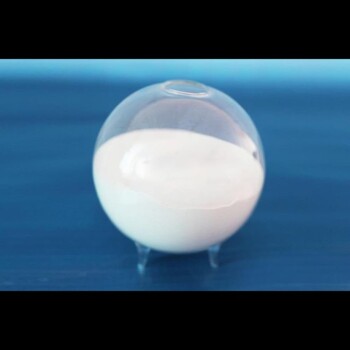
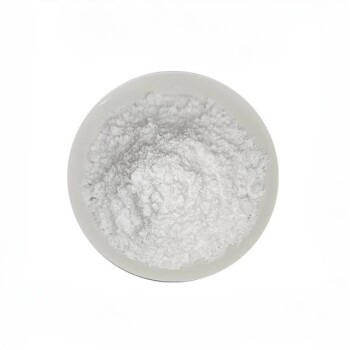
- High Purity Alumina Granulated Powder for Engineering Advanced Fine Ceramics
- High Temperature Wear-Resistant Alumina Al2O3 Plate for Engineering Advanced Fine Ceramics
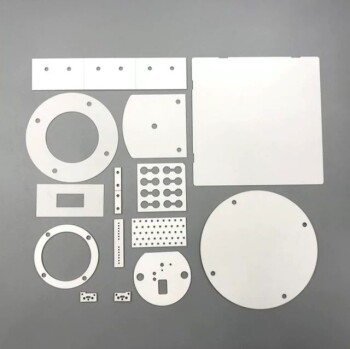
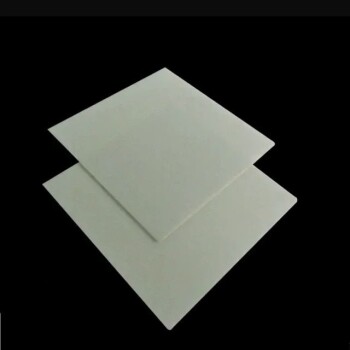
- Custom-Made Alumina Zirconia Special-Shaped Ceramic Plates for Engineering Advanced Fine Ceramics Processing
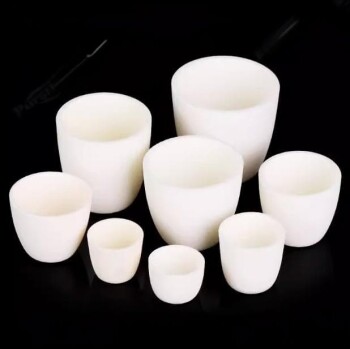
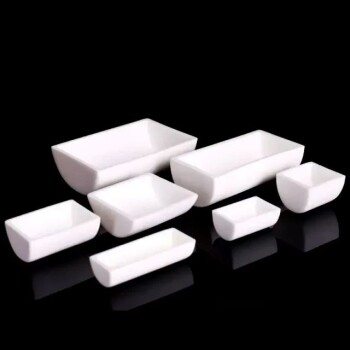
- Arc-Shaped Alumina Ceramic Crucible High Temperature Resistant for Engineering Advanced Fine Ceramics
- High Temperature Alumina (Al2O3) Furnace Tube for Engineering Advanced Fine Ceramics
People Also Ask
- What is the function of high-purity alumina powder in pack cementation? Ensure Uniform Aerospace Blade Coatings
- How should alumina powder be selected for polishing a disc electrode, and what is the procedure for removing scratches? Achieve a Perfect Mirror Finish
- What are the properties and handling precautions for alumina powder as a polishing material? Achieve a Flawless Finish with Precision
- Why is it necessary to apply alumina powder to graphite molds for TiC10/Cu-Al2O3? Ensure Smooth Release.
- What measures should be taken to prevent cross-contamination when using different sizes of alumina powder?