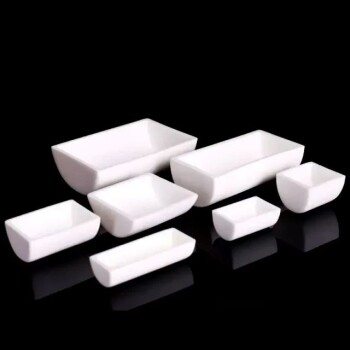
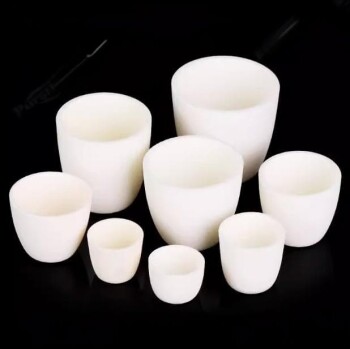
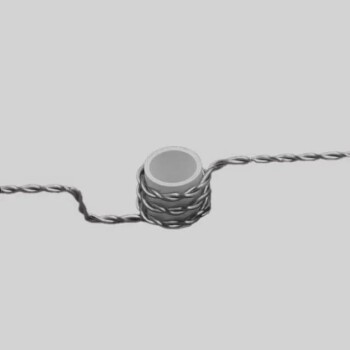
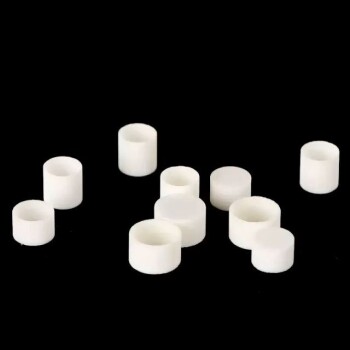
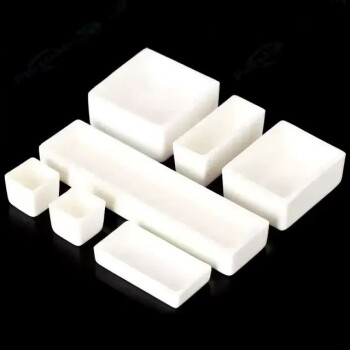
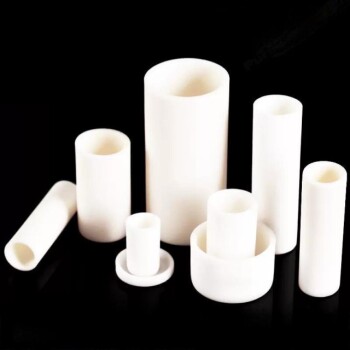
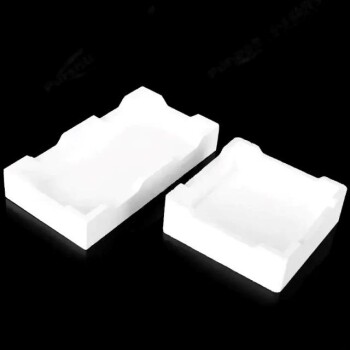
High-purity alumina crucibles provide the critical chemical and thermal stability required for the efficient recovery of battery materials. During high-temperature reduction roasting, these containers prevent unwanted chemical reactions between the crucible wall and the battery "black mass," ensuring the purity of recovered lithium and other metal oxides. Their exceptional resistance to both reducing atmospheres and aggressive metal oxides makes them the industry standard for maintaining the integrity of the recycling process.
The primary advantage of high-purity alumina is its ability to act as a chemically inert vessel that survives extreme thermal stress. By eliminating container-driven contamination, alumina crucibles ensure that the final recovered products meet the strict purity specifications required for battery-grade manufacturing.
Maintaining Material Purity Through Chemical Inertness
Resistance to Aggressive Reducing Agents
High-purity alumina is uniquely capable of withstanding the harsh environments created by reducing agents like hydrogen (H2) or carbon. Unlike lower-grade materials, alumina does not react with these gases or the metal oxides found in spent battery powders.
This inertness ensures that the reduction reaction is confined strictly to the battery materials. This level of control is essential for producing high-purity metal powders or salts during the roasting process.
Shielding Against Furnace Contamination
Crucibles and boats act as a protective barrier, shielding the sample from impurities within the furnace chamber. This prevents the migration of elements from the furnace heating elements or insulation into the battery powder.
By preventing cross-contamination, alumina ensures that weight changes measured during roasting are the result of the intended chemical reactions. This is vital for researchers using gravimetric methods to track the efficiency of the reduction process.
Prevention of Molten Metal Erosion
In processes involving carbothermic reduction, alumina effectively resists chemical erosion from molten droplets of iron or aluminum alloys. This prevents the crucible components from leaching into the melt.
This resistance is particularly important when treating complex battery waste that may contain diverse metallic fractions. The alumina surface remains stable, ensuring the chemical composition of the resulting alloy remains unaffected.
Structural Integrity in High-Heat Environments
Exceptional Thermal Stability
High-purity alumina, often in the form of corundum, can withstand temperatures far exceeding standard roasting requirements, sometimes up to 1550°C. This allows the crucibles to maintain their shape and structural integrity during prolonged heat treatments.
The material’s ability to handle drastic temperature fluctuations prevents the crucible from cracking or spalling. This durability is necessary for batch loading and unloading operations in industrial tube furnaces.
Load-Bearing Strength
Alumina possesses high structural strength, allowing it to support the weight of dense battery powders and inert fillers. It maintains this strength even as temperatures rise toward the peak roasting phase.
This stability ensures that the aluminizing atmosphere or gas flow remains uniformly distributed within the container. A stable crucible geometry prevents the powder from shifting in ways that could create uneven reaction zones.
Understanding the Trade-offs and Limits
The Critical 1100°C Threshold
While alumina is highly stable, it is not universally reactive-free at all temperatures. In battery black mass analysis, it is critical to keep the process temperature below 1100°C.
At temperatures exceeding this limit, certain cathode particles may begin to react with the alumina material itself. This can lead to sample contamination or cause the powder to fuse to the crucible surface, making recovery difficult.
Cost and Fragility Considerations
High-purity alumina is more expensive than quartz or lower-grade ceramics. While it offers superior chemical resistance, it is also a brittle ceramic that is susceptible to mechanical shock.
Users must balance the need for extreme purity with the reality of material handling. Dropping or mechanical stress during loading can easily fracture these high-value consumables.
How to Optimize Your Roasting Process
Making the Right Choice for Your Goal
Choosing the correct container depends on the specific chemistry and temperature of your reduction process.
- If your primary focus is maximizing product purity: High-purity alumina is mandatory to prevent the introduction of silicon or other impurities common in quartz or clay-based vessels.
- If your primary focus is high-volume batch processing: Use alumina boats to facilitate easy loading and unloading while ensuring the container does not deform under the weight of the powder.
- If your primary focus is operating near 1100°C: Closely monitor the interface between the black mass and the crucible to ensure no localized melting or reaction is occurring between the sample and the vessel.
Utilizing high-purity alumina crucibles transforms the reduction roasting process from a volatile reaction into a controlled, high-yield recovery system.
Summary Table:
| Key Feature | Advantage in Battery Roasting | Technical Benefit |
|---|---|---|
| Chemical Inertness | Prevents reaction with "black mass" and reducing agents | Ensures battery-grade purity of recovered metals |
| Thermal Stability | Withstands temperatures up to 1550°C | Resists cracking and spalling during heat cycles |
| Structural Strength | Supports dense powders and inert fillers | Maintains geometry for uniform gas flow and roasting |
| Contamination Shield | Blocks impurities from furnace elements/insulation | Prevents cross-contamination for accurate analysis |
| Erosion Resistance | Resists molten metal droplets (Fe, Al alloys) | Maintains crucible integrity and sample composition |
Optimize Your Battery Material Recovery with KINTEK
Achieving the strict purity requirements of battery-grade manufacturing starts with the right equipment. KINTEK specializes in high-performance laboratory solutions designed for the most demanding thermal processes.
Our extensive portfolio includes high-purity alumina crucibles, boats, and ceramics that provide the chemical inertness and thermal stability required for efficient battery powder reduction roasting. To complement your research, we offer a comprehensive range of high-temperature furnaces (muffle, tube, vacuum, and atmosphere), as well as precision crushing, milling, and hydraulic pellet presses for sample preparation.
Whether you are a researcher focused on lithium recovery or a manufacturer scaling up recycling operations, KINTEK delivers the durability and precision you need.
Ready to enhance your lab's efficiency and product yield?
Contact our technical experts today to find the perfect solution!
References
- Jiayin Zhou, Xiaofei Guan. The critical role of H <sub>2</sub> reduction roasting for enhancing the recycling of spent Li-ion battery cathodes in the subsequent neutral water electrolysis. DOI: 10.1039/d3su00201b
This article is also based on technical information from Kintek Solution Knowledge Base .
Related Products
- High Purity Pure Graphite Crucible for Evaporation
- Alumina Al2O3 Ceramic Crucible Semicircle Boat with Lid for Engineering Advanced Fine Ceramics
- Arc-Shaped Alumina Ceramic Crucible High Temperature Resistant for Engineering Advanced Fine Ceramics
- Ceramic Evaporation Boat Set Alumina Crucible for Laboratory Use
- Engineering Advanced Fine Ceramics Alumina Crucibles (Al2O3) for Thermal Analysis TGA DTA
People Also Ask
- Why are high-purity graphite crucibles preferred for sulfide solid electrolytes? Achieve Superior Material Purity
- Why is a high-purity graphite crucible required for Chromel-TaC composites? Ensure Peak Purity at 1400°C
- What role do high-purity graphite crucibles play in molten salt corrosion research? Ensure Reactor-Grade Precision
- Why are high-purity graphite crucibles used for magnesium distillation? Ensure 3N8 Purity & Thermal Stability
- Why is a high-purity graphite crucible ideal for nitrogen-doped graphene at 1500 °C? Maximize Purity and Stability