Hot pressing equipment fundamentally outperforms conventional sintering for high-performance applications by applying significant mechanical pressure simultaneously with heat. This dual-action process forces ceramic powders to mold and sinter at the same time, overcoming the limitations of relying on thermal energy alone to bond particles.
The core advantage of hot pressing lies in its ability to mechanically force densification. By applying external pressure during the heating phase, you achieve near-theoretical density and superior interfacial bonding that conventional pressureless sintering simply cannot replicate.
The Mechanics of Simultaneous Molding and Sintering
Achieving Superior Material Density
Conventional sintering relies on diffusion driven by heat to close gaps between particles. Hot pressing accelerates this by physically compressing the powder. This results in a significantly higher density composite compared to pressureless methods.
Eliminating Structural Voids
The simultaneous application of pressure actively collapses voids within the material. This dramatically reduces porosity, creating a solid, uniform structure that is less prone to internal defects or failure under stress.
Enhancing Mechanical and Thermal Performance
Strengthening Interfacial Bonding
In Cermets (ceramic-metal composites), the bond between the ceramic matrix and the reinforcement phase is critical. Hot pressing enhances the bonding strength between these dissimilar materials, ensuring they act as a cohesive unit rather than separate phases.
Improving Thermal Shock Resistance
Because the material is denser and the internal bonds are stronger, the composite can better withstand rapid temperature changes. This leads to improved thermal shock resistance, making the material suitable for extreme environments.
Maximizing Mechanical Durability
The reduction in porosity and the tight inter-particle bonding directly translate to mechanical toughness. Hot pressed components exhibit superior mechanical durability and wear resistance compared to their conventionally sintered counterparts.
Process Efficiency and Integrity
Preventing Workpiece Deformation
Hot pressing often allows for shorter processing times and potentially lower peak temperatures compared to pressureless sintering. This controlled environment helps prevent deformation, ensuring the final component retains its intended shape and dimensional accuracy.
Optimizing Process Variables
By introducing pressure as a variable, manufacturers can fine-tune the sintering process. This allows for the successful consolidation of difficult-to-sinter materials that might degrade or fail to densify under heat alone.
Understanding the Trade-offs
Geometry Limitations
While hot pressing produces superior material properties, it is generally limited to simple shapes (plates, disks, cylinders). The necessity of a mold or die makes it difficult to produce complex, undercut geometries that are possible with conventional sintering.
Cost and Complexity
Hot pressing equipment is significantly more complex and expensive to operate than standard sintering furnaces. The graphite dies used in the process are consumables and add to the recurring production costs.
Making the Right Choice for Your Goal
To determine if hot pressing is the correct manufacturing route for your specific application, consider your performance requirements against your budget.
- If your primary focus is maximum density and strength: Choose hot pressing to ensure near-zero porosity and exceptional mechanical durability.
- If your primary focus is thermal stability: Rely on hot pressing to create the tight interfacial bonds required for high thermal shock resistance.
- If your primary focus is complex 3D geometry: Acknowledge that hot pressing may require extensive post-process machining, and conventional sintering might be more practical.
Hot pressing is the definitive choice when material performance and structural integrity cannot be compromised.
Summary Table:
| Feature | Conventional Sintering | Hot Pressing (KINTEK) |
|---|---|---|
| Densification | Lower; relies on heat diffusion | Near-theoretical; mechanical force |
| Porosity | Higher residual voids | Minimal; voids collapsed by pressure |
| Bonding Strength | Standard interfacial bonding | Enhanced ceramic-metal interface |
| Geometry | Supports complex 3D shapes | Limited to simple shapes (dies) |
| Thermal Stability | Standard resistance | High thermal shock resistance |
| Process Control | Temperature only | Simultaneous heat and pressure |
Elevate Your Material Performance with KINTEK Precision
When compromise isn't an option, KINTEK provides the advanced technology needed to achieve near-zero porosity and exceptional structural integrity. Our comprehensive range of hot pressing and hydraulic presses is engineered specifically for researchers and manufacturers demanding superior mechanical durability in ceramic-matrix composites (Cermets).
Beyond high-pressure sintering, KINTEK specializes in a full suite of laboratory solutions, including high-temperature furnaces, crushing systems, and vacuum reactors. Our experts are ready to help you select the ideal configuration to optimize your production workflow and material outcomes.
Ready to transform your material properties? Contact KINTEK today for a customized consultation and see how our laboratory expertise can drive your innovation.
References
- М. И. Баранов. AN ANTHOLOGY OF THE DISTINGUISHED ACHIEVEMENTS IN SCIENCE AND TECHNIQUE. PART 41: COMPOSITE MATERIALS: THEIR CLASSIFICATION, TECHNOLOGIES OF MAKING, PROPERTIES AND APPLICATION DOMAINS IN MODERN TECHNIQUE. DOI: 10.20998/2074-272x.2017.6.01
This article is also based on technical information from Kintek Solution Knowledge Base .
Related Products
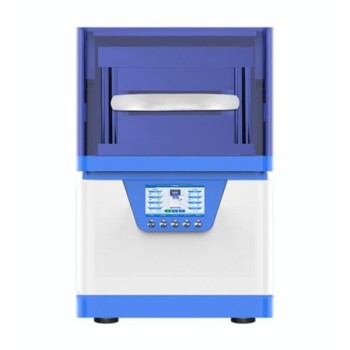
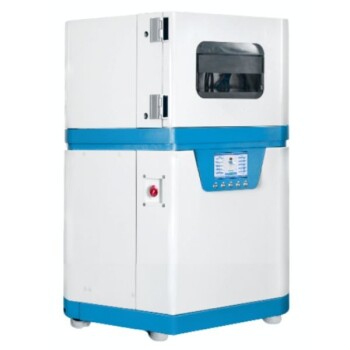
- Automatic Heated Hydraulic Press Machine with Heated Plates for Laboratory Hot Press
- Automatic Heated Hydraulic Press Machine with Heated Plates for Laboratory Hot Press 25T 30T 50T
- 30T 40T Split Automatic Heated Hydraulic Press Machine with Heated Plates for Laboratory Hot Press
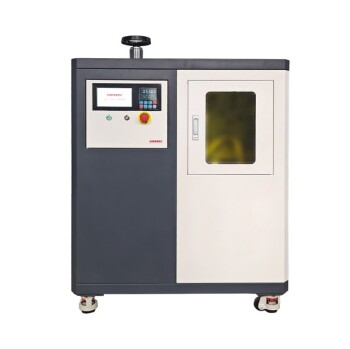
- Heated Hydraulic Press Machine with Heated Plates for Vacuum Box Laboratory Hot Press
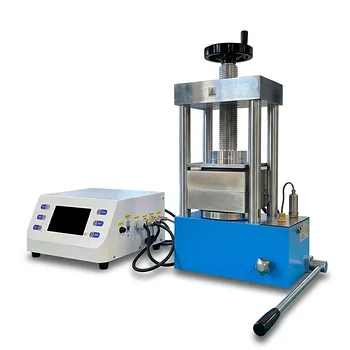
- Heated Hydraulic Press Machine with Heated Plates Split Manual Laboratory Hot Press
People Also Ask
- What are the core advantages of using a laboratory hot press to produce Bi2Se3? Achieve 93% Density & High Conductivity
- How does a laboratory hot press contribute to LATP/polymer composite electrolytes? Achieving Dense, High-Conductivity Films
- How does a three-stage pressure program affect rice husk particleboards? Optimize Bond Strength & Stability
- What is the purpose of a laboratory hot press in the encapsulation stage of solar cell assembly? Ensure Hermetic Seals
- What are the primary advantages of using a laboratory hot press in forming PEO/LLZTO? Unlock Solvent-Free Efficiency