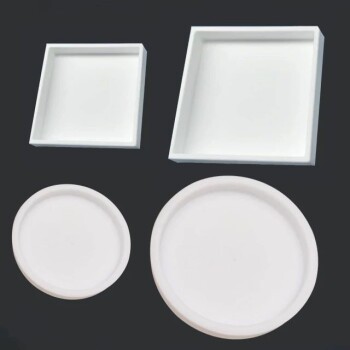
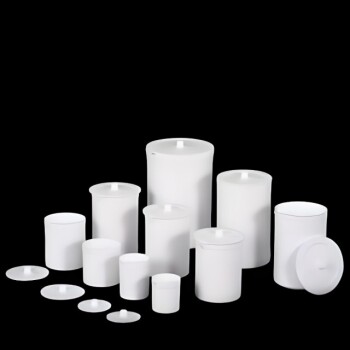
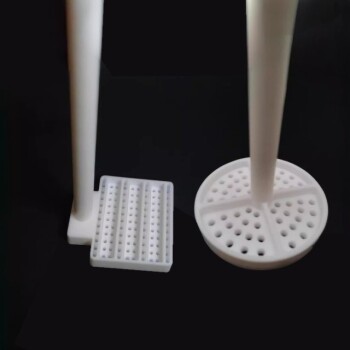
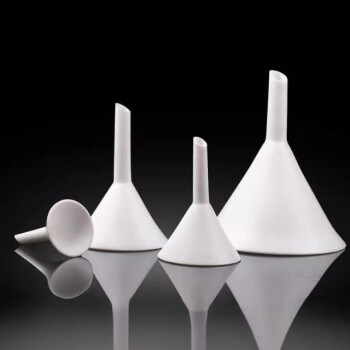
The primary advantages of using Polytetrafluoroethylene (PTFE) molds for preparing Polyurethane Acrylate (PUA) hybrid films are their extremely low surface energy and superior chemical inertness. These properties are essential during the drying and forming stages to prevent the emulsion from adhering to the container, ensuring the final film can be peeled off without structural damage. Additionally, PTFE's robustness against solvents prevents the mold from deforming or leaching impurities when exposed to acrylate monomers.
Core Insight: PTFE molds serve as a dual-purpose shield for PUA films: they provide a physical barrier against adhesion and a chemical barrier against contamination. This eliminates the need for external release agents, preserving the intrinsic properties and dimensional accuracy of the film.
The Mechanics of Adhesion Prevention
Low Surface Energy
The defining characteristic of PTFE is its extremely low surface energy. This property creates a "non-stick" interface that naturally repels the PUA emulsion.
Seamless Demolding
Because the emulsion cannot bond to the mold surface, the drying process occurs without mechanical anchoring. This ensures that the completed film can be peeled off easily.
Preservation of Film Integrity
Traditional molds often require force to release a film, which can cause tearing or surface defects. PTFE eliminates this risk, ensuring the film remains undamaged during removal.
Chemical Stability and Sample Purity
Resistance to Acrylate Monomers
PUA hybrid films involve potent chemicals, specifically acrylate monomers. PTFE exhibits superior solvent resistance, ensuring the mold remains stable and does not deform upon contact with these components.
Preventing Leaching and Impurities
Inferior mold materials can degrade over time, leaching substances into the film mixture. PTFE remains chemically inert, preventing the introduction of impurities that could alter the film's chemical composition.
Eliminating Release Agents
Because PTFE is naturally self-lubricating, there is no need to apply chemical mold release agents. This avoids a common source of surface contamination that could skew experimental data.
Understanding the Trade-offs
Mechanical Softness
While chemically robust, PTFE is mechanically softer than metal or glass. It is susceptible to scratching if handled roughly with sharp tools.
Surface Texture Transfer
Any scratches or gouges on a PTFE mold will be mirrored onto the surface of the PUA film. Maintaining the mold in pristine condition is critical for obtaining smooth, optical-quality films.
Thermal Expansion
PTFE has a higher coefficient of thermal expansion compared to metals. If your curing process involves significant temperature fluctuations, you must account for slight dimensional changes in the mold.
Making the Right Choice for Your Goal
The decision to use PTFE should be driven by your specific requirements for film quality and chemical purity.
- If your primary focus is Physical Integrity: Choose PTFE to ensure the film can be peeled off easily without tearing or deformation.
- If your primary focus is Chemical Purity: Rely on PTFE to prevent solvent leaching and eliminate the need for contaminating release agents.
By utilizing PTFE molds, you ensure that the PUA hybrid film you test is chemically pure and structurally identical to your design intent.
Summary Table:
| Feature | Advantage for PUA Hybrid Films | Impact on Result |
|---|---|---|
| Low Surface Energy | Prevents emulsion adhesion to the mold | Seamless demolding without tearing |
| Chemical Inertness | Resists acrylate monomers and solvents | Prevents leaching and contamination |
| Self-Lubrication | Eliminates the need for release agents | Preserves the film's intrinsic properties |
| Solvent Resistance | High stability during the drying process | Maintains dimensional accuracy |
| Thermal Stability | Consistent performance during curing | Reliable film formation and quality |
Upgrade Your Material Research with KINTEK Precision Solutions
Achieve uncompromising purity and structural integrity in your film preparation. KINTEK specializes in high-quality laboratory equipment and consumables, providing the essential tools researchers need for advanced material science.
Our extensive portfolio includes PTFE products, ceramics, and crucibles designed for superior chemical resistance, as well as a comprehensive range of high-temperature furnaces, crushing systems, and hydraulic presses for diverse laboratory applications. Whether you are working on PUA hybrid films or complex battery research, we offer the reliable consumables and cooling solutions (ULT freezers, freeze dryers) required to ensure your results are accurate and repeatable.
Ready to enhance your lab's efficiency? Contact us today to discover how KINTEK's premium laboratory solutions can support your next breakthrough!
References
- Junhao Zhou, Zhao‐Xia Guo. Fabrication of Polyurethane–Polyacrylate Hybrid Latexes with High Organosilicon Content via Phase Inversion Emulsion Polymerization. DOI: 10.3390/molecules29245870
This article is also based on technical information from Kintek Solution Knowledge Base .
Related Products
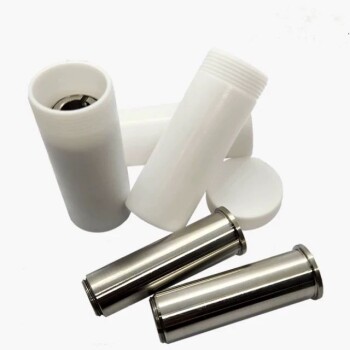
- Custom Machined and Molded PTFE Teflon Parts Manufacturer with PTFE Crucible and Lid
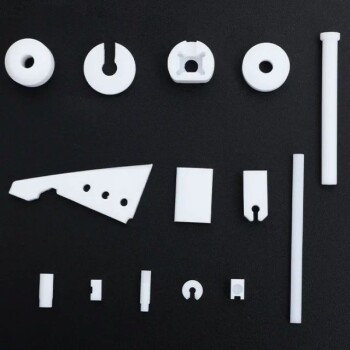
- Custom PTFE Teflon Parts Manufacturer for Non-Standard Insulator Customization
- Custom PTFE Teflon Parts Manufacturer for Hydrothermal Synthesis Reactor Polytetrafluoroethylene Carbon Paper and Carbon Cloth Nano-growth
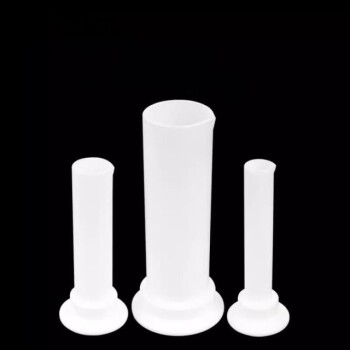
- Custom PTFE Teflon Parts Manufacturer for PTFE Measuring Cylinder 10/50/100ml
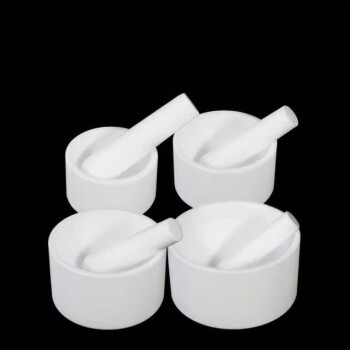
- Custom PTFE Teflon Parts Manufacturer Grinding Bowl
People Also Ask
- Why is a PTFE crucible preferred for plasma etching? Ensure Chemical Integrity and Targeted Action
- What essential consumables are required for laboratory processes? Expert Guide to PTFE, Ceramics, and Crucibles
- Why are PTFE molds used for dental resin specimens? Ensure Pure Samples and Accurate Testing
- What advantages do PTFE molds offer for composite polymer electrolyte casting? Ensure Defect-Free Membrane Fabrication
- Why are PTFE or high-quality steel molds recommended for geopolymer specimens? Ensure Data Integrity and Easy Release