The definitive advantage of using Silicon Nitride (Si3N4) grinding media lies in its unique chemical compatibility with the Silicon Carbide (SiC) matrix, which fundamentally safeguards the purity of the final ceramic. By using Si3N4, you eliminate the risk of introducing "heterogeneous impurities"—foreign contaminants that typically degrade performance—ensuring that any wear debris generated during milling is chemically consistent with the host material.
Core Insight: The choice of grinding media is not just about hardness; it is about chemical synergy. Using Si3N4 transforms inevitable media wear from a contamination risk into a benign integration, securing the structural integrity and uniformity of the final sintered body.
The Critical Role of Chemical Compatibility
Eliminating Foreign Contamination
All ball milling processes result in some degree of media wear due to friction and impact. When using traditional media (such as steel or distinct ceramics), this wear introduces foreign elements that act as heterogeneous impurities.
In the preparation of NITE-SiC, these impurities can ruin the electrical or mechanical properties of the ceramic. Si3N4 media circumvents this because its chemical composition is highly compatible with the SiC powder.
Preserving the Matrix
Because the wear debris from Si3N4 is chemically similar to the SiC matrix, it does not disrupt the sintering process.
Instead of acting as a defect, the abraded material integrates into the mixture. This results in a high-purity final product that maintains the intended stoichiometry and performance characteristics of the NITE-SiC ceramic.
Achieving Microstructural Homogeneity
Uniform Dispersion of Additives
The preparation of NITE-SiC requires mixing nanopowders with oxide additives. Si3N4 media is effective at ensuring these distinct components are mixed to a high degree of homogenization.
This uniformity is critical. It ensures that the sintering aids are evenly distributed throughout the powder, preventing localized defects or uneven densification during the heating phase.
Breaking Agglomerates
Beyond simple mixing, the mechanical energy provided by the grinding media breaks down soft agglomerates—clumps of particles that form naturally.
By reducing these agglomerates, the media ensures a uniform distribution of the microstructure. This leads to a consistent grain size and density across the entire sintered body, which is essential for reliable mechanical performance.
Understanding the Trade-offs
Wear is Inevitable
It is important to recognize that using Si3N4 does not stop wear from happening; it simply mitigates the consequences of that wear.
You must still monitor the size and condition of the media over time. Excessive wear can eventually alter the particle size distribution of your powder, even if the chemical purity remains intact.
Specificity of Application
While Si3N4 is ideal for SiC, it may not be the universal choice for other ceramics (like B4C or MAX phases) where other properties, such as the specific density of Zirconia, might be required to generate sufficient impact energy.
Always match the media to the chemical identity of your primary powder to maximize compatibility.
Making the Right Choice for Your Goal
When preparing NITE-SiC ceramic powders, your choice of media dictates the quality of the final sintered body.
- If your primary focus is Chemical Purity: Choose Si3N4 to ensure that media wear does not introduce foreign, performance-degrading elements into the SiC matrix.
- If your primary focus is Microstructural Uniformity: Rely on Si3N4 to break down agglomerates and disperse oxide additives evenly, ensuring consistent density in the final product.
Ultimately, selecting Si3N4 for NITE-SiC is an investment in the chemical integrity and reliability of your final ceramic component.
Summary Table:
| Feature | Advantage for NITE-SiC Preparation |
|---|---|
| Chemical Compatibility | Eliminates foreign contaminants; wear debris is benign and matrix-compatible. |
| Purity Safeguard | Prevents performance degradation from heterogeneous impurities. |
| Homogenization | Ensures uniform dispersion of oxide additives and nanopowders. |
| Microstructure Control | Effectively breaks down agglomerates for consistent grain size and density. |
| Sintering Integrity | Maintains intended stoichiometry for reliable mechanical performance. |
Elevate Your Material Purity with KINTEK Precision Solutions
Don't let media wear compromise the integrity of your advanced ceramics. KINTEK specializes in high-performance laboratory equipment and consumables designed for the most demanding research environments. Whether you are preparing NITE-SiC powders or developing next-generation battery materials, we provide the tools you need for excellence.
Our extensive portfolio includes:
- Crushing and Milling Systems: High-purity Silicon Nitride, Zirconia, and Alumina grinding media.
- High-Temperature Equipment: Muffle, tube, vacuum, and CVD furnaces for precise sintering.
- Advanced Reactors: High-temperature high-pressure reactors and autoclaves.
- Sample Preparation: Hydraulic pellet presses, sieving equipment, and specialized ceramics/crucibles.
Ready to optimize your milling process? Contact our technical experts today to find the perfect chemical synergy for your laboratory applications and ensure the reliability of your final sintered components.
References
- Chad M. Parish, Yutai Katoh. Microstructure and hydrothermal corrosion behavior of NITE-SiC with various sintering additives in LWR coolant environments. DOI: 10.1016/j.jeurceramsoc.2016.11.033
This article is also based on technical information from Kintek Solution Knowledge Base .
Related Products
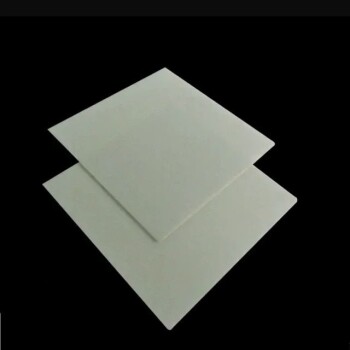
- Precision Machined Silicon Nitride (SiN) Ceramic Sheet for Engineering Advanced Fine Ceramics
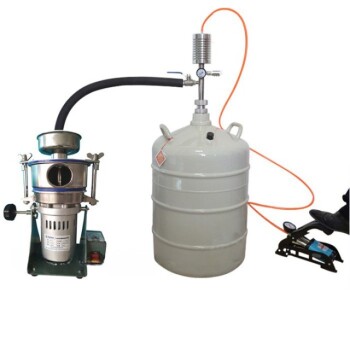
- lab cryogenic grinding use liquid-nitrogen for pulverizing plastic raw materials and heat sensitive materials
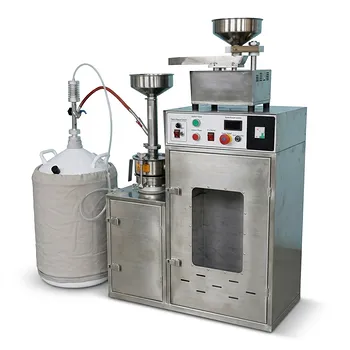
- Liquid Nitrogen Cryogenic Grinder Mill Cryomill with Screw Feeder
- Small Cryogenic Grinder Cryomill Cryogrinder with Liquid Nitrogen for Laboratory Use
People Also Ask
- What are the methods of high temperature ceramic? Master the 3-Stage Process for Durable Components
- What are pure silicon sputtering targets? Precision Source for High-Performance Thin Films
- Can silicon be sputtered? A Guide to RF & DC Methods for Thin Film Deposition
- What is the most commonly used in semiconductors? Discover Why Silicon Dominates Modern Electronics
- Which is the most preferred material for manufacturing of a semiconductor? Silicon's Dominance Explained