The primary advantages of Yttria-Stabilized Zirconia (YSZ) grinding media are its ability to maintain exceptional powder purity and its high milling efficiency. By combining high density with extreme hardness, YSZ effectively refines cermet precursors (such as Al/SiC) while preventing the severe metallic contamination commonly associated with traditional steel grinding media.
Core Takeaway In cermet preparation, the introduction of impurities can ruin material performance. YSZ solves this by offering a chemically inert, high-density milling solution that delivers sufficient kinetic energy to crush hard particles while ensuring the final powder remains free of detrimental metallic contaminants like iron or chromium.
Achieving High Purity in Cermet Synthesis
Eliminating Metallic Contamination
The most critical advantage of YSZ is its ability to prevent the introduction of metallic impurities. Traditional metal grinding media often shed elements like iron or chromium during the milling process.
In the preparation of cermets, such as Aluminum/Silicon Carbide (Al/SiC) composites, these metallic impurities can cause side reactions or degrade performance. YSZ is chemically inert, effectively neutralizing this risk.
Superior Wear Resistance
YSZ media possesses an extremely low wear rate compared to other materials. This ensures that the grinding balls and jars retain their integrity even during long-duration, high-speed impact milling.
Because the media does not degrade easily, the volume of foreign material introduced into the powder batch is kept to an absolute minimum.
Enhancing Milling Efficiency
The Role of High Density
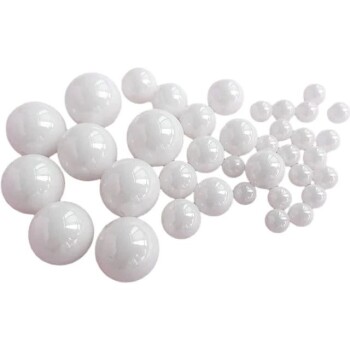
YSZ balls are significantly denser than many alternative ceramic media. This high density translates into greater kinetic energy during the ball milling process.
When the balls collide with the cermet powder, this increased energy allows for more efficient refinement. It ensures the powder reaches the desired particle size distribution more rapidly.
Hardness for Tough Materials
Cermets often contain hard ceramic phases that are difficult to break down. YSZ provides the extreme hardness necessary to crush these hard oxide or carbide components effectively.
This capability is essential for ensuring a uniform mixture and refined microstructure in the final sintered product.
Understanding the Trade-offs
Managing Trace Contamination
While YSZ eliminates metallic contamination, it is not completely immune to wear. As noted in technical analyses, trace amounts of zirconium dioxide (ZrO2) may still be introduced into the mixture.
Compatibility vs. Contamination
However, this trade-off is generally acceptable in cermet production. Unlike conductive metals like iron, trace zirconia is often chemically stable and compatible with the ceramic phase of the cermet, rendering it far less detrimental to the final material properties.
Making the Right Choice for Your Project
The decision to use YSZ largely depends on your tolerance for impurities and the hardness of your precursor materials.
- If your primary focus is material purity: YSZ is the superior choice to prevent the introduction of iron, chromium, and other metallic contaminants that cause side reactions.
- If your primary focus is milling efficiency: The high density of YSZ provides the necessary kinetic energy to refine hard ceramic particles that lighter media cannot effectively process.
Ultimately, YSZ represents the industry standard for high-performance cermet preparation where structural integrity and chemical stability are non-negotiable.
Summary Table:
| Feature | YSZ Grinding Media | Impact on Cermet Preparation |
|---|---|---|
| Material Purity | Chemically inert (no Fe/Cr) | Prevents side reactions and performance degradation |
| Density | High (approx. 6.0 g/cm³) | Increases kinetic energy for faster particle refinement |
| Hardness | Extreme Hardness | Effectively crushes hard oxide and carbide components |
| Wear Resistance | Extremely Low Wear Rate | Ensures minimal media degradation during long milling cycles |
| Compatibility | Trace ZrO2 is stable | Negligible impact on ceramic-phase material properties |
Elevate Your Material Synthesis with KINTEK
Precision in cermet preparation starts with the right grinding media. KINTEK specializes in high-performance YSZ grinding jars and balls, alongside a comprehensive suite of crushing and milling systems designed for the most demanding laboratory applications.
Whether you are refining precursors for Al/SiC composites or advancing battery research, our solutions—including planetary ball mills, high-temperature furnaces, and specialized consumables—ensure your materials remain pure and your processes efficient.
Ready to eliminate metallic contamination and optimize your milling workflow?
Contact KINTEK Today to Consult with Our Experts
References
- María Fernanda Valerio-Rodríguez, Eddie López‐Honorato. Composite coatings from polycarbosilane derived SiC and Al/SiC cermet active fillers as protective barriers against steel corrosion. DOI: 10.1007/s12633-024-03115-4
This article is also based on technical information from Kintek Solution Knowledge Base .
Related Products
- Laboratory Jar Ball Mill with Alumina Zirconia Grinding Jar and Balls
- Laboratory Ball Mill Jar Mill with Metal Alloy Grinding Jar and Balls
- Laboratory Jar Mill with Agate Grinding Jar and Balls
- Laboratory Four-Body Horizontal Jar Mill
- Laboratory Single Horizontal Jar Mill
People Also Ask
- What are the primary functions of using a ball mill for BZCY72 powder? Achieve High Purity and Enhanced Sintering
- In what way does a laboratory ball mill affect material properties when modifying PHBV/pulp fiber composites?
- Why is a laboratory ball mill required for ultra-fine fly ash? Unlock Nano-Scale Adsorption Power
- What is the function of a laboratory ball mill in the preparation of AMMCs? Optimize Dispersion & Grain Refinement
- What is the function of a laboratory ball mill in the pretreatment of waste tire char (WTC)? Optimize Material Reactivity