The primary advantages of utilizing Polytetrafluoroethylene (PTFE) sheets as casting substrates lie in their exceptionally low surface energy and superior chemical resistance. These physical and chemical properties resolve the most critical challenges in solution casting: membrane adhesion and contamination. By ensuring the slurry does not bond to the substrate, PTFE allows for the fabrication of pristine, defect-free composite solid-state electrolyte membranes.
Core Takeaway By leveraging the non-stick and chemically inert nature of PTFE, researchers can eliminate membrane tearing and substrate corrosion during fabrication. This results in PEO/LLZAO/BTO composite membranes that are physically intact, chemically pure, and morphologically uniform.
Mastering the Detachment Process
The Role of Low Surface Energy
Low surface energy is the defining characteristic of PTFE that makes it ideal for casting. High-energy surfaces tend to bond with the slurry as it dries, creating strong adhesion.
Because PTFE has extremely low surface energy, it creates a "non-stick" interface. This ensures that the interaction between the substrate and the composite slurry remains weak throughout the drying process.
Preventing Mechanical Damage
The most fragile stage of membrane fabrication is the peeling phase. If adhesion is too high, the thin electrolyte film will tear or stretch.
PTFE allows the dried composite to be peeled off completely and easily. This effortless detachment preserves the structural integrity of the membrane, preventing micro-cracks or mechanical deformation.
Ensuring Material Purity and Quality
Chemical Corrosion Resistance
Solid-state electrolyte slurries can be chemically reactive. Using a substrate that might react with the solvents or active materials leads to degradation.
PTFE offers superior chemical corrosion resistance. It remains inert when in contact with complex composite slurries, such as those containing PEO, LLZAO, and BTO.
Eliminating Impurities
A corroding substrate introduces foreign particles into the electrolyte. These impurities can hinder ionic conductivity and compromise battery performance.
Because PTFE resists corrosion, it avoids introducing impurities into the mixture. This guarantees that the chemical composition of the final solid-state electrolyte remains pure.
Achieving Uniform Morphology
Surface Smoothness
The topography of the casting substrate directly dictates the surface quality of the final film.
Using PTFE results in membranes with smooth and uniform surfaces. This uniformity is critical for ensuring consistent contact between the electrolyte and the battery electrodes.
Consistency in Composite Slurries
For composite mixtures like PEO/LLZAO/BTO, component distribution is key.
The stable casting surface provided by PTFE ensures that the slurry dries evenly. This leads to a homogenous film structure essential for reliable electrochemical performance.
Understanding Fabrication Constraints
The Necessity of Complete Drying
While PTFE facilitates easy peeling, the timing of this process is critical. The primary reference emphasizes that peeling occurs after drying.
Attempting to remove the membrane before the solvent has fully evaporated may still result in deformation, regardless of the substrate's non-stick properties.
Substrate Preparation
To maintain the benefits of smoothness and uniformity, the PTFE sheet itself must be pristine.
Any scratches or physical defects on the PTFE sheet will transfer to the cast membrane. Therefore, maintaining the quality of the reusable PTFE substrate is just as important as the casting process itself.
Making the Right Choice for Your Goal
Selecting the correct substrate is not just about holding the liquid; it is about defining the quality of the solid film.
- If your primary focus is mechanical yield: Utilize PTFE to minimize the surface energy at the interface, ensuring 100% of your films can be peeled without tearing.
- If your primary focus is electrochemical purity: Rely on PTFE’s chemical inertness to prevent substrate corrosion and the subsequent leaching of impurities into your electrolyte.
By integrating PTFE sheets into your casting protocol, you effectively safeguard both the physical structure and chemical purity of your solid-state electrolyte membranes.
Summary Table:
| Advantage | Benefit for Electrolyte Membranes |
|---|---|
| Low Surface Energy | Ensures non-stick interface and effortless peeling without tearing |
| Chemical Inertness | Prevents substrate corrosion and ensures material purity (no impurities) |
| Surface Smoothness | Produces uniform film morphology for better electrode contact |
| Thermal Stability | Maintains structural integrity during the solvent drying process |
| Reusable Material | Offers a cost-effective and durable solution for lab-scale fabrication |
Elevate Your Battery Research with Precision Equipment
Fabricating defect-free solid-state electrolytes requires more than just high-quality PTFE substrates—it demands a complete ecosystem of precision tools. KINTEK specializes in providing advanced laboratory equipment designed for the most rigorous material science applications.
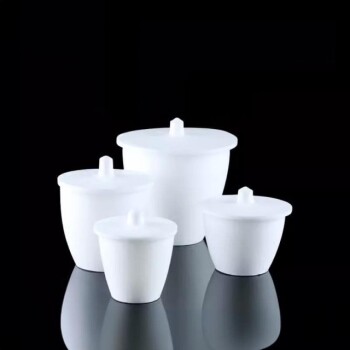
From high-performance PTFE products and crucibles to specialized crushing and milling systems and isostatic hydraulic presses, we offer everything you need to ensure morphological uniformity and chemical purity in your PEO/LLZAO/BTO composites. Our portfolio also includes high-temperature furnaces, ULT freezers, and battery research tools tailored for next-generation energy storage development.
Ready to optimize your casting process? Contact KINTEK today to discover how our high-quality consumables and laboratory solutions can enhance your research yield and experimental accuracy.
Related Products
- Custom PTFE Teflon Parts Manufacturer for Hydrothermal Synthesis Reactor Polytetrafluoroethylene Carbon Paper and Carbon Cloth Nano-growth
- High-Purity Titanium Foil and Sheet for Industrial Applications
- Custom PTFE Teflon Parts Manufacturer for Sampling Filters
- Custom PTFE Teflon Parts Manufacturer for Non-Standard Insulator Customization
- PTFE Electrolytic Cell Electrochemical Cell Corrosion-Resistant Sealed and Non-Sealed
People Also Ask
- What is the function of a PTFE reactor in MXene etching? Ensure Safe, High-Purity MAX Phase Conversion
- Why is a PTFE reactor required for titanium-based nano-ceramic coating solutions? Ensure Chemical Inertness & Purity
- Why must a Polytetrafluoroethylene (PTFE) reactor be used for Ti3C2TX MXene etching? Ensure Safety and Purity
- Why are PTFE reactors preferred for silver phosphate glass testing? Ensure Purity and Kinetic Accuracy
- What are the advantages of using polytetrafluoroethylene (PTFE) liners in hydrothermal synthesis reactors? High Purity