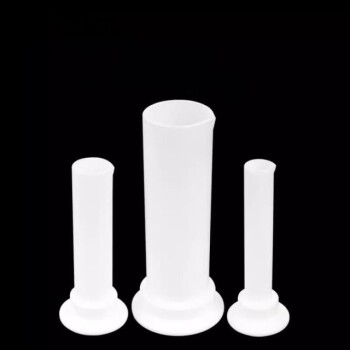
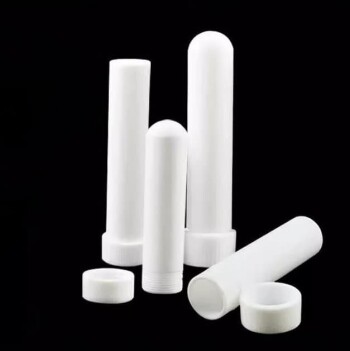
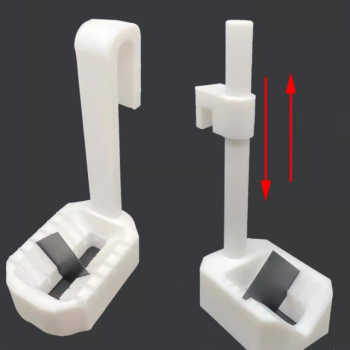
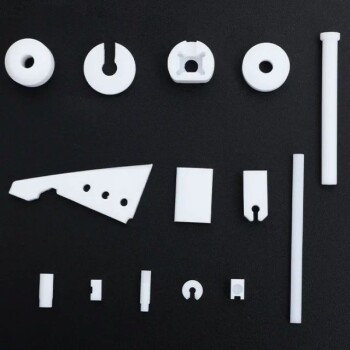
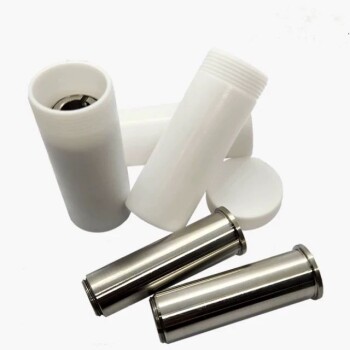
The use of a specialized polytetrafluoroethylene (PTFE) immersion unit is essential for eliminating experimental error during magnetite accumulation simulations. By leveraging the material's chemical inertness and electrical insulation, researchers prevent external galvanic corrosion, ensuring that the test results accurately reflect the interaction between the specimen and the environment.
The core advantage of this specialized unit is its ability to isolate variables. It prevents the testing container from chemically interacting with the specimen while physically forcing magnetite powder against the metal to accurately replicate the harsh conditions of industrial occluded zones.
Eliminating External Variables
To obtain valid corrosion data, the testing environment must not influence the results.
Preventing Galvanic Corrosion
In aggressive testing environments, such as high-temperature EDTA solutions, standard metallic containers can interact with the test subject. PTFE is chemically inert, effectively acting as a neutral barrier. This prevents the container components from forming a galvanic couple with the SA508 specimen, which would otherwise accelerate or alter the corrosion process.
Ensuring Electrical Insulation
Accurate electrochemical simulation requires precise control over electrical pathways. The PTFE material provides superior electrical insulation. This ensures that any measured electrical activity is a result of the specimen's degradation, rather than stray currents passing through the container walls.
Replicating Industrial Conditions
Beyond material properties, the physical design of the specialized unit plays a critical role in simulation accuracy.
Mimicking Occluded Zones
Real-world corrosion in steam generators often occurs in restricted spaces. This unit is specifically designed to simulate the occluded zones found in steam generator tube sheets. It replicates the stagnant conditions that facilitate specific types of localized corrosion.
Controlling Magnetite Density
The geometry of the unit ensures the specimen is tightly surrounded by magnetite powder. This close physical contact is necessary to mimic the dense accumulation environments seen in the field. Without this tight packing, the simulation would fail to represent the actual accumulation loads on the metal surface.
Understanding the Trade-offs
While highly effective, using a specialized PTFE unit requires attention to specific operational details to ensure success.
Reliance on Design Fit
The accuracy of the simulation is heavily dependent on the unit's internal geometry. If the design fails to pack the magnetite tightly against the specimen, the "occluded zone" environment is lost, rendering the simulation invalid.
Material Constraints
PTFE is an excellent insulator but lacks the mechanical rigidity of metals. While effective for high-temperature solutions, the unit components must be handled with care to maintain the structural integrity required for repeated simulations.
Optimizing Your Simulation Strategy
To ensure your corrosion testing delivers actionable data, consider your primary testing objectives:
- If your primary focus is chemical validity: Prioritize the PTFE material properties to eliminate galvanic coupling in high-temperature EDTA solutions.
- If your primary focus is field replication: Ensure the unit's design dimensions force intimate contact between the magnetite powder and the SA508 specimen.
By securing both chemical isolation and geometric precision, you transform a standard immersion test into a high-fidelity simulation of steam generator environments.
Summary Table:
| Key Feature | Benefit for Simulation | Impact on Research Accuracy |
|---|---|---|
| Chemical Inertness | Eliminates galvanic coupling between container and specimen | Prevents external corrosion errors |
| Electrical Insulation | Isolates electrical activity to the test specimen | Ensures precise electrochemical measurements |
| Occluded Zone Design | Replicates stagnant, restricted industrial environments | Mimicks real-world steam generator conditions |
| Dense Powder Packing | Forces intimate contact between magnetite and metal | Accurately simulates field accumulation loads |
Elevate Your Material Research with KINTEK Precision
To achieve valid results in complex corrosion simulations, your lab requires high-performance materials that eliminate experimental variables. KINTEK specializes in advanced laboratory equipment and consumables, providing the high-quality PTFE products, ceramics, and crucibles necessary for demanding high-temperature environments.
Whether you are conducting battery research, processing materials in our high-temperature furnaces, or performing critical corrosion studies in high-pressure reactors and autoclaves, our comprehensive portfolio ensures your simulations are accurate and repeatable.
Ready to optimize your testing environment? Contact us today to discover how KINTEK’s specialized solutions can bring precision to your laboratory work.
References
- Yeong-Ho Son, Do Haeng Hur. Corrosion Behavior of SA508 Coupled with and without Magnetite in EDTA-Based Solutions. DOI: 10.3390/coatings8110377
This article is also based on technical information from Kintek Solution Knowledge Base .
Related Products
- Custom PTFE Teflon Parts Manufacturer for PTFE Measuring Cylinder 10/50/100ml
- Custom PTFE Teflon Parts Manufacturer for Microwave Digestion Tank
- PTFE Electrolytic Cell Electrochemical Cell Corrosion-Resistant Sealed and Non-Sealed
- Custom PTFE Teflon Parts Manufacturer for Centrifuge Tubes
- Custom PTFE Teflon Parts Manufacturer for PTFE Mesh F4 Sieve
People Also Ask
- What are the specific applications of PTFE in micro-batch slug flow systems? Enhance Your Microfluidic Reaction Purity
- Is PTFE corrosion resistant? Discover the Ultimate Chemical Resistance for Your Lab
- How is PTFE utilized for insulation in Alloy 22 corrosion setups? Ensure Signal Purity & Accuracy
- What chemicals are used in heat treatment? Master the Quenching Process for Optimal Metal Properties
- What role do standard pyrometric cones (PCE Cones) play during refractoriness testing? Ensure High-Temp Stability