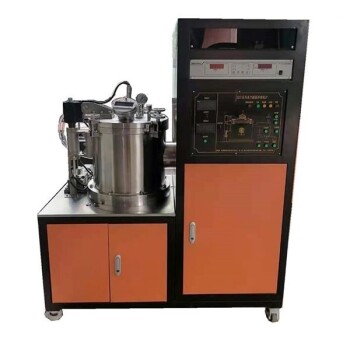
In the context of creep testing between 600ºC and 800ºC, the primary functions of a vacuum tube furnace are to provide exceptional thermal stability and high-vacuum protection. By combining a precision control system with a sealed environment, this equipment maintains temperature fluctuations within a strict 5ºC range while inhibiting the chemical interaction between the material and the atmosphere.
The critical value of this setup is the preservation of the specimen's geometry; by preventing high-temperature oxidation, you ensure the cross-sectional area remains constant, guaranteeing the validity of stress calculations under constant loads.
Precision Thermal Regulation
Maintaining a Stable Environment
Testing materials at elevated temperatures requires more than just reaching a set point; it requires rigorous stability.
The vacuum tube furnace utilizes a precision temperature control system to manage the thermal environment.
Limiting Temperature Fluctuations
Within the critical testing range of 600ºC to 800ºC, this system ensures that temperature deviations do not exceed 5ºC.
This stability is vital for isolating the mechanical response of the material from thermal expansion or contraction artifacts.
Protection Against Oxidation
Inhibiting Surface Reactions
At these elevated temperatures, materials like stainless steel are highly susceptible to oxidation when exposed to air.
The high-vacuum protection feature of the furnace removes oxygen from the testing environment to effectively inhibit these high-temperature oxidation reactions.
Preventing Scale Spalling
Long-term testing carries the risk of oxide layers forming and subsequently flaking off, a process known as scale spalling.
The vacuum environment prevents this phenomenon entirely.
By stopping scale formation, the furnace ensures that the cross-sectional area of the specimen does not unintentionally decrease during the test.
Understanding the Stakes: Data Integrity Risks
The Consequence of Area Reduction
If the vacuum protection is absent or fails, oxidation changes the physical dimensions of the specimen.
Since creep stress is calculated based on force over area, any reduction in the cross-sectional area due to spalling results in an unintended increase in actual stress on the material.
Reliability of Mechanism Analysis
The accuracy of the data is directly tied to the stability of the environment.
Without the protection of a vacuum furnace, the data may reflect environmental degradation rather than true material creep, rendering the creep mechanism analysis unreliable.
Making the Right Choice for Your Goal
To ensure your high-temperature testing yields actionable data, consider these primary objectives:
- If your primary focus is Stress Accuracy: Prioritize high-vacuum protection to prevent scale spalling, ensuring your load-to-area ratio remains constant throughout the test.
- If your primary focus is Mechanism Analysis: Rely on the system's thermal precision (within 5ºC) to ensure that observed deformations are strictly due to creep behavior, not thermal fluctuations.
A vacuum tube furnace is not just a heating element; it is an isolation chamber that guarantees the physical and thermal consistency required for valid materials science.
Summary Table:
| Feature | Function in Creep Testing | Benefit to Material Analysis |
|---|---|---|
| Thermal Stability | Maintains range within ±5ºC | Eliminates thermal expansion artifacts |
| Vacuum Protection | Removes O2 to inhibit oxidation | Prevents scale spalling and area reduction |
| Sealed Environment | Isolates specimen from atmosphere | Ensures observed deformation is purely mechanical |
| Stress Preservation | Maintains constant cross-sectional area | Guarantees validity of stress calculations |
Secure the Accuracy of Your Material Research with KINTEK
Don't let oxidation or thermal fluctuations compromise your creep testing results. KINTEK specializes in advanced laboratory solutions, offering a comprehensive range of high-performance vacuum tube furnaces, muffle furnaces, and high-pressure reactors designed to meet the rigorous demands of materials science.
Whether you are conducting creep mechanism analysis or evaluating durability under extreme conditions, our precision-engineered heating systems and crushing, milling, and hydraulic press solutions provide the consistency your lab requires. Contact KINTEK today to discuss your specific testing parameters and discover how our high-temperature expertise can protect your data integrity.
References
- Sérgio Neves Monteiro, Foluke Salgado de Assis. Creep Parameters and Dislocation Substructure in AISI 316 Austenitic Stainless Steel From 600ºC to 800ºC. DOI: 10.1590/1980-5373-mr-2016-0998
This article is also based on technical information from Kintek Solution Knowledge Base .
Related Products
- Vacuum Sealed Continuous Working Rotary Tube Furnace Rotating Tube Furnace
- Laboratory High Pressure Vacuum Tube Furnace
- Laboratory Vacuum Tilt Rotary Tube Furnace Rotating Tube Furnace
- Split Chamber CVD Tube Furnace with Vacuum Station Chemical Vapor Deposition System Equipment Machine
- 1200℃ Controlled Atmosphere Furnace Nitrogen Inert Atmosphere Furnace
People Also Ask
- What are the advantages of using a rotary tube furnace for MoVOx catalysts? Elevate Uniformity and Crystallinity
- What are the process advantages of using a rotary tube furnace for WS2 powder? Achieve Superior Material Crystallinity
- Why is a vacuum tube furnace with argon protection required for RGO/Cu? Ensure Conductivity and Material Purity
- Why is a rotary tube furnace preferred over a fixed tube furnace for the carbonization of asphaltenes? Superior Quality
- What is a rotary tube furnace? Achieve Superior Uniformity for Powders and Granules