Knowledge What are the primary functions of automated crushing and sieving systems in e-waste recycling? Optimize Material Recovery
Author avatar

Tech Team · Kintek Solution

Updated 2 days ago

What are the primary functions of automated crushing and sieving systems in e-waste recycling? Optimize Material Recovery


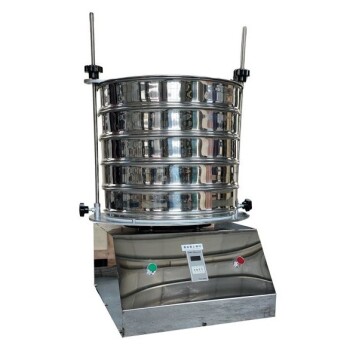
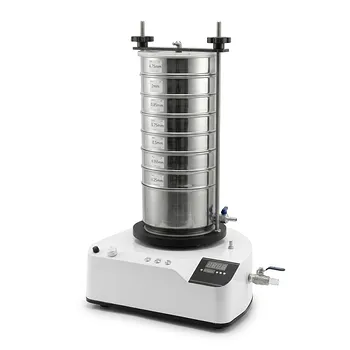
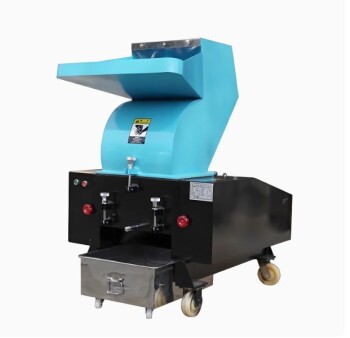
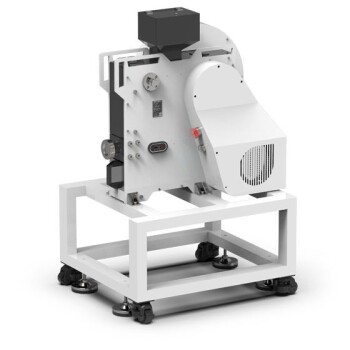
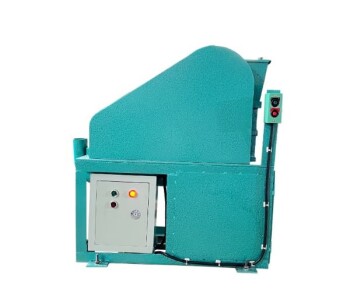
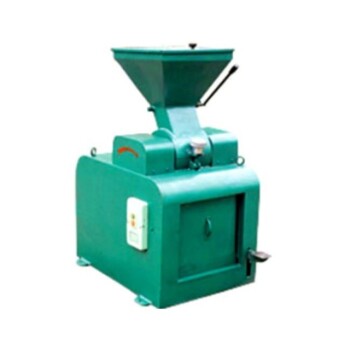
Automated crushing and sieving systems serve as the critical first step in the industrial recycling of electronic waste. They apply mechanical force to physically dismantle complex devices into their fundamental constituents, such as metal frames, circuit boards, and structural plastics. This mechanical breakdown turns whole units into a manageable, processable flow of materials.

Core Takeaway By converting complex electronic assemblies into sorted granules, these systems provide the essential "preliminary separation" required for recovery. They bridge the gap between waste collection and the high-precision refining processes of smelting or polymer recycling.

The Mechanics of Material Liberation

The primary goal of the initial stage is not chemical refinement, but physical liberation. The equipment must break the bonds holding the device together to expose valuable materials.

Mechanical Dismantling

Automated crushing equipment replaces manual disassembly with high-throughput mechanical force. This process shatters the physical structure of the device.

By destroying the device's integrity, the system frees internal components that are otherwise inaccessible. This is the prerequisite for all subsequent sorting steps.

Component Exposure

Once the device is crushed, its materials are no longer a single unit but a mixture of distinct fragments.

This mixture typically contains heavy metal frames, intricate circuit boards, and various plastic casings. The crushing phase ensures these materials are physically detached from one another.

Preliminary Separation and Sorting

After crushing, the material exists as a chaotic mix. The system must then organize this output into streams that downstream machinery can accept.

Granulation and Sizing

Integrated granulation machinery processes the crushed debris into consistent fragment sizes.

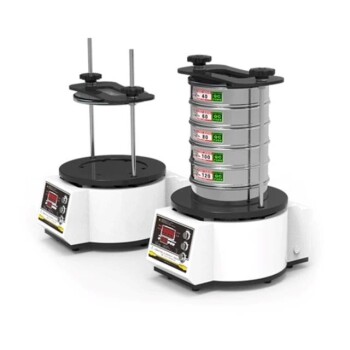
Sieving systems then filter these fragments. Uniform sizing is critical because it ensures that subsequent separation technologies work efficiently.

Mechanical Sorting

The sieving process performs a "preliminary separation" of the mixed fragments.

The system differentiates between metal and plastic components. This sorting produces "qualified raw materials"—inputs that meet the specific purity standards required for the next stage of processing.

Understanding the Process Limitations

While automated crushing is efficient, it is important to understand what it does not do. Misunderstanding this stage can lead to inefficiencies in the broader recycling plant design.

It Is a Preparatory Step

These systems do not produce pure, market-ready metals or plastics. They produce a feedstock.

The output is a "concentrate" or a sorted fraction. It is clean enough to be processed, but it is not a final product.

Reliance on Downstream Technologies

The effectiveness of crushing is defined by the needs of the next machine in the line.

For example, the separated metals are sent to smelting furnaces, and plastics move to specialized recycling systems. If the crushing system fails to liberate materials fully, these downstream processes will suffer from contamination.

Making the Right Choice for Your Operations

To maximize the value of e-waste, you must align your crushing capabilities with your downstream goals.

  • If your primary focus is Metal Recovery: Ensure your crushing system is aggressive enough to fully liberate circuit boards from metal frames to prevent loss during smelting.
  • If your primary focus is Plastic Purity: Prioritize precision in the sieving and granulation stage to minimize metal dust contamination in your plastic stream.

Success in e-waste recycling relies on treating the crushing phase not just as waste disposal, but as the manufacturing of a precise raw material for refining.

Summary Table:

Stage Key Function Primary Outcome
Mechanical Dismantling Applies high-throughput force Shatters device integrity and frees internal components
Material Liberation Physical detachment of parts Separates metal frames, circuit boards, and plastics
Granulation Size reduction Creates consistent fragment sizes for efficient processing
Sieving & Sorting Preliminary separation Organizes debris into qualified raw material streams

Revolutionize Your E-Waste Processing with KINTEK

Maximize the value of your electronic waste recovery with KINTEK’s industry-leading crushing and milling systems and sieving equipment. Whether your goal is high-purity metal recovery or refined plastic granulation, our automated solutions transform complex e-waste into precise, processable raw materials.

As experts in laboratory and industrial material processing, KINTEK provides the robust tools needed to bridge the gap between waste collection and high-precision refining. From high-durability crushers to advanced hydraulic presses and essential consumables like crucibles for smelting, we empower your facility to achieve superior material liberation and operational efficiency.

Ready to optimize your recycling line? Contact us today to find the perfect equipment for your needs!

Related Products

People Also Ask

Related Products

Laboratory Test Sieves and Sieving Machines

Laboratory Test Sieves and Sieving Machines

Precision lab test sieves & sieving machines for accurate particle analysis. Stainless steel, ISO-compliant, 20μm-125mm range. Request specs now!

Laboratory Test Sieves and Vibratory Sieve Shaker Machine

Laboratory Test Sieves and Vibratory Sieve Shaker Machine

Efficiently process powders, granules, and small blocks with a high-frequency vibration sieve. Control vibration frequency, screen continuously or intermittently, and achieve accurate particle size determination, separation, and classification.

Laboratory Vibratory Sieve Shaker Machine for Dry and Wet Three-Dimensional Sieving

Laboratory Vibratory Sieve Shaker Machine for Dry and Wet Three-Dimensional Sieving

KT-VD200 can be used for sieving tasks of dry and wet samples in the laboratory. The screening quality is 20g-3kg. The product is designed with a unique mechanical structure and an electromagnetic vibrating body with a vibration frequency of 3000 times per minute.

Laboratory Vibratory Sieve Shaker Machine Slap Vibrating Sieve

Laboratory Vibratory Sieve Shaker Machine Slap Vibrating Sieve

KT-T200TAP is a slapping and oscillating sieving instrument for laboratory desktop use, with 300 rpm horizontal circular motion and 300 vertical slapping motions to simulate manual sieving to help sample particles pass through better.

Small Lab Rubber Calendering Machine

Small Lab Rubber Calendering Machine

Small lab rubber calendering machine is used for producing thin, continuous sheets of plastic or rubber materials. It is commonly employed in laboratories, small-scale production facilities, and prototyping environments to create films, coatings, and laminates with precise thickness and surface finish.

Vibratory Sieve Shaker Machine Dry Three-Dimensional Vibrating Sieve

Vibratory Sieve Shaker Machine Dry Three-Dimensional Vibrating Sieve

The KT-V200 product focuses on solving common sieving tasks in the laboratory. It is suitable for sieving 20g-3kg dry samples.

Electric Split Lab Cold Isostatic Press CIP Machine for Cold Isostatic Pressing

Electric Split Lab Cold Isostatic Press CIP Machine for Cold Isostatic Pressing

Split cold isostatic presses are capable of providing higher pressures, making them suitable for testing applications that require high pressure levels.

Rubber Vulcanizer Vulcanizing Machine Plate Vulcanizing Press for Lab

Rubber Vulcanizer Vulcanizing Machine Plate Vulcanizing Press for Lab

The Plate vulcanizing press is a kind of equipment used in the production of rubber products, mainly used for the vulcanization of rubber products. Vulcanization is a key step in rubber processing.

Single Punch Electric Tablet Press Machine TDP Tablet Punching Machine

Single Punch Electric Tablet Press Machine TDP Tablet Punching Machine

The electric tablet punching machine is a laboratory equipment designed for pressing various granular and powdery raw materials into discs and other geometric shapes. It is commonly used in pharmaceutical, healthcare products, food, and other industries for small batch production and processing. The machine is compact, lightweight, and easy to operate, making it suitable for use in clinics, schools, laboratories, and research units.

Lab Plastic PVC Calender Stretch Film Casting Machine for Film Testing

Lab Plastic PVC Calender Stretch Film Casting Machine for Film Testing

The cast film machine is designed for the molding of polymer cast film products and has multiple processing functions such as casting, extrusion, stretching, and compounding.

Desktop Fast High Pressure Laboratory Autoclave Sterilizer 16L 24L for Lab Use

Desktop Fast High Pressure Laboratory Autoclave Sterilizer 16L 24L for Lab Use

The desktop fast steam sterilizer is a compact and reliable device used for rapid sterilization of medical, pharmaceutical, and research items.

Lab Blown Film Extrusion Three Layer Co-Extrusion Film Blowing Machine

Lab Blown Film Extrusion Three Layer Co-Extrusion Film Blowing Machine

Lab blown film extrusion is mainly used to detect the feasibility of film blowing of polymer materials and the colloid condition in the materials, as well as the dispersion of colored dispersions, controlled mixtures, and extrudates;

Chemical Vapor Deposition CVD Equipment System Chamber Slide PECVD Tube Furnace with Liquid Gasifier PECVD Machine

Chemical Vapor Deposition CVD Equipment System Chamber Slide PECVD Tube Furnace with Liquid Gasifier PECVD Machine

KT-PE12 Slide PECVD System: Wide power range, programmable temp control, fast heating/cooling with sliding system, MFC mass flow control & vacuum pump.

Desktop Fast Laboratory Autoclave Sterilizer 35L 50L 90L for Lab Use

Desktop Fast Laboratory Autoclave Sterilizer 35L 50L 90L for Lab Use

The desktop fast steam sterilizer is a compact and reliable device used for rapid sterilization of medical, pharmaceutical, and research items. It efficiently sterilizes surgical instruments, glassware, medicines, and resistant materials, making it suitable for various applications.

Automatic Heated Hydraulic Press Machine with Heated Plates for Laboratory Hot Press 25T 30T 50T

Automatic Heated Hydraulic Press Machine with Heated Plates for Laboratory Hot Press 25T 30T 50T

Efficiently prepare your samples with our Automatic Heated Lab Press. With a pressure range up to 50T and precise control, it's perfect for various industries.

Benchtop Laboratory Freeze Dryer for Lab Use

Benchtop Laboratory Freeze Dryer for Lab Use

Premium benchtop laboratory freeze dryer for lyophilization, preserving samples with ≤ -60°C cooling. Ideal for pharmaceuticals & research.

Manual High Temperature Heated Hydraulic Press Machine with Heated Plates for Lab

Manual High Temperature Heated Hydraulic Press Machine with Heated Plates for Lab

The High Temperature Hot Press is a machine specifically designed for pressing, sintering and processing materials in a high temperature environment. It is capable of operating in the range of hundreds of degrees Celsius to thousands of degrees Celsius for a variety of high temperature process requirements.

Laboratory High Pressure Horizontal Autoclave Steam Sterilizer for Lab Use

Laboratory High Pressure Horizontal Autoclave Steam Sterilizer for Lab Use

The horizontal autoclave steam sterilizer adopts the gravity displacement method to remove the cold air in the inner chamber, so that the inner steam and cold air content is less, and the sterilization is more reliable.

Automatic Lab Cold Isostatic Press CIP Machine Cold Isostatic Pressing

Automatic Lab Cold Isostatic Press CIP Machine Cold Isostatic Pressing

Efficiently prepare samples with our Automatic Lab Cold Isostatic Press. Widely used in material research, pharmacy, and electronic industries. Provides greater flexibility and control compared to electric CIPs.

Heated Hydraulic Press Machine with Integrated Manual Heated Plates for Lab Use

Heated Hydraulic Press Machine with Integrated Manual Heated Plates for Lab Use

Efficiently process heat-pressing samples with our Integrated Manual Heated Lab Press. With a heating range up to 500°C, it's perfect for various industries.


Leave Your Message