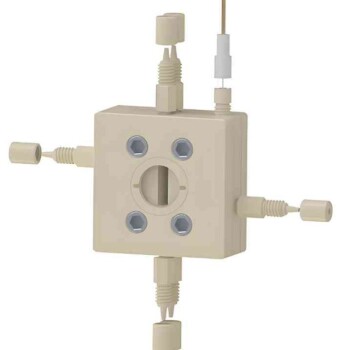
The significant advantage of a Flow-through Reactor in this context is the integration of metal reduction and surface modification into a single, continuous operation. By enabling reducing gases to permeate a layer of solid raw materials, the system facilitates the formation of the iron structure while simultaneously applying a protective carbosiloxane film. This consolidation eliminates the need for multi-stage processing, streamlining the production timeline while improving the fundamental quality of the material.
Core Takeaway The Flow-through Reactor acts as a process intensifier by ensuring that the protective coating bonds chemically to the metal atoms the instant they are generated. This simultaneous processing yields superior coating adhesion and reaction kinetics compared to sequential, multi-step methods.
Mechanics of Process Integration
Single-Unit Efficiency
A Flow-through Reactor removes the distinction between the reduction phase and the coating phase. Instead of transferring materials between different vessels, both the creation of the metal structure and its surface modification occur within one technical unit.
Continuous Gas Permeation
The reactor is designed to allow reducing gases to flow continuously through the layer of solid raw materials. This ensures that reactants are constantly replenished at the reaction site, maintaining high reaction kinetics throughout the synthesis process.
Impact on Material Quality
Simultaneous Formation and Modification
The unique benefit of this reactor type is that the protective carbosiloxane film is applied at the exact moment the metal structure is being formed. The iron particles are never exposed to potential contaminants between synthesis and coating.
Immediate Chemical Bonding
Because the coating is introduced during the generation of metal atoms, it forms a chemical bond with the surface. This differs from physical adsorption, which might occur if the coating were applied in a later, separate step.
Superior Coating Adhesion
The result of this "in-situ" coating process is significantly stronger adhesion of the protective layer. The film is integrated into the surface chemistry of the dispersed iron powder, resulting in a more durable and stable final product.
Operational Considerations
Balancing Simultaneous Reactions
While efficient, this method requires the process conditions to support two distinct phenomena at once: the reduction of the iron and the polymerization or bonding of the carbosiloxane film. The operator must ensure that the gas flow and thermal conditions favor both reactions simultaneously to avoid incomplete reduction or poor coating coverage.
Making the Right Choice for Your Goal
To maximize the benefits of a Flow-through Reactor for dispersed iron powders, consider your specific production targets:
- If your primary focus is Process Efficiency: Leverage the single-unit design to eliminate intermediate handling and transport of reactive metal powders, reducing cycle times.
- If your primary focus is Material Stability: Prioritize this reactor type to ensure the protective film chemically bonds to "fresh" metal surfaces, maximizing resistance to environmental degradation.
By synchronizing the synthesis and protection phases, you transform the coating from a passive addition into an integral part of the material's creation.
Summary Table:
| Feature | Flow-through Reactor Advantage | Impact on Production |
|---|---|---|
| Process Flow | Integrated single-stage reduction & coating | Reduced cycle times & eliminated transfers |
| Coating Method | In-situ chemical bonding (Carbosiloxane) | Superior film adhesion & material stability |
| Gas Dynamics | Continuous gas permeation through solids | High reaction kinetics & constant replenishment |
| Material Integrity | Zero exposure to contaminants between steps | Improved purity & protection of metal atoms |
Elevate Your Material Synthesis with KINTEK Precision
Unlock the full potential of your research and production with KINTEK’s advanced laboratory solutions. Whether you are synthesizing dispersed iron powders or developing next-generation nanomaterials, our high-performance high-temperature high-pressure reactors and autoclaves provide the precise control needed for complex, integrated processes.
From muffle and tube furnaces for thermal treatment to crushing and milling systems for post-synthesis processing, KINTEK offers a comprehensive range of equipment designed for durability and accuracy. Let us help you streamline your workflow and achieve superior material stability.
Ready to optimize your laboratory efficiency? Contact our experts today to find the perfect equipment for your application!
References
- А. Г. Сырков, Н. Р. Прокопчук. Dispersed iron obtaining by the method of solid state hydride synthesis and the problem of hydrophobiсity of metal. DOI: 10.17580/cisisr.2021.01.03
This article is also based on technical information from Kintek Solution Knowledge Base .
Related Products
- Customizable Laboratory High Temperature High Pressure Reactors for Diverse Scientific Applications
- Electrolytic Electrochemical Cell Gas Diffusion Liquid Flow Reaction Cell
- Customizable High Pressure Reactors for Advanced Scientific and Industrial Applications
- Electric Rotary Kiln Small Rotary Furnace Biomass Pyrolysis Plant
- High Pressure Laboratory Autoclave Reactor for Hydrothermal Synthesis
People Also Ask
- How do high-pressure and high-temperature reactors ensure the effective treatment of lignocellulosic wastewater in WAO?
- What equipment is required for high-pressure high-temperature reactions? Master Extreme Chemistry Safely
- How do you control high pressure in a reactor? A Guide to Safe & Stable Operation
- Why is argon better than nitrogen for inert atmosphere? Ensure Absolute Reactivity & Stability
- How does initial oxygen pressure affect the wet oxidation of pharmaceutical sludge? Master Your Oxidation Depth