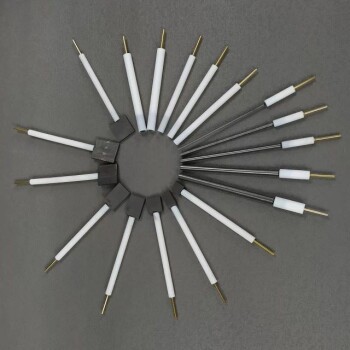
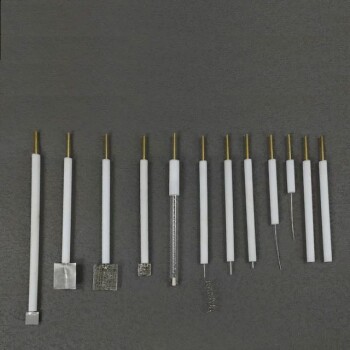
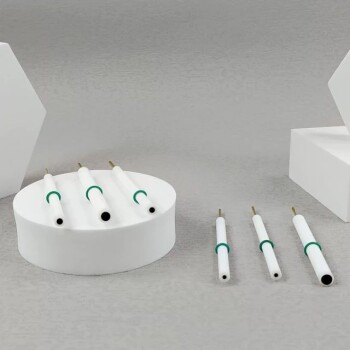
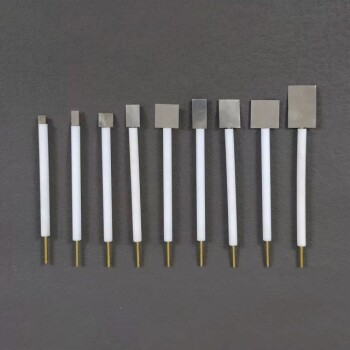
In Electrochemical Impedance Spectroscopy (EIS), the platinum electrode functions as the counter electrode, tasked with completing the electrical circuit to facilitate current flow through the electrolyte. The silver/silver chloride (Ag/AgCl) electrode acts as the reference electrode, providing a fixed, stable potential baseline to ensure accurate voltage measurements at the working electrode.
By separating the current-carrying role from the voltage-measuring role, this system ensures that the chemical reaction being studied is not disturbed. The platinum electrode handles charge transmission without contaminating the solution, while the Ag/AgCl electrode provides the precise "ruler" needed to measure microscopic coating properties.
The Role of the Platinum Counter Electrode
The platinum electrode, often referred to as the auxiliary electrode, is the workhorse of the three-electrode system. Its primary purpose is to enable the flow of electricity without participating in the chemical reaction itself.
Completing the Current Loop
For electrochemical reactions to occur, a complete circuit is required. The platinum electrode serves as the conduit for this current, allowing electrons to flow between the electrolyte and the external circuit.
It balances the reaction occurring at the working electrode (the sample being tested) to maintain charge neutrality within the system.
Ensuring Chemical Inertness
Platinum is selected specifically for its high chemical stability. Unlike other metals, it does not undergo oxidative dissolution or react easily with the electrolyte during the testing process.
This inertness is vital because it ensures the electrode does not introduce impurity ions into the solution, which would otherwise contaminate the electrolyte and skew the impedance data.
Facilitating Efficient Charge Transfer
Platinum possesses excellent electrical conductivity. This property ensures the stable and efficient transmission of the test current through the electrolyte solution.
By minimizing resistance at the counter electrode itself, the system ensures that the measured impedance reflects the properties of the sample (such as coating resistance), rather than artifacts from the equipment.
The Function of the Ag/AgCl Reference Electrode
The silver/silver chloride electrode plays a passive but critical role. It does not carry significant current; instead, it acts as a constant standard for measurement.
Providing a Stable Potential Standard
The Ag/AgCl electrode maintains a known and highly stable electrochemical potential. It serves as the "zero point" or fixed reference against which the potential of the working electrode is measured.
Without this stable reference, it would be impossible to distinguish whether voltage fluctuations are caused by the sample or by instability in the measurement tools.
Ensuring Data Accuracy and Comparability
By providing a standardized potential, the Ag/AgCl electrode ensures that the potential fluctuations measured on the surface of the working electrode are objectively accurate.
This standardization allows researchers to compare data across different experiments and conditions with confidence, ensuring reproducibility in analyzing properties like double-layer capacitance.
Understanding the Trade-offs
While this setup is the standard for high-precision EIS, understanding the limitations and potential pitfalls is essential for valid results.
Reference Electrode Impedance
Ideally, a reference electrode should have zero impedance, but in reality, it has a finite resistance. If the Ag/AgCl electrode is damaged or the internal solution is depleted, its potential can drift.
This drift effectively "moves the ruler" during the experiment, leading to erroneous calculations of the working electrode's potential and invalidating long-duration tests.
Counter Electrode Surface Area
While platinum is inert, the geometry of the counter electrode matters. If the platinum surface area is too small relative to the working electrode, it can become a bottleneck for current flow.
This can limit the system's ability to drive the necessary reactions, particularly at high frequencies, potentially masking the true behavior of the coating or material being tested.
Making the Right Choice for Your Goal
To obtain the best possible data from your EIS setup, consider the specific requirements of your experiment.
- If your primary focus is Precision and Reproducibility: Ensure your Ag/AgCl reference electrode is well-maintained and saturated, as this stability is the foundation of comparable voltage measurements.
- If your primary focus is Electrolyte Purity and Stability: Rely on high-purity platinum for the counter electrode to prevent the release of ions that could interfere with sensitive surface reactions.
The success of your impedance spectroscopy relies on the platinum electrode reliably driving current without reaction, while the Ag/AgCl electrode quietly maintains the standard of truth.
Summary Table:
| Electrode Type | Primary Function | Key Property | Role in EIS |
|---|---|---|---|
| Platinum (Counter) | Current Completion | Chemical Inertness | Facilitates current flow without contaminating the electrolyte. |
| Ag/AgCl (Reference) | Potential Standard | High Stability | Provides a fixed 'zero point' for accurate voltage measurements. |
Elevate Your Electrochemical Research with KINTEK
Precision in Electrochemical Impedance Spectroscopy starts with high-quality components. At KINTEK, we specialize in providing researchers with premium laboratory equipment and consumables designed for demanding applications.
Whether you need high-purity electrolytic cells and electrodes (including platinum and Ag/AgCl), high-temperature furnaces, or specialized battery research tools, our portfolio is engineered for accuracy and durability. We help you eliminate measurement artifacts and ensure reproducibility in every test.
Ready to upgrade your lab's performance? Contact us today to find the perfect solution for your research!
References
- Felipe de Aquino Lima, Jorge David Alguiar Bellido. Corrosion resistance evaluation of carbon steel plates protected by zirconium and titanium nanoceramic coatings. DOI: 10.33448/rsd-v9i3.2715
This article is also based on technical information from Kintek Solution Knowledge Base .
Related Products
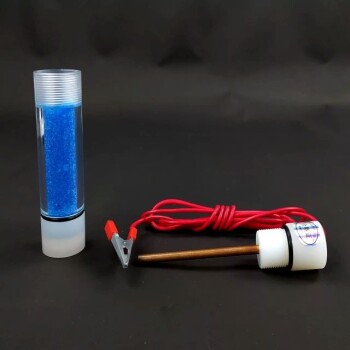
- Reference Electrode Calomel Silver Chloride Mercury Sulfate for Laboratory Use
- Copper Sulfate Reference Electrode for Laboratory Use
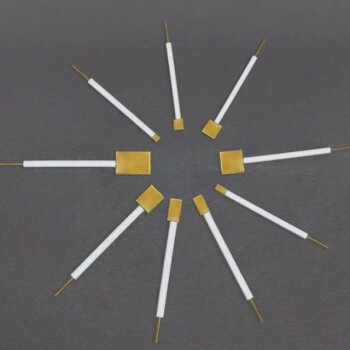
- Gold Electrochemical Sheet Electrode Gold Electrode
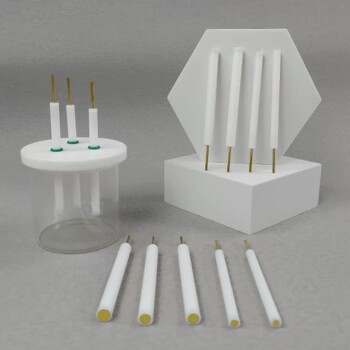
- Gold Disc Electrode
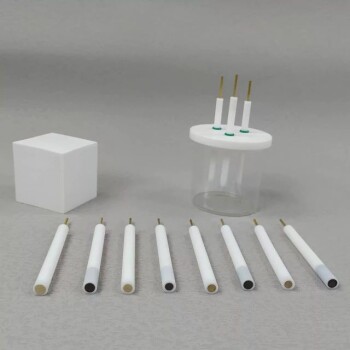
- Metal Disc Electrode Electrochemical Electrode
People Also Ask
- What is the function of a reference electrode? Master Precision in Three-Electrode Reactor Reconstruction
- What is the recommended maintenance for the filling solution of a reference electrode? A Guide to Stable & Accurate Readings
- Which electrode is used as a ground reference? Master the Key to Accurate Electrochemical Measurements
- What is the reference electrode in potentiometry? The Key to Stable & Accurate Measurements
- Which electrode is used as a reference? A Guide to Accurate Electrochemical Measurements