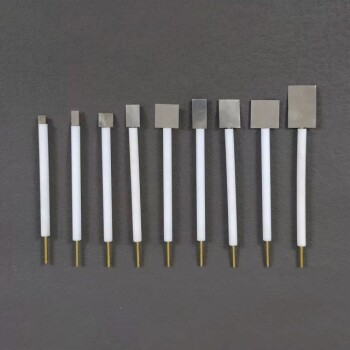
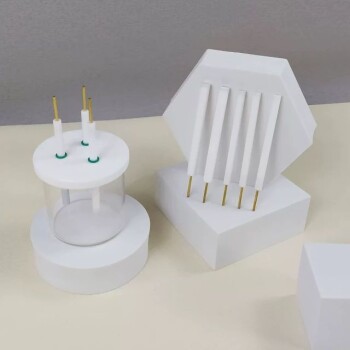
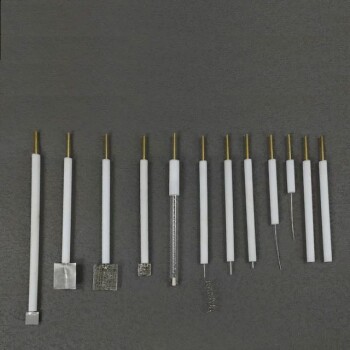
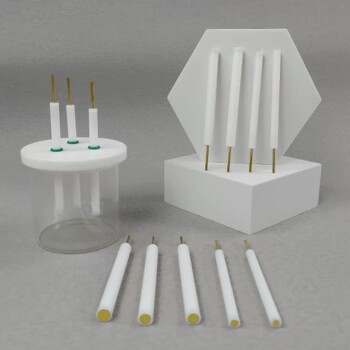
In a three-electrode electrochemical testing cell, the platinum electrode functions as the Counter (or Auxiliary) Electrode, while the Silver/Silver Chloride (Ag/AgCl) electrode serves as the Reference Electrode.
The platinum electrode acts as the conduit for electrical current, completing the circuit required to drive the reaction. Conversely, the Ag/AgCl electrode provides a stable, unchanging voltage standard against which the Working Electrode is measured, ensuring data accuracy.
Core Takeaway The three-electrode setup isolates the flow of current from the measurement of voltage. The platinum electrode handles the heavy lifting of current transmission, allowing the Ag/AgCl electrode to remain a passive, stable reference point, ensuring the test results reflect only the behavior of your sample (the Working Electrode).
The Platinum Electrode: The Current Carrier
In this configuration, the high-purity platinum electrode is designated as the Counter Electrode (CE), also known as the auxiliary electrode. Its primary role is to facilitate the flow of electricity without influencing the chemistry of the test.
Completing the Current Loop
For an electrochemical reaction to occur, a closed electrical circuit is necessary. The platinum electrode provides the path for the polarization current to flow through the electrolyte and interact with the Working Electrode (the sample being tested).
Why Platinum is Critical
Platinum is selected for this role due to its exceptional chemical inertness and high electrical conductivity. Because it acts as a highly conductive carrier for charge exchange, it allows current to pass freely.
Preventing Interference
Crucially, the platinum electrode does not participate in the chemical reaction itself. It remains stable and does not dissolve or polarize significantly. This ensures that the counter electrode does not introduce "noise" or side reactions that could distort the data collected from the Working Electrode.
The Ag/AgCl Electrode: The Measurement Standard
The Silver/Silver Chloride electrode functions as the Reference Electrode (RE). Unlike the platinum electrode, its purpose is not to carry the main test current, but to provide a fixed baseline.
A Stable Reference Point
The Ag/AgCl electrode maintains a known, constant electrical potential (often in a saturated potassium chloride solution). It acts as the "zero point" or standard ruler for voltage.
Ensuring Measurement Accuracy
Because the potential of the Ag/AgCl electrode does not fluctuate, any change in voltage measured by the electrochemical workstation can be attributed entirely to the Working Electrode.
Standardization
This electrode allows for objective comparability. By using a standardized Ag/AgCl reference, the potential response of materials—such as the corrosion of stainless steel or the resistance of nano-coatings—can be precisely analyzed and compared against data from other experiments.
Understanding the Trade-offs
While this setup is the industry standard for precision, understanding the limitations of each component is vital for experimental success.
Counter Electrode Surface Area
While platinum is inert, the surface area of the Counter Electrode affects current distribution. If the platinum electrode is too small compared to the Working Electrode, it can limit the current flow, acting as a bottleneck that artificially constrains the reaction rate on your sample.
Reference Electrode Stability
The Ag/AgCl electrode is only effective if its internal chemistry remains undisturbed. It must be kept in the appropriate electrolyte solution (usually saturated KCl) to maintain its potential. If the internal solution becomes contaminated or dries out, the "standard" drifts, rendering precise potential measurements impossible.
Electrical Isolation
The system relies on the Reference Electrode carrying negligible current. If the instrument forces current through the Ag/AgCl electrode, it will polarize, losing its stability as a reference point. The platinum electrode exists specifically to prevent this by diverting the current load.
Making the Right Choice for Your Goal
To ensure your electrochemical data is valid, you must verify that each electrode is performing its distinct function correctly.
- If your primary focus is reaction kinetics (Current): Ensure your Platinum Counter Electrode has a surface area larger than your Working Electrode to prevent current throttling.
- If your primary focus is thermodynamic properties (Potential): Verify the integrity of your Ag/AgCl Reference Electrode and its filling solution to guarantee the voltage baseline is accurate.
By allowing the platinum electrode to drive the current and the Ag/AgCl electrode to define the voltage, you achieve the isolation necessary for rigorous scientific measurement.
Summary Table:
| Electrode Type | Specific Role | Key Material Property | Function in Cell |
|---|---|---|---|
| Platinum (Pt) | Counter / Auxiliary | Chemically inert & highly conductive | Carries current loop to drive the reaction without interfering. |
| Ag/AgCl | Reference | Stable potential baseline | Provides a fixed voltage standard to measure the Working Electrode. |
Elevate Your Electrochemical Research with KINTEK
Precision in the lab starts with high-quality components. KINTEK specializes in premium laboratory equipment, offering high-performance platinum counter electrodes and Ag/AgCl reference electrodes designed for maximum stability and accuracy. Whether you are performing battery research, corrosion testing, or material characterization, our comprehensive range of electrolytic cells, electrodes, and high-temperature reactors ensures your data is reliable and reproducible.
Ready to optimize your testing setup? Contact our technical experts today to find the perfect electrochemical solutions for your laboratory needs!
References
- К. К. Кадыржанов, Anatoli I. Popov. Development of a method for directed modification of thin-film nitride coatings to enhance resistance to corrosion processes of steels and alloys. DOI: 10.51301/ejsu.2023.i4.03
This article is also based on technical information from Kintek Solution Knowledge Base .
Related Products
- Platinum Sheet Electrode for Laboratory and Industrial Applications
- Rotating Platinum Disk Electrode for Electrochemical Applications
- Platinum Sheet Electrode for Battery Lab Applications
- Platinum Auxiliary Electrode for Laboratory Use
- RRDE rotating disk (ring disk) electrode / compatible with PINE, Japanese ALS, Swiss Metrohm glassy carbon platinum
People Also Ask
- What is a common use for a platinum sheet electrode? As a Reliable Counter Electrode in Electrochemical Cells
- What is the most critical guideline for immersing a platinum sheet electrode in an electrolyte? Ensure Accurate Electrochemical Measurements
- What is the purity of the platinum sheet in a platinum sheet electrode? The Key to Reliable Electrochemical Data
- What is the expected lifespan of a platinum sheet electrode? Maximize Your Electrode's Service Life
- What are the available specifications for platinum sheet electrodes? Find the Perfect Fit for Your Electrochemical Needs