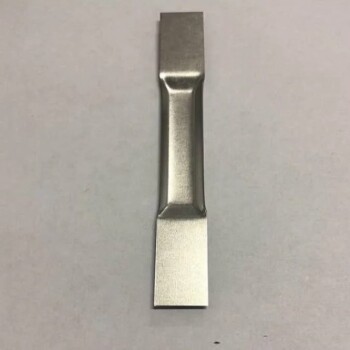
In a Hot Filament Chemical Vapor Deposition (HFCVD) reactor, the tungsten filament serves a dual purpose as both a thermal engine and a chemical catalyst. By conducting electrical current to reach extreme temperatures of approximately 2100°C, the filament creates the necessary energy to physically break down gas molecules. This process converts stable precursor gases into the volatile atomic hydrogen and carbon-reactive clusters required to synthesize diamond.
The tungsten filament is not merely a passive heating element; it is an active participant in the chemical reaction, directly catalyzing the dissociation of molecular gases into the specific atomic species required for deposition.
The Mechanisms of Action
To understand the filament's role, we must look at how it manipulates energy and matter within the vacuum chamber.
Thermal Activation
The filament functions primarily through resistive heating.
When an electrical current is applied, the high-purity tungsten resists the flow of electricity, generating intense heat.
This drives the filament temperature to roughly 2100°C, a critical threshold for activating the chemical vapor deposition process.
Catalytic Dissociation
Beyond simple heating, the tungsten surface acts as a catalyst.
It lowers the activation energy required to break chemical bonds within the gas mixture.
This allows stable molecules to split apart more efficiently than they would via heat alone.
Creating the Deposition Environment
The ultimate goal of the filament is to maintain a specific "soup" of reactive particles near the substrate.
Generating Atomic Hydrogen
The most critical specific function is the dissociation of molecular hydrogen ($H_2$).
The hot tungsten surface breaks these molecules into atomic hydrogen (H•).
Maintaining a high concentration of atomic hydrogen is essential, as it stabilizes the diamond surface during growth.
Activating Carbon Species
Simultaneously, the filament excites the carbon source gases (typically methane or similar hydrocarbons).
The thermal and catalytic energy decomposes these gases into hydrocarbon radical species.
These reactive clusters are the "building blocks" that travel to the substrate to form the diamond film.
Understanding the Operational Trade-offs
While the tungsten filament is effective, relying on such high temperatures creates specific operational challenges.
Filament Stability
To function correctly, the filament must maintain a consistent 2100°C.
Fluctuations in electrical current or gas pressure can alter this temperature, immediately changing the chemical composition of the deposition environment.
Material Limitations
The filament is subjected to a harsh chemical environment while extremely hot.
Over time, the interaction with carbon gases can alter the physical properties of the tungsten itself.
This requires careful monitoring to ensure the filament continues to produce the necessary concentrations of reactive species without degrading.
Making the Right Choice for Your Goal
When operating or designing an HFCVD system, your management of the filament dictates the quality of the output.
- If your primary focus is Deposition Rate: Prioritize maintaining the filament temperature at the upper end of the safe range (near 2100°C) to maximize the production of carbon radicals.
- If your primary focus is Film Quality: Focus on the stability of the power supply to ensure a constant, non-fluctuating production of atomic hydrogen, which etches away non-diamond carbon.
By controlling the filament's temperature and stability, you directly control the chemistry of diamond growth.
Summary Table:
| Function Type | Mechanism | Role in Deposition |
|---|---|---|
| Thermal Activation | Resistive heating up to 2100°C | Provides the energy needed to physically break down gas molecules. |
| Catalytic Dissociation | Surface catalysis | Lowers activation energy to split stable molecules more efficiently. |
| Hydrogen Generation | $H_2$ to H• conversion | Produces atomic hydrogen to stabilize the diamond surface during growth. |
| Carbon Activation | Hydrocarbon decomposition | Creates reactive carbon radical species as building blocks for the film. |
Elevate Your Material Research with KINTEK Precision
Achieving the perfect "chemical soup" for diamond synthesis requires more than just heat—it requires high-performance equipment that ensures stability and purity. KINTEK specializes in advanced laboratory solutions, including high-temperature vacuum furnaces, CVD systems, and essential consumables like tungsten filaments and ceramics.
Whether you are focusing on high deposition rates or superior film quality, our technical team is ready to help you optimize your HFCVD setup. From high-temperature high-pressure reactors to precision cooling solutions and crushing systems, we provide the tools needed for groundbreaking research.
Ready to refine your deposition process? Contact KINTEK experts today for a custom consultation
References
- William de Melo Silva, Deílson Elgui de Oliveira. Fibroblast and pre-osteoblast cell adhesive behavior on titanium alloy coated with diamond film. DOI: 10.1590/1980-5373-mr-2016-0971
This article is also based on technical information from Kintek Solution Knowledge Base .
Related Products
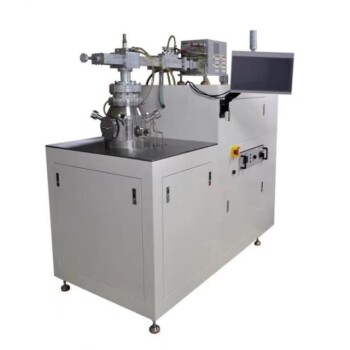
- HFCVD Machine System Equipment for Drawing Die Nano-Diamond Coating
- Customer Made Versatile CVD Tube Furnace Chemical Vapor Deposition Chamber System Equipment
- Split Chamber CVD Tube Furnace with Vacuum Station Chemical Vapor Deposition System Equipment Machine
- Microwave Plasma Chemical Vapor Deposition MPCVD Machine System Reactor for Lab and Diamond Growth
- Cylindrical Resonator MPCVD Machine System Reactor for Microwave Plasma Chemical Vapor Deposition and Lab Diamond Growth
People Also Ask
- What is the full form of HFCVD? A Guide to Hot Filament Chemical Vapor Deposition
- What are the disadvantages and challenges of the HFCVD method? Overcome Growth Limits and Filament Issues
- What is the function of tungsten filaments in HFCVD? Powering Diamond Film Synthesis with Thermal Excitation
- Why is Chemical Vapor Deposition (CVD) equipment uniquely suited for constructing hierarchical superhydrophobic structures?
- What is the chemical vapor deposition growth process? Build Superior Thin Films from the Atom Up