The technical advantage of graphite or carbon crucibles with lids lies in their ability to create a self-contained "micro-chamber" that maintains a spontaneous CO/CO₂ equilibrium. This configuration achieves extremely low oxygen partial pressure and efficient electron injection reduction at temperatures between 1000°C and 1300°C. By leveraging the reactive nature of the crucible material itself, researchers and engineers can eliminate the need for expensive external reducing gas mixtures while ensuring a clean sample surface.
The core advantage of utilizing lidded graphite crucibles is the transition from an externally managed reduction atmosphere to a passive, self-regulating "micro-environment" that ensures high thermal uniformity and chemical purity.
The Creation of a Self-Sustaining "Micro-Chamber"
Achieving Spontaneous CO/CO₂ Equilibrium
When sealed with a lid, a graphite or carbon crucible generates a specific chemical equilibrium between carbon monoxide and carbon dioxide. This reaction naturally scavenges residual oxygen, creating an environment with extremely low oxygen partial pressure.
This "micro-chamber" effect is critical for processes like the reduction of C12A7 or the conversion of metal oxides. It ensures that the reduction happens consistently across the sample surface without relying on the flow dynamics of a furnace's primary atmosphere.
Eliminating External Reducing Gases
One of the most significant operational advantages is the elimination of external reducing gas mixtures. Ordinary crucibles often require a constant flow of hydrogen or forming gas to prevent oxidation.
Lidded graphite crucibles perform this function autonomously by using the carbon from the crucible walls to maintain the reducing state. This reduces both the operational cost and the safety risks associated with handling flammable or specialized gas cylinders.
Superior Thermal and Structural Performance
High Thermal Conductivity and Isothermal Stability
Graphite is renowned for its exceptional thermal conductivity, which far exceeds that of standard ceramic or clay crucibles. This property ensures a uniform thermal field, preventing hot spots that can lead to uneven reduction or sample degradation.
The material also acts as a rapid preheating device. This allows samples to reach the desired reaction temperature faster, facilitating isothermal reduction and improving the repeatability of high-temperature experiments.
High-Temperature Refractoriness
While ordinary crucibles may soften or react at extreme temperatures, high-purity graphite remains structurally stable exceeding 1500°C. Its high refractoriness allows it to simulate industrial environments, such as a coke bed, without melting or losing its shape.
This stability is essential for processes involving molten materials, such as aluminum or steel dust. The crucible serves as a durable container that resists thermal shock during frequent heating and cooling cycles.
Material Purity and Erosion Resistance
Preventing Material Contamination
Specially treated, high-purity graphite has low ash content, which prevents volatile substances from contaminating the sample. In processes like graphene synthesis or cellulose carbonization, this ensures the chemical inertness required for high-purity yields.
Unlike ordinary crucibles that might shed particles or react with the charge, high-purity graphite prevents the infiltration of metal impurities. This is vital for maintaining the integrity of porous carbon or specialized coatings.
Low Porosity and Erosion Resistance
Advanced manufacturing processes allow for graphite crucibles with high bulk density and low porosity. This physical structure resists erosion from molten metals and gas particles, which would typically penetrate and degrade an ordinary crucible.
Many of these crucibles also feature a polished mirror surface. This reduces the physical "grip" of the melt on the crucible walls, making sample recovery easier and extending the service life of the vessel.
Understanding the Trade-offs
Susceptibility to Oxidation
The primary drawback of graphite is that it will oxidize rapidly in an oxygen-rich atmosphere at high temperatures. While the lid protects the internal sample, the exterior of the crucible will degrade unless the furnace itself is purged with an inert gas like Argon or Nitrogen.
Temperature-Specific Suitability
At lower temperatures (e.g., below 500°C), the chemical advantages of graphite are less pronounced. For tasks like biomass pyrolysis or elemental ash analysis, ceramic crucibles may be preferable because they do not participate in the reaction and offer better stability in oxidizing environments.
Cost and Machining Requirements
High-purity, machined graphite crucibles represent a higher initial investment than mass-produced clay or basic ceramic alternatives. The need for exact machining to ensure a tight lid fit adds to the complexity of procurement compared to "off-the-shelf" ordinary crucibles.
Selecting the Right Tool for Your Process
How to Apply This to Your Project
Choosing between graphite and ordinary crucibles depends heavily on your target atmosphere and temperature range.
- If your primary focus is cost-effective reduction: Use lidded graphite crucibles to eliminate the need for expensive external reducing gases.
- If your primary focus is high-purity material synthesis: Invest in high-purity, low-ash graphite to prevent contamination and ensure a mirror-finish sample surface.
- If your primary focus is low-temperature analysis (under 500°C): Stick with ceramic crucibles to ensure chemical inertness and prevent the vessel from participating in the reaction.
- If your primary focus is molten metal processing: Select high-density, low-porosity graphite to resist erosion and maximize the lifespan of the crucible.
By mastering the "micro-chamber" effect of lidded graphite, you can achieve precise, repeatable reduction results with significantly less infrastructure.
Summary Table:
| Feature | Lidded Graphite/Carbon Crucible | Ordinary Ceramic/Clay Crucible |
|---|---|---|
| Atmosphere Control | Self-regulating "micro-chamber" (CO/CO₂ balance) | Dependent on furnace atmosphere |
| Reducing Gas Need | Eliminates external reducing gases | Often requires H₂ or forming gas |
| Thermal Uniformity | High conductivity; prevents hot spots | Lower conductivity; potential uneven heating |
| Max Temperature | Stable up to and exceeding 1500°C | Varies; may soften at high temps |
| Purity | High-purity, low-ash, erosion-resistant | Risk of material shedding or reaction |
| Best Use Case | Controlled reduction, molten metals | Low-temp analysis (<500°C), oxidation |
Elevate Your Material Synthesis with KINTEK Precision
Achieve uncompromising purity and thermal stability in your controlled atmosphere processes. KINTEK specializes in high-performance laboratory equipment, providing the essential tools researchers need for advanced material science.
Whether you require high-purity graphite crucibles, high-temperature furnaces (muffle, vacuum, or atmosphere), or specialized high-pressure reactors and autoclaves, our portfolio is designed to meet the most rigorous industrial and laboratory standards. From ceramics and crucibles to battery research tools and hydraulic presses, we deliver the reliability your experiments demand.
Ready to optimize your reduction process and reduce operational costs?
Contact KINTEK Today to Find Your Solution
References
- Xiangyu Zhang, Tian‐Nan Ye. Recent progress and prospects in active anion-bearing C12A7-mediated chemical reactions. DOI: 10.1039/d3ta02422a
This article is also based on technical information from Kintek Solution Knowledge Base .
Related Products
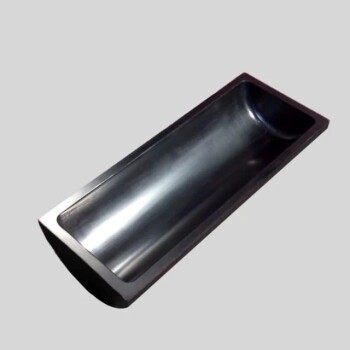
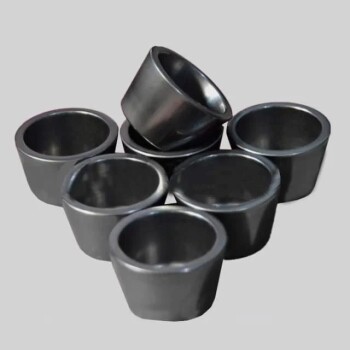
- High Purity Pure Graphite Crucible for Evaporation
- Carbon Graphite Boat -Laboratory Tube Furnace with Cover
- High Purity Pure Graphite Crucible for Electron Beam Evaporation
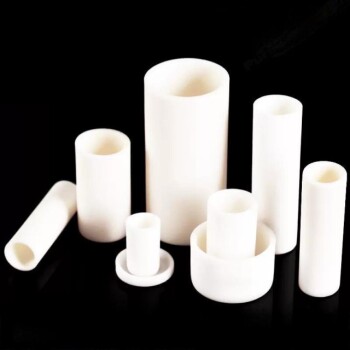
- Engineering Advanced Fine Ceramics Alumina Al2O3 Crucible With Lid Cylindrical Laboratory Crucible
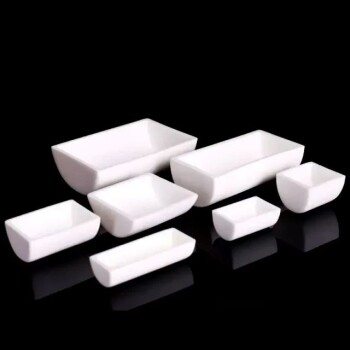
- Alumina Al2O3 Ceramic Crucible Semicircle Boat with Lid for Engineering Advanced Fine Ceramics
People Also Ask
- Why are high-purity graphite crucibles preferred for sulfide solid electrolytes? Achieve Superior Material Purity
- Why is a high-purity graphite crucible required for Chromel-TaC composites? Ensure Peak Purity at 1400°C
- What role do high-purity graphite crucibles play in molten salt corrosion research? Ensure Reactor-Grade Precision
- Why are high-purity graphite crucibles used for magnesium distillation? Ensure 3N8 Purity & Thermal Stability
- Why is a high-purity graphite crucible ideal for nitrogen-doped graphene at 1500 °C? Maximize Purity and Stability