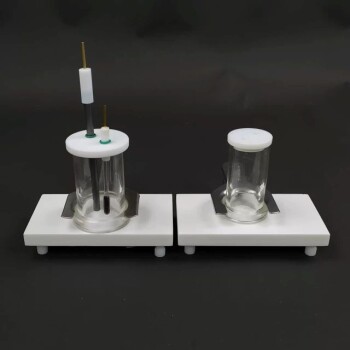
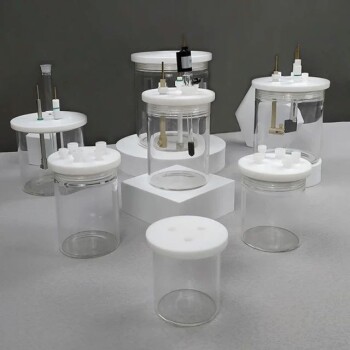
The primary technical advantages of using Polytetrafluoroethylene (PTFE) in electrochemical microfluidic reaction cells are its exceptional chemical resistance and its ability to define precise structural geometry. Specifically, PTFE prevents corrosion from aggressive reaction byproducts while ensuring leak-proof sealing and uniform fluid flow, which are critical for experimental reproducibility.
In the volatile environment of electrochemical microfluidics, component failure often stems from chemical degradation. PTFE addresses this deep need by serving as a chemically inert barrier against aggressive oxidants, while simultaneously acting as a precision-engineered scaffold to control fluid dynamics.
Chemical Resilience in Harsh Environments
Withstanding Aggressive Oxidants
Electrochemical reactions frequently generate highly corrosive byproducts. PTFE is essential because of its superior chemical inertness.
It effectively withstands corrosion from high concentrations of substances like active chlorine and hydrogen peroxide, which degrade lesser materials.
Resisting Free Radical Attack
Beyond standard acids and bases, electrochemical processes often produce various free radicals.
PTFE components maintain their integrity even when exposed to these reactive species, ensuring the reaction cell remains uncontaminated and structurally sound over time.
Structural Integrity and Fluid Dynamics
Defining Precise Reaction Spaces
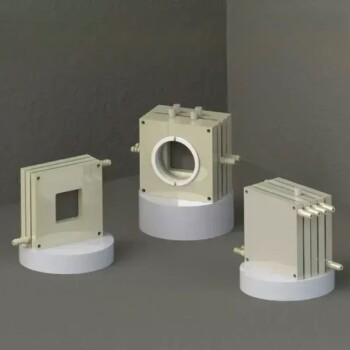
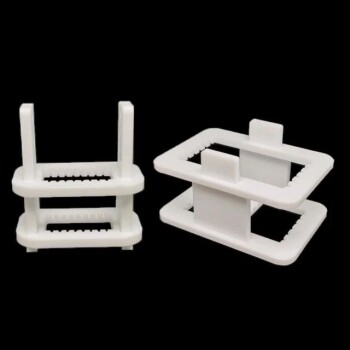
The physical architecture of a microfluidic cell is as important as its chemistry. PTFE flow-path frames are used to provide a specific, stable physical space for the reaction to occur.
Ensuring Uniform Fluid Distribution
By maintaining rigid channel geometry, PTFE frames ensure that fluids are distributed uniformly across the cell.
This uniformity is vital for consistent reaction rates and preventing "dead zones" where reactants might stagnate.
Leak Prevention and Safety
The sealing capability of PTFE gaskets is the primary defense against system failure.
These components prevent leaks within the microfluidic cell, which protects both the operator and the surrounding equipment, thereby maintaining the safety of the system’s operation.
Understanding the Trade-offs
The Necessity of Precision
While PTFE provides the material properties for success, the reference highlights that the benefit comes from the "precise physical space" provided.
This implies that if the PTFE component is not manufactured to exact tolerances, the benefits of "uniform fluid distribution" will be compromised. The material excellence cannot compensate for poor geometric design.
Dependence on Material Integrity
The system's reproducibility is entirely dependent on the PTFE maintaining its shape and inertness.
If the material quality is substandard, or if the gasket does not seal perfectly, the "safety and reproducibility" of the entire system are immediately at risk.
Making the Right Choice for Your Goal
To maximize the efficacy of your electrochemical microfluidic reaction cells, consider your primary experimental objectives:
- If your primary focus is Long-Term Durability: Prioritize PTFE for its ability to resist corrosion from active chlorine, hydrogen peroxide, and free radicals.
- If your primary focus is Data Reproducibility: Rely on precise PTFE flow-path frames to ensure uniform fluid distribution and consistent reaction conditions.
- If your primary focus is Operational Safety: Utilize high-quality PTFE gaskets to strictly prevent leaks and contain hazardous chemical byproducts.
By selecting PTFE components, you are choosing a material that bridges the gap between chemical durability and precise fluid engineering.
Summary Table:
| Technical Advantage | Key Benefit | Practical Impact |
|---|---|---|
| Chemical Inertness | Resists aggressive oxidants (Chlorine, H2O2) | Prevents component degradation and contamination |
| Radical Resistance | Withstands free radical attacks | Ensures long-term structural integrity and cell life |
| Structural Geometry | Defines precise reaction spaces | Guarantees uniform fluid distribution and flow |
| Sealing Capability | Leak-proof performance | Protects operators and ensures experimental safety |
| Material Stability | Maintains rigid channel geometry | Enhances data reproducibility and eliminates dead zones |
Elevate Your Electrochemical Research with KINTEK Precision
Don't let chemical degradation or fluid instability compromise your experimental data. KINTEK specializes in high-performance laboratory solutions, providing the high-quality PTFE products, electrolytic cells, and electrodes necessary for rigorous electrochemical microfluidics. Our expertise extends across a comprehensive range of equipment—from high-temperature furnaces and reactors to specialized consumables like ceramics and crucibles—designed to meet the exacting standards of modern research facilities.
Ready to optimize your lab’s efficiency and safety? Contact KINTEK today to discuss your custom component needs and see how our premium material science solutions can drive your next breakthrough.
References
- Paula Andrea Espinosa-Barrera, Alejandro Moncayo‐Lasso. Synergistic effects of a sequential recirculation electrochemical system combined with low-cost UV-LEDs on the gram-negative bacteria inactivation. DOI: 10.1007/s11356-024-35297-0
This article is also based on technical information from Kintek Solution Knowledge Base .
Related Products
- Custom PTFE Teflon Parts Manufacturer for Gaskets and More
- PTFE Electrolytic Cell Electrochemical Cell Corrosion-Resistant Sealed and Non-Sealed
- Custom PTFE Teflon Parts Manufacturer for Hydrothermal Synthesis Reactor Polytetrafluoroethylene Carbon Paper and Carbon Cloth Nano-growth
- Customizable PTFE Wafer Carriers for Semiconductor and Lab Applications
- Custom PTFE Teflon Parts Manufacturer for PTFE Measuring Cylinder 10/50/100ml
People Also Ask
- What technical advantages do PTFE seals provide in high-pressure CO2? Optimize Your Seal Integrity
- What are the critical functions of Polytetrafluoroethylene (PTFE) gaskets within a glow discharge unit? Enhance Precision
- How are PTFE gaskets utilized for POEGMA electrolyte conductivity? Ensure Precision in Electrochemical Measurements
- What is the purpose of using PTFE gaskets in fuel cell test fixtures? Ensure Seal Purity and Data Integrity
- What protective roles do Sealing Gaskets and Support Grids play in oil-water separation? Ensure High-Pressure Integrity