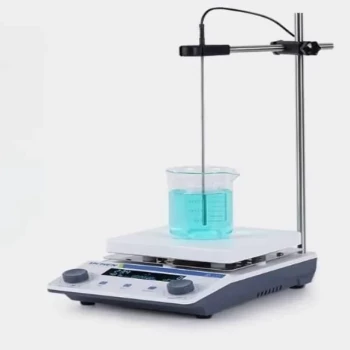
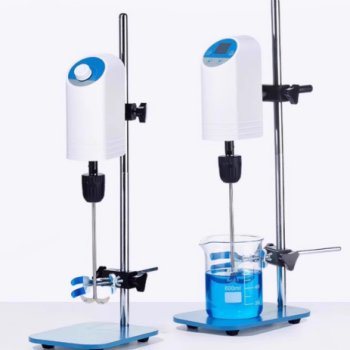
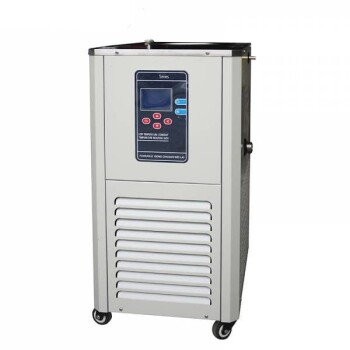
Precise control over mixing and temperature is the defining factor in the successful liquid-phase epoxidation of Karanja oil methyl esters. A temperature-controlled magnetic stirred reactor provides two essential benefits: it creates high thermal uniformity via a thermostatic oil bath and generates sufficient shear force to mix three distinct phases. These features facilitate the mass transfer necessary to achieve high conversion rates and selectivity.
The core challenge in this reaction is the natural separation between insoluble oils, aqueous oxidants, and solid catalysts. A temperature-controlled magnetic stirred reactor overcomes this by forcing these immiscible components to interact while maintaining the strict thermal environment required for chemical stability.
Overcoming Multiphase Barriers
Managing Three Distinct Components
The epoxidation process involves a complex mixture of three phases: insoluble fatty acid methyl esters, aqueous hydrogen peroxide, and a solid catalyst.
Without active intervention, these components will naturally separate, preventing the reaction from occurring. The reactor serves as the physical vessel where these incompatible phases are forced into contact.
The Critical Role of Shear Force
The magnetic stirring mechanism is not merely for blending; it provides specific shear force.
This mechanical energy breaks the surface tension between the immiscible liquids and suspends the solid catalyst. By doing so, it facilitates efficient mass transfer, ensuring that the reactants can physically reach the catalyst surface.
Ensuring Reaction Stability
Achieving Thermal Uniformity
Integrated with a thermostatic oil bath, this reactor setup eliminates temperature gradients within the vessel.
Uneven heating can lead to "hot spots" or "cold zones," which disrupt reaction kinetics. A uniform thermal profile is a fundamental requirement for consistent results.
Impact on Selectivity and Conversion
Temperature control is directly linked to the quality of the final product.
By maintaining a stable environment, the system maximizes conversion rates (how much oil reacts). Simultaneously, it ensures high selectivity, preventing the epoxidized product from degrading into unwanted byproducts due to thermal fluctuations.
Understanding the Trade-offs
Limitations of Magnetic Stirring
While magnetic stirring provides sufficient shear for many applications, it relies on a magnetic coupling that can be broken.
If the reaction mixture becomes unexpectedly viscous or if the stirring speed is set too high, the stir bar may decouple (spin out). This results in an immediate loss of shear force and a halt in mass transfer.
Heat Transfer Latency
Using an external oil bath provides uniformity, but it introduces a delay in temperature adjustments.
Unlike internal cooling coils or direct heating, the heat must travel through the reactor wall. This can make it slightly slower to react to rapid exotherms compared to systems with direct internal thermal management.
Making the Right Choice for Your Goal
To maximize the efficiency of your epoxidation process, you must align the reactor's capabilities with your specific objectives.
- If your primary focus is Process Efficiency: Prioritize the optimization of stirring speed to ensure the shear force is sufficient to overcome mass transfer resistance between the three phases.
- If your primary focus is Product Purity: Focus on the precision of the thermostatic bath to maintain the exact thermal window required for high selectivity.
Effective epoxidation requires a system that treats mechanical agitation and thermal control not as separate variables, but as a unified operating condition.
Summary Table:
| Feature | Benefit in Epoxidation | Impact on Process |
|---|---|---|
| Magnetic Stirring | High shear force across 3 phases | Facilitates mass transfer between oil, aqueous, and catalyst |
| Thermostatic Oil Bath | Thermal uniformity & stability | Prevents hot spots, ensuring high selectivity and product purity |
| Multiphase Management | Active suspension of solid catalysts | Increases conversion rates by maximizing reactant-catalyst contact |
| Sealed Environment | Precise control of reaction kinetics | Maintains chemical stability during the liquid-phase reaction |
Elevate Your Chemical Synthesis with KINTEK Precision
Are you looking to maximize conversion rates and selectivity in your multiphase reactions? KINTEK specializes in high-performance laboratory equipment, providing the advanced high-temperature high-pressure reactors and autoclaves required for demanding processes like the epoxidation of Karanja oil methyl esters.
Our solutions offer the precise thermal uniformity and mechanical shear force necessary to overcome mass transfer barriers, ensuring consistent results for research and industrial applications. Beyond reactors, we provide a comprehensive range of magnetic stirrers, hydraulic presses, and specialized ceramics tailored for material science and battery research.
Ready to optimize your lab's efficiency? Contact our technical experts today to find the perfect reactor system for your specific research goals.
References
- Nicola Scotti, Matteo Guidotti. Epoxidation of Karanja (Millettia pinnata) Oil Methyl Esters in the Presence of Hydrogen Peroxide over a Simple Niobium-Containing Catalyst. DOI: 10.3390/catal9040344
This article is also based on technical information from Kintek Solution Knowledge Base .
Related Products
- Laboratory Small Constant Temperature Heated Magnetic Stirrer Heater and Stirrer
- Custom PTFE Teflon Parts Manufacturer for Magnetic Stirring Bar
- Customizable Laboratory High Temperature High Pressure Reactors for Diverse Scientific Applications
- High Performance Laboratory Stirrers for Diverse Applications
- Mini SS High Pressure Autoclave Reactor for Laboratory Use
People Also Ask
- What role does a magnetic stirrer with heating play in ZnO nanoparticle synthesis? Precision Control for Quality Results
- What role does a constant temperature heating magnetic stirrer play in MFC-HAp synthesis? Achieve Material Homogeneity
- What is the function of a laboratory magnetic stirrer in Ni–Cr–P electrodeposition? Optimize Ion Transport & Coating
- Why is a laboratory magnetic stirrer required for benzoic acid esters? Boost Reaction Speed & Yield with High RPM
- What role does a laboratory magnetic stirrer play in TiO2 and TiO2-Ag sol preparation? Master Chemical Kinetics