Knowledge What chemical compatibility restrictions apply to active metal electrodes? Protect Magnesium from Acid Damage
Author avatar

Tech Team · Kintek Solution

Updated 29 minutes ago

What chemical compatibility restrictions apply to active metal electrodes? Protect Magnesium from Acid Damage


Active metal electrodes, particularly magnesium, require the strict avoidance of acid-based cleaning agents. Due to their high reactivity, these metals undergo rapid dissolution when exposed to dilute acid solutions, effectively destroying the electrode. To maintain material integrity, you must exclusively utilize inert organic solvents or specific alkaline solutions.

The critical constraint for cleaning active metal electrodes is the absolute prohibition of acid-based methods. Because active metals like magnesium dissolve rapidly in acidic environments, cleaning protocols must rely on chemically inert or alkaline alternatives to ensure material stability.

The Vulnerability of Active Metals

Reactivity with Dilute Acids

Active metals, by definition, sit high on the electrochemical series and are prone to oxidation. Magnesium electrodes are highly reactive when introduced to acidic environments.

Even dilute acid solutions can trigger an immediate chemical reaction. This is not a gradual degradation; it is an aggressive attack on the material structure.

The Consequence of Acid Exposure

The primary result of using acid-based cleaners is the rapid dissolution of the electrode material.

This leads to immediate mass loss and changes in the electrode's geometry. Consequently, the electrode loses its functionality and stability, rendering it useless for precise electrochemical measurements.

Developing a Safe Cleaning Protocol

Utilizing Inert Organic Solvents

To remove contaminants without compromising the electrode, you must switch to inert organic solvents.

These solvents can dissolve surface impurities—such as oils or organic residues—without reacting with the metal lattice itself. They provide a neutral environment that preserves the electrode's active surface area.

Application of Alkaline Solutions

If organic solvents are insufficient for the specific contaminants present, specific alkaline solutions are the permissible alternative.

Unlike acids, appropriate alkaline environments generally do not trigger the rapid dissolution mechanisms seen in active metals like magnesium. They allow for chemical cleaning while maintaining material stability.

Common Pitfalls to Avoid

Misjudging Acid Concentration

A common error is assuming that a "weak" or highly dilute acid is safe for a quick rinse.

You must recognize that for active metals, concentration does not mitigate risk. The fundamental chemistry of magnesium makes it intolerant to acidic protons, regardless of the acid's strength.

Sacrificing Stability for Speed

Acid cleaning is often used in other contexts because it strips surfaces quickly.

However, with active metals, there is a distinct trade-off: cleaning speed comes at the cost of electrode destruction. You must accept that safe cleaning methods (solvents/alkalines) may be less aggressive but are the only way to prevent unnecessary electrode loss.

Making the Right Choice for Your Goal

When finalizing your cleaning Standard Operating Procedure (SOP), consider the specific nature of your contaminants while strictly adhering to chemical compatibility rules.

  • If your primary focus is removing surface oils or organics: Utilize inert organic solvents to dissolve contaminants without interacting with the metal surface.
  • If your primary focus is removing stubborn inorganic residues: Employ specific alkaline solutions to chemically clean the surface while avoiding the dissolution risks associated with acids.

By eliminating acids from your workflow, you ensure reliable data and prolong the operational lifespan of your magnesium electrodes.

Summary Table:

Aspect Incompatible (Avoid) Compatible (Recommended)
Cleaning Agents Dilute or concentrated acids Inert organic solvents, specific alkaline solutions
Chemical Reaction Rapid dissolution and mass loss Non-reactive surface purification
Material Impact Loss of geometry and functionality Preservation of material stability and active area
Best Use Case Never recommended for active metals Removing oils, organics, and stubborn residues

Maximize Your Research Precision with KINTEK

Don't let improper maintenance compromise your electrochemical data. KINTEK specializes in high-performance laboratory equipment, including specialized electrolytic cells and electrodes, battery research tools, and chemical-resistant consumables designed for the most demanding environments.

Whether you are working with reactive magnesium electrodes or need advanced high-temperature high-pressure reactors, our expert team is here to provide the durable solutions and technical guidance your lab requires.

Ready to upgrade your laboratory setup? Contact KINTEK today for expert consultation and high-quality consumables!

References

  1. Arthur J. Shih, Marc T. M. Koper. Water electrolysis. DOI: 10.1038/s43586-022-00164-0

This article is also based on technical information from Kintek Solution Knowledge Base .

Related Products

People Also Ask

Related Products

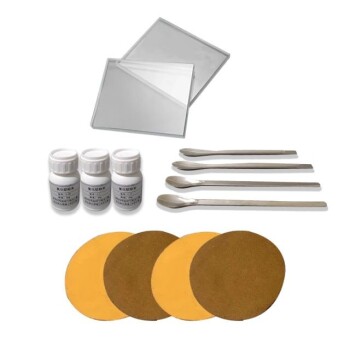
Electrode Polishing Material for Electrochemical Experiments

Electrode Polishing Material for Electrochemical Experiments

Looking for a way to polish your electrodes for electrochemical experiments? Our polishing materials are here to help! Follow our easy instructions for best results.

Platinum Sheet Electrode for Laboratory and Industrial Applications

Platinum Sheet Electrode for Laboratory and Industrial Applications

Elevate your experiments with our Platinum Sheet Electrode. Crafted with quality materials, our safe and durable models can be tailored to fit your needs.

RRDE rotating disk (ring disk) electrode / compatible with PINE, Japanese ALS, Swiss Metrohm glassy carbon platinum

RRDE rotating disk (ring disk) electrode / compatible with PINE, Japanese ALS, Swiss Metrohm glassy carbon platinum

Elevate your electrochemical research with our Rotating Disk and Ring Electrodes. Corrosion resistant and customizable to your specific needs, with complete specifications.

Platinum Auxiliary Electrode for Laboratory Use

Platinum Auxiliary Electrode for Laboratory Use

Optimize your electrochemical experiments with our Platinum Auxiliary Electrode. Our high-quality, customizable models are safe and durable. Upgrade today!

Platinum Sheet Electrode for Battery Lab Applications

Platinum Sheet Electrode for Battery Lab Applications

Platinum sheet is composed of platinum, which is also one of the refractory metals. It is soft and can be forged, rolled and drawn into rod, wire, plate, tube and wire.

High Purity Gold Platinum Copper Iron Metal Sheets

High Purity Gold Platinum Copper Iron Metal Sheets

Elevate your experiments with our high-purity sheet metal. Gold, platinum, copper, iron, and more. Perfect for electrochemistry and other fields.

Custom PTFE Teflon Parts Manufacturer for Acid and Alkali Resistant Chemical Powder Material Scoops

Custom PTFE Teflon Parts Manufacturer for Acid and Alkali Resistant Chemical Powder Material Scoops

Known for its excellent thermal stability, chemical resistance and electrical insulating properties, PTFE is a versatile thermoplastic material.

MgF2 Magnesium Fluoride Crystal Substrate Window for Optical Applications

MgF2 Magnesium Fluoride Crystal Substrate Window for Optical Applications

Magnesium fluoride (MgF2) is a tetragonal crystal that exhibits anisotropy, making it imperative to treat it as a single crystal when engaging in precision imaging and signal transmission.

Custom PTFE Teflon Parts Manufacturer for Conductive Glass Substrate Cleaning Rack

Custom PTFE Teflon Parts Manufacturer for Conductive Glass Substrate Cleaning Rack

The PTFE conductive glass substrate cleaning rack is used as the carrier of the square solar cell silicon wafer to ensure efficient and pollution-free handling during the cleaning process.

PTFE Electrolytic Cell Electrochemical Cell Corrosion-Resistant Sealed and Non-Sealed

PTFE Electrolytic Cell Electrochemical Cell Corrosion-Resistant Sealed and Non-Sealed

Choose our PTFE Electrolytic Cell for reliable, corrosion-resistant performance. Customize specifications with optional sealing. Explore now.

Laboratory Sealed Hammer Crusher for Efficient Sample Preparation

Laboratory Sealed Hammer Crusher for Efficient Sample Preparation

Discover the Laboratory Sealed Hammer Crusher for efficient sample preparation. Ideal for coal, metallurgy, and research, this crusher ensures high production efficiency and environmental friendliness.

Custom PTFE Teflon Parts Manufacturer for PTFE Measuring Cylinder 10/50/100ml

Custom PTFE Teflon Parts Manufacturer for PTFE Measuring Cylinder 10/50/100ml

PTFE measuring cylinder are a rugged alternative to traditional glass cylinders. They are chemically inert over a wide temperature range (up to 260º C), have excellent corrosion resistance and maintain a low coefficient of friction, ensuring ease of use and cleaning.

Laboratory Disc Rotary Mixer for Efficient Sample Mixing and Homogenization

Laboratory Disc Rotary Mixer for Efficient Sample Mixing and Homogenization

Efficient Laboratory Disc Rotary Mixer for Precise Sample Mixing, Versatile for Various Applications, DC Motor and Microcomputer Control, Adjustable Speed and Angle.

Molybdenum Disilicide (MoSi2) Thermal Elements Electric Furnace Heating Element

Molybdenum Disilicide (MoSi2) Thermal Elements Electric Furnace Heating Element

Discover the power of Molybdenum Disilicide (MoSi2) Heating Element for high-temperature resistance. Unique oxidation resistance with stable resistance value. Learn more about its benefits now!

Custom PTFE Teflon Parts Manufacturer Laboratory High Temperature Mixing Paddle Mixer

Custom PTFE Teflon Parts Manufacturer Laboratory High Temperature Mixing Paddle Mixer

The PTFE mixing paddle mixer is a versatile and robust tool designed for laboratory use, particularly in environments requiring high resistance to chemicals and extreme temperatures. Crafted from high-quality PTFE, this mixer boasts several key features that enhance its functionality and durability.

Small Vacuum Heat Treat and Tungsten Wire Sintering Furnace

Small Vacuum Heat Treat and Tungsten Wire Sintering Furnace

The small vacuum tungsten wire sintering furnace is a compact experimental vacuum furnace specially designed for universities and scientific research institutes. The furnace features a CNC welded shell and vacuum piping to ensure leak-free operation. Quick-connect electrical connections facilitate relocation and debugging, and the standard electrical control cabinet is safe and convenient to operate.

High Temperature Constant Temperature Heating Circulator Water Bath Chiller Circulator for Reaction Bath

High Temperature Constant Temperature Heating Circulator Water Bath Chiller Circulator for Reaction Bath

Efficient and reliable, KinTek KHB Heating Circulator is perfect for your lab needs. With a max. heating temperature of up to 300℃, it features accurate temperature control and fast heating.

Warm Isostatic Press WIP Workstation 300Mpa for High Pressure Applications

Warm Isostatic Press WIP Workstation 300Mpa for High Pressure Applications

Discover Warm Isostatic Pressing (WIP) - A cutting-edge technology that enables uniform pressure to shape and press powdered products at a precise temperature. Ideal for complex parts and components in manufacturing.

Zirconia Ceramic Gasket Insulating Engineering Advanced Fine Ceramics

Zirconia Ceramic Gasket Insulating Engineering Advanced Fine Ceramics

Zirconia insulating ceramic gasket has high melting point, high resistivity, low thermal expansion coefficient and other properties, making it an important high temperature resistant material, ceramic insulating material and ceramic sunscreen material.

Laboratory manual slicer

Laboratory manual slicer

Manual microtome is a high-precision cutting device designed for laboratories, industry and medical fields. It is suitable for the preparation of thin slices of various materials such as paraffin samples, biological tissues, battery materials, food, etc.


Leave Your Message