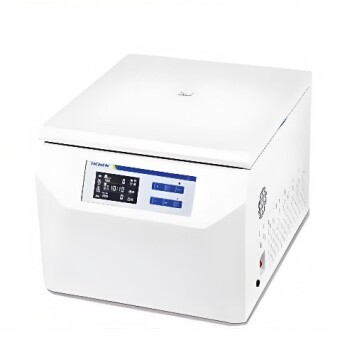
A high-pressure reactor establishes a closed hydrothermal ecosystem defined by elevated temperature and pressure. This environment facilitates the dissolution and recrystallization of raw materials within an aqueous solution, maintaining a precise equilibrium state that is typically unattainable under standard ambient conditions.
The core function of this environment is to drive the controlled self-assembly of hydroxyapatite crystals. By managing the thermodynamic conditions, the reactor enables the engineering of specific mesoporous structures and high surface areas essential for effective catalysis.
The Mechanics of the Hydrothermal Environment
Achieving Equilibrium via Dissolution and Recrystallization
The reactor operates as a closed system, which prevents the loss of solvents and allows pressure to build as temperature rises.
In this environment, raw materials in an aqueous solution undergo a continuous cycle of dissolution and recrystallization. This dynamic process occurs in an equilibrium state, ensuring that the structural formation of the material is uniform and consistent.
The Power of Subcritical Conditions
The combination of high temperature and pressure often brings the aqueous solution into a subcritical state.
This state significantly enhances the solubility of precursors that might otherwise be insoluble. It also accelerates reaction kinetics, guiding the precise self-assembly of the hydroxyapatite crystal lattice.
Controlling Catalyst Architecture
Tuning Phase Composition and Dispersibility
The physical properties of the final hydroxyapatite (HA) catalyst are not random; they are a direct result of the reactor's adjustable parameters.
By rigorously controlling the reaction temperature and exposure time, researchers can dictate the phase composition of the HA. This precise control ensures the final powder has excellent dispersibility, avoiding the agglomeration that often plagues nanomaterial synthesis.
Regulating Pore Structure with Molybdate Anions
A critical aspect of this synthesis involves the introduction of specific additives, such as molybdate anions.
Within the reactor, the concentration of these anions can be adjusted to regulate the pore structure of the material. This is the key mechanism for generating a mesoporous architecture with a high specific surface area, which directly correlates to superior ion-exchange capabilities and catalytic efficiency.
Understanding the Trade-offs
Equipment Material and Chemical Purity
While the high-pressure environment is advantageous for synthesis, it places significant stress on the reactor vessel itself.
If the reactor involves corrosive salt solutions (such as molybdenum or vanadium), there is a risk of the reactor body corroding. This can lead to the leaching of metal ions into the catalyst, compromising the chemical purity of the sample.
Operational Complexity
Achieving the correct equilibrium requires precise management of the temperature and pressure distribution.
Inconsistencies in the reactor’s internal environment can lead to phase impurities or irregular particle morphology. Therefore, the stability and quality of the reactor hardware are just as critical as the chemical recipe.
Making the Right Choice for Your Goal
To maximize the effectiveness of hydrothermal synthesis for mesoporous hydroxyapatite, align your processing parameters with your specific material requirements.
- If your primary focus is High Catalytic Activity: Prioritize the precise adjustment of molybdate anion concentration to maximize specific surface area and pore volume.
- If your primary focus is Sample Purity: Ensure the reactor is constructed from corrosion-resistant materials (like Hastelloy) to prevent metal ion leaching during long exposure times.
- If your primary focus is Particle Uniformity: Focus on maintaining a strictly constant temperature and pressure distribution to guarantee a consistent recrystallization equilibrium.
The high-pressure reactor is not merely a vessel for heating; it is a precision instrument for engineering the microscopic architecture of your catalyst.
Summary Table:
| Feature | Hydrothermal Environment Impact | Catalyst Benefit |
|---|---|---|
| Equilibrium State | Controlled dissolution and recrystallization | Uniform crystal structure and phase purity |
| Subcritical Water | Enhanced solubility and accelerated kinetics | Guided self-assembly of crystal lattices |
| Pressure Control | Closed-system solvent retention | Prevents agglomeration; improves dispersibility |
| Additive Regulation | Controlled molybdate anion interaction | High surface area and mesoporous architecture |
Elevate Your Material Synthesis with KINTEK Precision
Unlock the full potential of your research with KINTEK’s high-performance laboratory solutions. Whether you are engineering mesoporous hydroxyapatite or advanced nanomaterials, our high-temperature high-pressure reactors and autoclaves provide the precise thermodynamic control required for superior catalytic activity and chemical purity.
Why choose KINTEK?
- Advanced Reactor Technology: Corrosion-resistant designs (including Hastelloy options) to ensure zero leaching and maximum sample purity.
- Comprehensive Lab Portfolio: From muffle and vacuum furnaces to crushing systems and isostatic presses, we provide the tools for every stage of material processing.
- Specialized Consumables: High-quality ceramics, crucibles, and PTFE products tailored for harsh chemical environments.
Ready to optimize your hydrothermal processes? Contact our technical experts today to find the perfect equipment for your lab!
References
- Asta Narkūnienė, Gintautas Poškas. Multiphysics simulation to support analysis of engineered materials in geological repository. DOI: 10.21175/rad.abstr.book.2023.44.4
This article is also based on technical information from Kintek Solution Knowledge Base .
Related Products
- Customizable Laboratory High Temperature High Pressure Reactors for Diverse Scientific Applications
- Customizable High Pressure Reactors for Advanced Scientific and Industrial Applications
- Stainless High Pressure Autoclave Reactor Laboratory Pressure Reactor
- Mini SS High Pressure Autoclave Reactor for Laboratory Use
- High Pressure Laboratory Autoclave Reactor for Hydrothermal Synthesis
People Also Ask
- How do high-pressure and high-temperature reactors ensure the effective treatment of lignocellulosic wastewater in WAO?
- What equipment is required for high-pressure high-temperature reactions? Master Extreme Chemistry Safely
- How do you control high pressure in a reactor? A Guide to Safe & Stable Operation
- Why is argon better than nitrogen for inert atmosphere? Ensure Absolute Reactivity & Stability
- How does initial oxygen pressure affect the wet oxidation of pharmaceutical sludge? Master Your Oxidation Depth