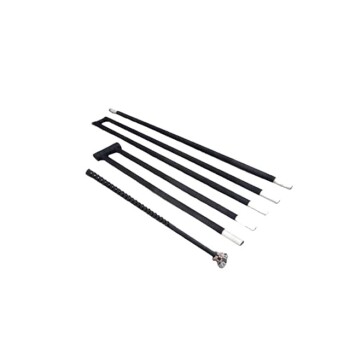
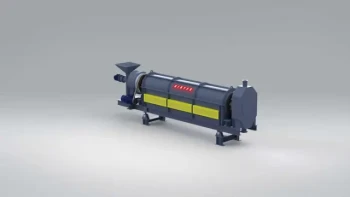
A laboratory electric heating furnace provides a precisely controlled thermal environment essential for reliable biomass co-pyrolysis. Its primary function is to heat the reaction retort to specific target temperatures using exact heating rates, such as 10 K/min. This rigorous control is necessary to dictate the breakdown of long-chain polymers and manage the resulting distribution of gas, liquid, and solid products.
By strictly regulating temperature and heating rates, the furnace allows researchers to manipulate reaction pathways, ensuring reproducible data on how organic materials decompose into distinct phases.
The Role of Thermal Precision
Breaking Down Long-Chain Polymers
Biomass is composed of complex, long-chain molecular structures. The furnace provides the exact energy input required to fracture these chemical bonds.
Without this stable thermal environment, the breaking patterns of these polymers become erratic. Consistent heat ensures that the degradation process occurs uniformly across the sample.
Managing Phase Distribution
The outcome of co-pyrolysis is a mixture of three distinct phases: gas, liquid (bio-oil), and solid (char).
The specific temperature maintained by the furnace directly dictates the ratio of these products. Accurate temperature control allows researchers to target specific yield distributions for different applications.
Controlling Reaction Dynamics
The Importance of Heating Rate
It is not enough to simply reach a target temperature; the speed at which the material is heated is equally critical.
A preset heating rate, such as 10 K/min, influences the reaction kinetics. This controlled ramp-up prevents thermal shock and allows for the orderly evolution of volatile matter.
Multi-Stage Programmability
Advanced processing often requires complex heating schedules. Programmable furnaces can execute multi-stage heating profiles, typically ranging from 150 °C to 800 °C.
This capability is vital for converting organic precursors into specific carbon structures. It enables advanced modifications, such as in-situ nitrogen doping, which determines the final material's graphitization degree.
Understanding the Trade-offs
The Necessity of Atmospheric Protection
While heat is the primary driver, it cannot act alone in pyrolysis. The furnace must accommodate an inert protective atmosphere, usually provided by a continuous nitrogen flow.
Failing to maintain this inert environment will lead to combustion rather than pyrolysis. This destroys the desired carbon structures and invalidates the study of polymer breakdown.
Sensitivity to Configuration
The precision of the furnace is only as good as its programming.
Because the distribution of functional groups is highly sensitive to thermal history, even minor deviations in the heating program can skew results. Researchers must ensure the preset program aligns perfectly with the chemical requirements of the biomass being studied.
Making the Right Choice for Your Research
To achieve optimal co-pyrolysis results, align your furnace parameters with your specific experimental goals.
- If your primary focus is product yield analysis: Prioritize precise temperature control to accurately map the distribution of gas, liquid, and solid phases.
- If your primary focus is material structure optimization: Focus on programmable heating rates and inert atmospheres to control graphitization and functional group distribution.
Mastering these thermal variables is the key to unlocking consistent, high-quality biomass conversion results.
Summary Table:
| Critical Condition | Impact on Co-Pyrolysis Process | Research Benefit |
|---|---|---|
| Precise Temperature | Dictates the distribution of gas, liquid, and solid phases. | Accurate yield analysis & reproducibility. |
| Controlled Heating Rate | Influences reaction kinetics and volatile evolution (e.g., 10 K/min). | Prevents thermal shock; orderly degradation. |
| Programmable Profiles | Enables multi-stage heating for complex carbon structures. | Supports in-situ doping and graphitization. |
| Inert Atmosphere | Prevents combustion during the heating cycle. | Ensures true pyrolysis and structural integrity. |
Elevate Your Biomass Research with KINTEK Precision
Unlock consistent, high-quality results in your co-pyrolysis experiments with KINTEK’s advanced thermal solutions. As specialists in laboratory equipment, we provide the high-performance muffle, tube, and vacuum furnaces necessary for precise temperature regulation and programmable heating rates.
Whether you are optimizing bio-oil yields or engineering advanced carbon structures, KINTEK offers a comprehensive range of crushing and milling systems, pellet presses, and high-temperature reactors tailored for your laboratory's needs.
Ready to master your reaction kinetics? Contact us today to find the perfect furnace for your research!
References
- Roksana Muzyka, Marcin Sajdak. Impact of Plastic Blends on the Gaseous Product Composition from the Co-Pyrolysis Process. DOI: 10.3390/en16020947
This article is also based on technical information from Kintek Solution Knowledge Base .
Related Products
- Laboratory Scientific Electric Heating Blast Drying Oven
- Multi-zone Laboratory Tube Furnace
- Laboratory Rapid Thermal Processing (RTP) Quartz Tube Furnace
- 1400℃ Muffle Oven Furnace for Laboratory
- Molybdenum Disilicide (MoSi2) Thermal Elements Electric Furnace Heating Element
People Also Ask
- How does a laboratory electric drying oven contribute to the formation of the initial coating? Expert Insights
- What role does a precision laboratory drying oven play in the synthesis of GO-PANI nanocomposites? Protect Material Integrity
- What role does a laboratory drying oven play in the preparation of zinc oxide nanoparticle precursors?
- What is the necessity of using a laboratory drying oven when processing MoO3/GO composite nanopowders? Find out here.
- What is the role of a laboratory drying oven in cellulose citrate production? Ensure Material Stability & Purity