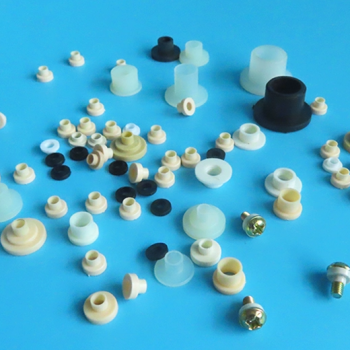
Zirconia sleeves and gaskets function as critical electrical insulators within the loading mechanism of autoclave cracking tests. Their primary role is to physically and electrically isolate the stressed specimen from both the autoclave's main body and the metallic loading rods. By preventing direct contact between these components, they serve as a barrier against electrical interference that would otherwise compromise the test environment.
By effectively isolating the specimen, these components prevent stray currents and galvanic corrosion, ensuring the purity of material evaluations and the accuracy of sensitive electrochemical data.
The Mechanics of Isolation
Separating the Specimen
Zirconia sleeves and gaskets act as a physical interface between the test specimen and the mechanical loading system.
Without these consumables, the specimen would be in direct contact with the loading rods. This contact creates an electrical pathway that must be interrupted for valid testing.
Breaking the Electrical Circuit
The primary engineering function of zirconia in this context is dielectric separation.
It ensures that the specimen remains electrically distinct from the massive metal structure of the autoclave. This isolation is the foundational requirement for any subsequent electrochemical monitoring.
Preserving Data Accuracy
Protecting Electrochemical Signals
Modern cracking tests rely heavily on monitoring corrosion potential.
If the specimen is electrically coupled to the autoclave, the corrosion potential reading will reflect the entire vessel, not the specific material being tested. Zirconia insulation ensures the data collected applies strictly to the specimen.
Ensuring DCPD Precision
Direct Current Potential Drop (DCPD) signals are used to monitor crack growth.
These signals are highly sensitive to electrical leakage. Zirconia gaskets prevent current from "shorting" through the loading train, guaranteeing that the voltage drop measured is a true reflection of the crack length.
Understanding the Risks of Insulation Failure
The Threat of Galvanic Corrosion
If the zirconia barrier fails or is omitted, galvanic corrosion becomes an immediate variable.
Connecting two different metals (the specimen and the autoclave/rods) in a conductive fluid creates a battery effect. This artificially accelerates or retards corrosion rates, rendering the material property evaluation invalid.
Interference from Stray Currents
Non-isolated setups are susceptible to stray currents.
These uncontrolled electrical flows introduce noise into the monitoring equipment. This interference makes it impossible to distinguish between actual material behavior and experimental artifacts.
Ensuring Experimental Success
To guarantee the validity of your autoclave cracking tests, consider the following regarding your insulation strategy:
- If your primary focus is electrochemical accuracy: Ensure high-quality zirconia components are installed to prevent signal drift caused by electrical coupling with the vessel.
- If your primary focus is material property evaluation: Verify the integrity of the gaskets to eliminate galvanic corrosion, which can artificially alter the specimen's cracking resistance.
Zirconia insulation is not merely a spacer; it is the gatekeeper of experimental validity in high-pressure corrosion testing.
Summary Table:
| Component | Primary Function | Impact on Test Accuracy |
|---|---|---|
| Zirconia Sleeves | Electrical isolation of loading rods | Prevents stray currents from interfering with DCPD signals |
| Zirconia Gaskets | Dielectric separation of specimens | Eliminates galvanic corrosion between specimen and autoclave |
| Insulation Barrier | Physical interface | Guarantees corrosion potential readings reflect only the specimen |
Ensure the integrity of your high-pressure corrosion research with KINTEK’s precision-engineered consumables. As specialists in laboratory equipment, KINTEK provides high-quality zirconia sleeves, gaskets, and essential ceramics alongside our industry-leading high-temperature high-pressure reactors and autoclaves. Our solutions are designed to eliminate electrical leakage and galvanic interference, protecting the accuracy of your DCPD and electrochemical data. Contact us today to equip your lab with the specialized tools needed for valid, repeatable material evaluation.
References
- Raúl B. Rebak. Alloy Selection for Accident Tolerant Fuel Cladding in Commercial Light Water Reactors. DOI: 10.1007/s40553-015-0057-6
This article is also based on technical information from Kintek Solution Knowledge Base .
Related Products
- Zirconia Ceramic Gasket Insulating Engineering Advanced Fine Ceramics
- Dental Porcelain Zirconia Sintering Ceramic Vacuum Press Furnace
- Engineering Advanced Fine Ceramics Head Tweezers with Pointed Elbow Zirconia Ceramic Tip
- Dental Porcelain Zirconia Sintering Ceramic Furnace Chairside with Transformer
People Also Ask
- What are the applications of zirconia ceramics? Unlock High-Performance Solutions for Extreme Environments
- What ceramics are used for insulation? Choose the Right Material for Thermal or Electrical Needs
- What is the main disadvantage of zirconia? Balancing Strength, Aesthetics, and Tooth Wear
- What is the strongest type of zirconia? A Guide to Choosing the Right Dental Zirconia
- What are the failures of zirconia? Avoid Fracture and Debonding with Proper Protocol