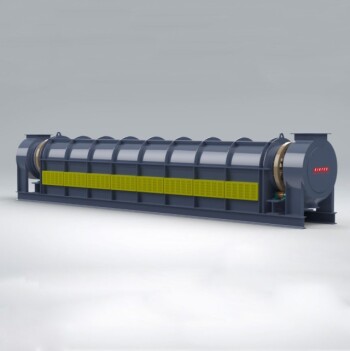
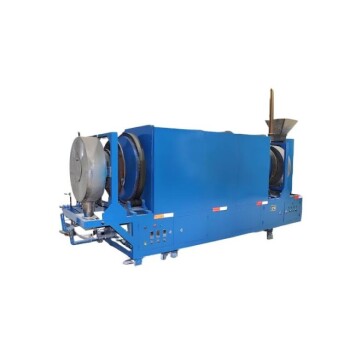
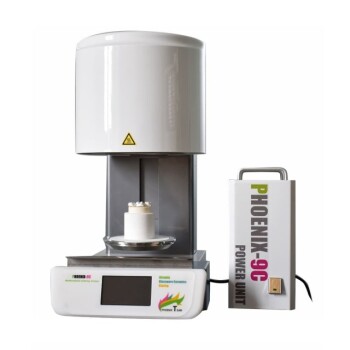
A calcination furnace acts as the decisive stabilization tool in the manufacturing of metal-based core-shell phase change materials (PCMs). By applying high-temperature treatment just below the melting point, this equipment induces critical phase transitions and sinters the protective shell, transforming a raw composite into a structurally sound unit capable of withstanding thermal cycling.
The calcination process secures the longevity of the material by densifying the outer shell and relieving internal pressure. Without this step, the core-shell structure would remain chemically unstable and prone to deformation or decomposition during actual operation.
The Mechanisms of Structural Enhancement
Inducing Phase Transitions
The primary function of the furnace is to facilitate thermal treatments that trigger specific phase transitions within the shell material.
This ensures the outer layer, often an aluminum-oxide structure, achieves its final, most thermodynamically stable crystalline form.
Sintering the Protective Shell
Calcination acts as a sintering process, fusing the particles of the shell material together.
This significantly improves the density of the shell, reducing porosity and creating a robust barrier that contains the phase change material (the core) effectively.
Removal of Volatile Impurities
Drawing from general calcination principles, this process heats the sample to remove volatile substances, such as moisture or residual binders from previous processing steps.
Eliminating these impurities purifies the material, preventing internal gas pressure build-up that could crack the shell during use.
Ensuring Long-Term Reliability
Elimination of Residual Stresses
During the initial synthesis of core-shell structures, mechanical and thermal stresses often accumulate within the material.
The calcination furnace relieves these residual stresses, neutralizing internal tension that would otherwise lead to premature structural failure.
Prevention of Deformation
By densifying the shell and settling the internal structure, calcination mitigates the risk of material deformation.
A well-calcined shell maintains its shape even when the core material melts and expands, ensuring the PCM performs consistently over thousands of thermal cycles.
Chemical Stability
The thermal treatment enhances the chemical stability of the shell, making it resistant to decomposition.
This creates a "hermetic" seal that prevents the reactive core material from leaking or reacting with the external environment.
Understanding the Trade-offs
Temperature Precision is Critical
The furnace must operate strictly below the melting temperature of the shell material.
Overheating risks melting the structure entirely or causing the core to react adversely with the shell, destroying the core-shell architecture before it is finished.
Atmosphere Control
While calcination often implies heating in the absence of air to prevent unwanted oxidation of the metal core, the atmosphere must be carefully controlled.
Incorrect atmospheric conditions can lead to incomplete removal of volatiles or failure to achieve the desired oxide phase in the shell.
Making the Right Choice for Your Goal
To maximize the performance of your metal-based PCMs, tailor your calcination parameters to your specific performance metrics.
- If your primary focus is Cycle Life: Prioritize higher-temperature sintering (within safety limits) to maximize shell density and leak prevention.
- If your primary focus is Thermal Responsiveness: Focus on precise temperature control to remove all impurities without creating an excessively thick or brittle shell that impedes heat transfer.
Calcination is not merely a drying step; it is the fundamental process that engineers the mechanical survival of your phase change material.
Summary Table:
| Process Function | Key Impact on Core-Shell PCM | Benefit to Material Performance |
|---|---|---|
| Sintering | Densifies the protective shell and reduces porosity | Prevents leakage of the core material |
| Phase Transition | Induces stable crystalline forms (e.g., Alumina) | Enhances thermodynamic stability |
| Impurity Removal | Eliminates moisture and volatile binders | Prevents internal pressure and shell cracking |
| Stress Relief | Neutralizes internal mechanical/thermal tension | Extends cycle life and prevents deformation |
| Atmosphere Control | Maintains inert or specific reactive environments | Prevents unwanted oxidation of the metal core |
Elevate Your Material Stability with KINTEK
Precision is the difference between a successful core-shell PCM and a structural failure. KINTEK specializes in advanced laboratory equipment designed to meet the rigorous demands of thermal processing. Whether you are engineering high-performance phase change materials or conducting cutting-edge battery research, our comprehensive range of high-temperature furnaces (muffle, tube, vacuum, and atmosphere control) provides the thermal accuracy your research requires.
From high-pressure reactors and autoclaves to precision crushing, milling, and hydraulic presses, KINTEK offers the complete workflow solution for your lab. Let our experts help you select the ideal sintering and calcination system to maximize your material's cycle life and thermal responsiveness.
Ready to optimize your thermal treatment? Contact KINTEK today to discuss your project requirements!
References
- Aikaterini Feizatidou, Ioannis Α. Kartsonakis. Green Synthesis of Core/Shell Phase Change Materials: Applications in Industry and Energy Sectors. DOI: 10.3390/en18082127
This article is also based on technical information from Kintek Solution Knowledge Base .
Related Products
- Electric Rotary Kiln Pyrolysis Furnace Plant Machine Calciner Small Rotary Kiln Rotating Furnace
- Electric Rotary Kiln Continuous Working Small Rotary Furnace Heating Pyrolysis Plant
- Vertical High Temperature Graphite Vacuum Graphitization Furnace
- Graphite Vacuum Furnace High Thermal Conductivity Film Graphitization Furnace
- Ultra-High Temperature Graphite Vacuum Graphitization Furnace
People Also Ask
- What is a rotary kiln electric furnace? Achieve Superior Uniform Heating for Your Materials
- What are the characteristics of the slipping, slumping, and rolling modes of bed motion? Optimize Your Rotary Process
- What are the advantages of rotary kiln furnace? Achieve Superior Uniformity & Efficiency
- What is the temperature of a rotating kiln? It Depends on Your Material and Process Goal
- What are the principles of a rotary kiln? Master the Mechanics of High-Temperature Processing