Knowledge What is a rotary vacuum evaporator? A Guide to Gentle, Efficient Solvent Removal
Author avatar

Tech Team · Kintek Solution

Updated 6 days ago

What is a rotary vacuum evaporator? A Guide to Gentle, Efficient Solvent Removal


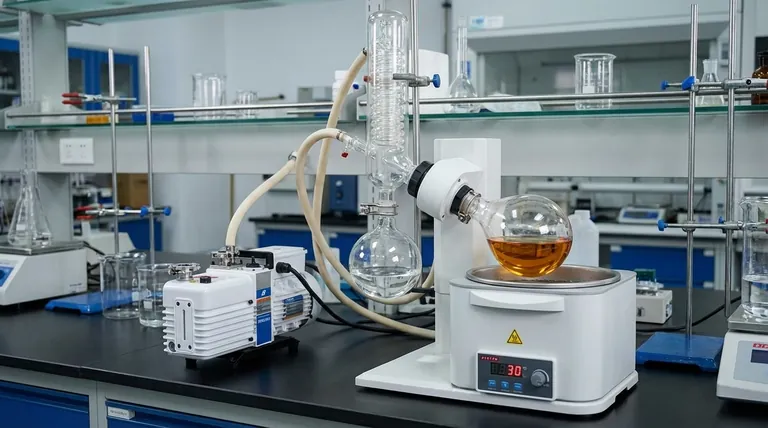
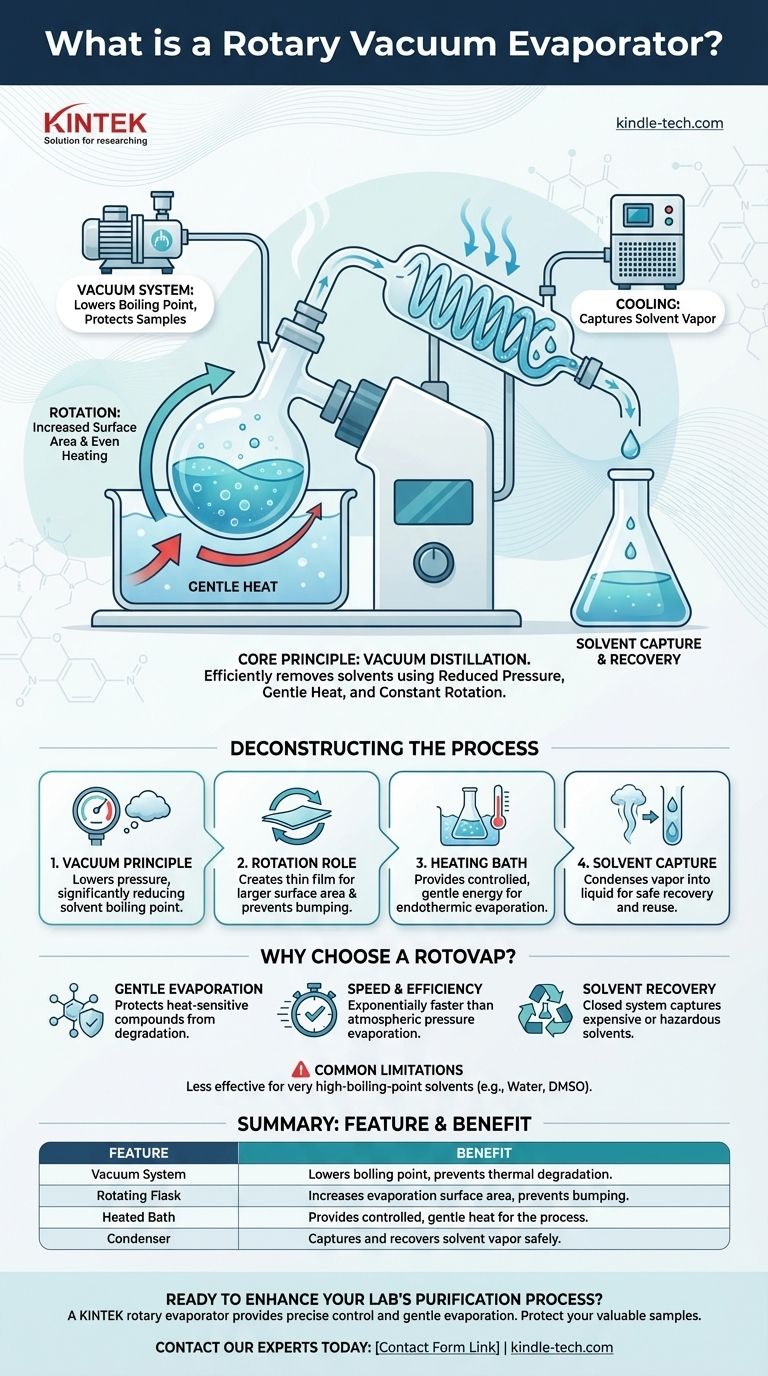
At its core, a rotary vacuum evaporator—often called a "rotovap"—is a laboratory instrument designed to efficiently and gently remove solvents from a sample. It accomplishes this through a process known as vacuum distillation, combining reduced pressure, gentle heat, and constant rotation to separate a volatile solvent from a non-volatile compound of interest.

The central challenge in chemical purification is removing a solvent without destroying the sample you want to keep. A rotary evaporator solves this by lowering the solvent's boiling point with a vacuum, allowing for rapid evaporation at a low, safe temperature.
What is a rotary vacuum evaporator? A Guide to Gentle, Efficient Solvent Removal

Deconstructing the Process: How a Rotovap Works

To understand the rotovap's value, you must first understand the scientific principles that make it so effective. Each component plays a critical role in achieving gentle and rapid solvent removal.

The Principle of Vacuum Distillation

The defining feature of a rotovap is the vacuum. By lowering the pressure inside the system, the boiling point of the solvent is significantly reduced.

This is the same reason water boils at a lower temperature at high altitudes. The rotovap exploits this principle to make solvents boil at temperatures as low as room temperature, preventing thermal degradation of sensitive samples.

The Role of Rotation

The rotating flask, which holds the sample, is the most visually distinct part of the apparatus. This rotation is not for show; it serves two crucial functions.

First, it constantly spreads the liquid into a thin film on the inner surface of the flask, dramatically increasing the surface area available for evaporation. Second, it provides constant agitation, ensuring the sample is heated evenly and preventing violent bumping or boiling.

The Importance of the Heating Bath

The evaporation of a solvent is an endothermic process, meaning it requires energy in the form of heat. The rotovap uses a heated fluid bath, typically filled with water, to provide this energy in a controlled and gentle manner.

The bath temperature is carefully set to be warm enough to facilitate evaporation at the reduced pressure but low enough to avoid damaging the sample.

Capturing the Solvent

As the solvent evaporates, the vapor travels into a condenser. This component uses a cooled surface (from circulating water or a chiller) to turn the solvent vapor back into a liquid.

This recaptured liquid, known as the distillate, is collected in a separate receiving flask. This prevents the release of potentially hazardous solvent fumes into the lab and allows the solvent to be recycled.

Understanding the Trade-offs: Why Choose a Rotovap?

While powerful, a rotary evaporator is a specific tool for a specific job. Understanding its advantages and limitations is key to using it effectively.

The Primary Advantage: Gentle Evaporation

The main reason to use a rotovap is to protect heat-sensitive compounds. Traditional distillation often requires high temperatures that can decompose or alter the chemical structure of the desired product. A rotovap removes this risk entirely.

Speed and Efficiency

Compared to simply letting a solvent evaporate at atmospheric pressure, a rotovap is exponentially faster. The combination of increased surface area, gentle heat, and reduced pressure creates the ideal conditions for rapid evaporation.

Common Limitations

A rotovap is less effective for removing very high-boiling-point solvents, such as water or DMSO. While possible, the process can be extremely slow even under a strong vacuum. For these applications, other techniques like freeze-drying (lyophilization) are often preferred.

Making the Right Choice for Your Goal

Deciding when to use a rotary evaporator depends entirely on your sample and your objective.

  • If your primary focus is purifying a heat-sensitive product: The rotovap is the standard and safest method for removing a volatile solvent without degrading your compound.
  • If your primary focus is quickly processing a large volume of solvent: A rotovap is far more efficient and faster than open-air evaporation or other passive methods.
  • If your primary focus is solvent recovery and safety: The closed system with a condenser is ideal for capturing and reusing expensive solvents or preventing the release of hazardous vapors.

Mastering the use of a rotary evaporator is a fundamental skill for efficient and safe chemical purification in any modern laboratory.

Summary Table:

Feature Benefit
Vacuum System Lowers solvent boiling point to prevent thermal degradation.
Rotating Flask Increases evaporation surface area and prevents bumping.
Heated Bath Provides controlled, gentle heat for the evaporation process.
Condenser Captures and recovers solvent vapor safely and efficiently.

Ready to enhance your lab's purification process?

A KINTEK rotary evaporator provides the precise control and gentle evaporation needed to protect your valuable, heat-sensitive samples. Whether you're concentrating compounds, recovering solvents, or purifying products, our rotovaps are designed for reliability and efficiency.

Contact our lab equipment experts today to find the perfect solution for your laboratory's needs. Get in touch via our Contact Form to discuss your application!

Visual Guide
What is a rotary vacuum evaporator? A Guide to Gentle, Efficient Solvent Removal Visual Guide

Related Products

People Also Ask

Related Products

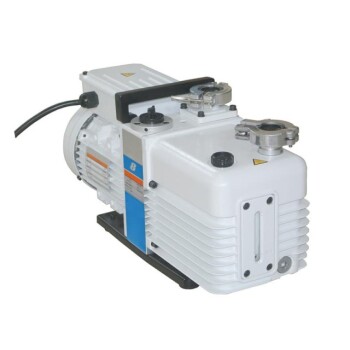
Laboratory Rotary Vane Vacuum Pump for Lab Use

Laboratory Rotary Vane Vacuum Pump for Lab Use

Experience high vacuum pumping speed and stability with our UL-certified Rotary Vane Vacuum Pump. Two-shift gas ballast valve and dual oil protection. Easy maintenance and repair.

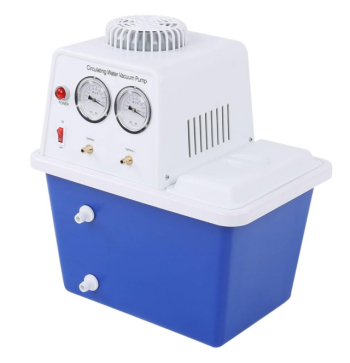
Circulating Water Vacuum Pump for Laboratory and Industrial Use

Circulating Water Vacuum Pump for Laboratory and Industrial Use

Efficient circulating water vacuum pump for labs - oil-free, corrosion-resistant, quiet operation. Multiple models available. Get yours now!

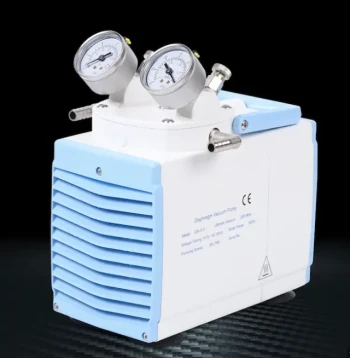
Oil Free Diaphragm Vacuum Pump for Laboratory and Industrial Use

Oil Free Diaphragm Vacuum Pump for Laboratory and Industrial Use

Oil-free diaphragm vacuum pump for labs: clean, reliable, chemical-resistant. Ideal for filtration, SPE, and rotary evaporation. Maintenance-free operation.

Small Vacuum Heat Treat and Tungsten Wire Sintering Furnace

Small Vacuum Heat Treat and Tungsten Wire Sintering Furnace

The small vacuum tungsten wire sintering furnace is a compact experimental vacuum furnace specially designed for universities and scientific research institutes. The furnace features a CNC welded shell and vacuum piping to ensure leak-free operation. Quick-connect electrical connections facilitate relocation and debugging, and the standard electrical control cabinet is safe and convenient to operate.

Customizable High Pressure Reactors for Advanced Scientific and Industrial Applications

Customizable High Pressure Reactors for Advanced Scientific and Industrial Applications

This laboratory-scale high-pressure reactor is a high-performance autoclave engineered for precision and safety in demanding research and development environments.

1400℃ Controlled Atmosphere Furnace with Nitrogen and Inert Atmosphere

1400℃ Controlled Atmosphere Furnace with Nitrogen and Inert Atmosphere

Achieve precise heat treatment with KT-14A controlled atmosphere furnace. Vacuum sealed with a smart controller, it's ideal for lab and industrial use up to 1400℃.

High Pressure Laboratory Vacuum Tube Furnace Quartz Tubular Furnace

High Pressure Laboratory Vacuum Tube Furnace Quartz Tubular Furnace

KT-PTF High Pressure Tube Furnace: Compact split tube furnace with strong positive pressure resistance. Working temp up to 1100°C and pressure up to 15Mpa. Also works under controller atmosphere or high vacuum.

High Pressure Laboratory Autoclave Reactor for Hydrothermal Synthesis

High Pressure Laboratory Autoclave Reactor for Hydrothermal Synthesis

Discover the applications of Hydrothermal Synthesis Reactor - a small, corrosion-resistant reactor for chemical labs. Achieve rapid digestion of insoluble substances in a safe and reliable way. Learn more now.

Graphite Vacuum Furnace IGBT Experimental Graphitization Furnace

Graphite Vacuum Furnace IGBT Experimental Graphitization Furnace

IGBT experimental graphitization furnace, a tailored solution for universities and research institutions, with high heating efficiency, user-friendliness, and precise temperature control.

Graphite Vacuum Furnace High Thermal Conductivity Film Graphitization Furnace

Graphite Vacuum Furnace High Thermal Conductivity Film Graphitization Furnace

The high thermal conductivity film graphitization furnace has uniform temperature, low energy consumption and can operate continuously.

Molybdenum Vacuum Heat Treat Furnace

Molybdenum Vacuum Heat Treat Furnace

Discover the benefits of a high-configuration molybdenum vacuum furnace with heat shield insulation. Ideal for high-purity, vacuum environments like sapphire crystal growth and heat treatment.

2200 ℃ Graphite Vacuum Heat Treat Furnace

2200 ℃ Graphite Vacuum Heat Treat Furnace

Discover the power of the KT-VG Graphite Vacuum Furnace - with a maximum working temperature of 2200℃, it's perfect for vacuum sintering of various materials. Learn more now.

Dental Porcelain Zirconia Sintering Ceramic Vacuum Press Furnace

Dental Porcelain Zirconia Sintering Ceramic Vacuum Press Furnace

Get precise dental results with Dental Vacuum Press Furnace. Automatic temperature calibration, low noise tray, and touch screen operation. Order now!

2200 ℃ Tungsten Vacuum Heat Treat and Sintering Furnace

2200 ℃ Tungsten Vacuum Heat Treat and Sintering Furnace

Experience the ultimate refractory metal furnace with our Tungsten vacuum furnace. Capable of reaching 2200℃, perfect for sintering advanced ceramics and refractory metals. Order now for high-quality results.

Ultra-High Temperature Graphite Vacuum Graphitization Furnace

Ultra-High Temperature Graphite Vacuum Graphitization Furnace

The ultra-high temperature graphitization furnace utilizes medium frequency induction heating in a vacuum or inert gas environment. The induction coil generates an alternating magnetic field, inducing eddy currents in the graphite crucible, which heats up and radiates heat to the workpiece, bringing it to the desired temperature. This furnace is primarily used for graphitization and sintering of carbon materials, carbon fiber materials, and other composite materials.

Small Jaw Crusher for Laboratory and Small Mines Efficient Flexible Affordable Laboratory Ore Crusher Coal Crusher

Small Jaw Crusher for Laboratory and Small Mines Efficient Flexible Affordable Laboratory Ore Crusher Coal Crusher

Discover the small jaw crusher for efficient, flexible, and affordable crushing in labs and small mines. Ideal for coal, ores, and rocks. Learn more now!

Lab-Scale Vacuum Induction Melting Furnace

Lab-Scale Vacuum Induction Melting Furnace

Get precise alloy composition with our Vacuum Induction Melting Furnace. Ideal for aerospace, nuclear energy, and electronic industries. Order now for effective smelting and casting of metals and alloys.

Vacuum Heat Treat Furnace with Ceramic Fiber Liner

Vacuum Heat Treat Furnace with Ceramic Fiber Liner

Vacuum furnace with polycrystalline ceramic fiber insulation liner for excellent heat insulation and uniform temperature field. Choose from 1200℃ or 1700℃ max. working temperature with high vacuum performance and precise temperature control.

304 316 Stainless Steel Vacuum Ball Valve Stop Valve for High Vacuum Systems

304 316 Stainless Steel Vacuum Ball Valve Stop Valve for High Vacuum Systems

Discover 304/316 stainless steel vacuum ball valves, Ideal for high vacuum systems, Ensure precise control and durability. Explore now!

RRDE rotating disk (ring disk) electrode / compatible with PINE, Japanese ALS, Swiss Metrohm glassy carbon platinum

RRDE rotating disk (ring disk) electrode / compatible with PINE, Japanese ALS, Swiss Metrohm glassy carbon platinum

Elevate your electrochemical research with our Rotating Disk and Ring Electrodes. Corrosion resistant and customizable to your specific needs, with complete specifications.


Leave Your Message