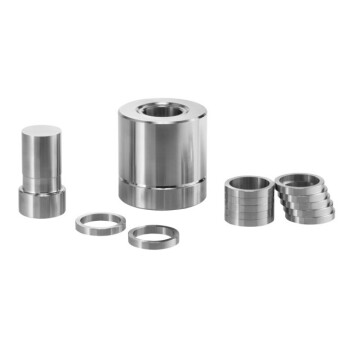
The critical function of specialized PTFE molds in solution casting is to serve as a chemically inert, low-energy carrier that ensures the structural integrity of the final membrane. During the solvent evaporation phase, these molds facilitate the uniform spreading of the polymer solution to define precise thickness and shape. Crucially, their non-stick surface prevents adhesion, allowing for the damage-free peeling of ultra-thin, self-supporting electrolyte membranes.
The success of the solution casting process hinges on the demolding stage. Without the specific low surface energy properties of PTFE, the adhesive forces between the polymer and the mold would likely cause tearing or surface defects, rendering the electrolyte membrane unusable.
Controlling Membrane Architecture
Ensuring Uniform Thickness
In PEO-based solid-state batteries, performance relies on consistent electrolyte thickness. The smooth surface of the PTFE mold allows the polymer solution to spread evenly across the substrate. This uniformity ensures that the final membrane has no thick or thin spots that could impede ionic flow.
Preserving Chemical Purity
The solution casting process involves extended contact between the polymer solution and the mold during solvent evaporation. PTFE is chosen for its chemical inertness. This ensures the mold does not react with the electrolyte components, preserving the chemical composition of the membrane as it solidifies.
Preserving Integrity During Demolding
Overcoming Adhesion Forces
The most perilous step in fabricating solid-state electrolytes is removing the dried film from the mold. PTFE (Polytetrafluoroethylene) possesses extremely low surface energy. This property prevents the polymer from bonding to the substrate as the solvent evaporates.
Preventing Micro-Tearing
PEO-based membranes are often ultra-thin and flexible, making them susceptible to mechanical damage. The non-stick nature of PTFE allows these delicate films to be peeled off completely. This eliminates adhesion-induced tearing and ensures the production of a self-supporting, defect-free sample.
Operational Considerations and Risks
Sensitivity to Surface Defects
The quality of the membrane is a direct reflection of the mold's surface. Because the PTFE mold acts as a template, any scratches, abrasions, or deformities on the mold surface will be transferred to the electrolyte. Maintaining a pristine, smooth mold surface is non-negotiable for defect-free production.
Dependency on Cleanliness
While PTFE is naturally resistant to adhesion, surface contaminants can alter its surface energy. To ensure the membrane peels off without damage, the mold must be kept rigorously clean. Residue from previous runs can compromise the low surface energy benefits, leading to sticking and tearing.
Optimizing the Solution Casting Workflow
To achieve high-performance solid-state electrolytes, the interaction between the solution and the mold must be carefully managed.
- If your primary focus is Consistency: Prioritize molds with a verified ultra-smooth finish to guarantee uniform solution spreading and membrane thickness.
- If your primary focus is Production Yield: Rely on the pristine condition of the PTFE surface to minimize waste caused by tearing during the critical peeling phase.
Ultimately, the PTFE mold is not merely a container, but a precision tool that defines the physical viability of the solid-state electrolyte.
Summary Table:
| Feature of PTFE Mold | Critical Function in Solution Casting | Impact on PEO Membrane |
|---|---|---|
| Low Surface Energy | Prevents polymer adhesion during solvent evaporation | Allows damage-free peeling and prevents tearing |
| Chemical Inertness | Resists reaction with polymer/solvent mixtures | Preserves the chemical purity of the electrolyte |
| Ultra-Smooth Surface | Facilitates uniform spreading of the solution | Ensures consistent membrane thickness and ionic flow |
| Thermal Stability | Maintains shape during controlled evaporation phases | Provides structural integrity and precise dimensions |
Elevate Your Battery Research with KINTEK Precision
Precision in solid-state electrolyte fabrication starts with the right materials. KINTEK specializes in high-quality laboratory consumables, including specialized PTFE products and ceramics designed to meet the rigorous demands of PEO-based membrane casting.
Whether you are scaling up production or refining ultra-thin electrolyte architectures, our expertise in high-temperature furnaces, hydraulic presses, and battery research tools ensures your lab has the competitive edge in performance and yield. Don't let adhesion-induced defects compromise your research.
Ready to optimize your solution casting process? Contact KINTEK today for premium PTFE molds and custom lab solutions!
Related Products
- Proton Exchange Membrane for Batteries Lab Applications
- Custom PTFE Teflon Parts Manufacturer for Sampling Filters
- PTFE Electrolytic Cell Electrochemical Cell Corrosion-Resistant Sealed and Non-Sealed
- Customizable PEM Electrolysis Cells for Diverse Research Applications
- Polyethylene Separator for Lithium Battery
People Also Ask
- What is the function of a proton exchange membrane in a PEC cell? Enhancing CO2 Reduction Safety and Efficiency
- What initial steps are required before using a new proton exchange membrane? Ensure Peak Performance and Longevity
- What should be done if a proton exchange membrane is found to be contaminated or damaged? Restore Performance or Replace for Safety
- How should a proton exchange membrane be installed? A Guide to Flawless Assembly for Peak Performance
- What contaminants should be avoided during the operation of a proton exchange membrane? Protect Your PEM from Heavy Metals & Organics