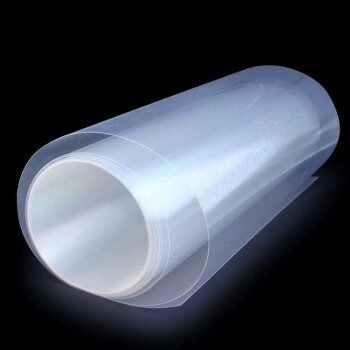
The Anion Exchange Membrane (AEM) acts as the critical gatekeeper within a photoelectrochemical system. Its primary function is to physically isolate the cathode and anode chambers while selectively permitting the transport of specific ions. This dual capability prevents dangerous gas mixing while enabling the continuous flow of charge required to maintain the system's electrical neutrality.
Core Takeaway The AEM is essential for balancing operational safety with performance; it creates a physical barrier to prevent hazardous reactions between hydrogen and chlorine gases while simultaneously acting as a conductive bridge for specific ions. This ensures the system achieves high coulombic efficiency without compromising the integrity of the electrolytic cell.
The Dual Pillars of AEM Functionality
To understand the value of the AEM, you must look beyond its role as a simple divider. It performs two simultaneous, often competing functions: complete physical isolation and highly selective chemical permeation.
Physical Isolation and Safety
The most immediate role of the AEM is serving as a physical barrier.
By separating the cathode and anode chambers, the membrane prevents the mixing of volatile reaction products.
Specifically, it stops produced hydrogen and chlorine gases from interacting, which eliminates severe safety hazards such as explosions or the formation of dangerous byproducts.
Preventing Product Re-oxidation
Beyond safety, physical separation is vital for chemical purity.
If products generated at the cathode migrate to the anode, they may be re-oxidized, effectively undoing the work the system just performed.
The AEM acts as a shield, ensuring that once a product is made, it remains separated from the opposing electrode's environment.
Maintaining Electrical Neutrality
While the membrane blocks gases, it must not block the internal circuit.
The AEM allows specific ions to pass through efficiently, facilitating the migration necessary to balance the charge generated at the electrodes.
This ion movement is what maintains electrical neutrality across the cell, ensuring the reaction does not stall due to charge buildup.
Driving Coulombic Efficiency
The efficiency of ion transport directly dictates the performance of the system.
By enabling a continuous and smooth charge flow, the AEM supports high coulombic efficiency.
This means that a maximal amount of the electrical energy input is successfully converted into the desired chemical reaction, rather than being lost as heat or resistance.
Understanding the Trade-offs
Designing or selecting an AEM requires balancing two opposing forces: the need to seal the chambers versus the need to facilitate flow.
The Barrier vs. Conductivity Conflict
A membrane that is too "tight" might offer excellent gas separation but create high electrical resistance.
Conversely, a membrane that is too permeable for ions might inadvertently allow product crossover, reducing the purity of your output.
The Cost of Poor Selectivity
If the AEM fails to filter ions correctly, the internal circuit cannot close efficiently.
This leads to a drop in energy efficiency, as the system must work harder to drive ions across a resistive or non-selective barrier.
Making the Right Choice for Your Goals
The AEM is not a passive component; it is an active participant in your system's success. Depending on your specific constraints, focus on the following parameters:
- If your primary focus is Safety: Prioritize a membrane with superior structural density to guarantee the absolute separation of hydrogen and chlorine gases.
- If your primary focus is Efficiency: Select a membrane engineered for high ionic conductivity to minimize resistance and maximize coulombic efficiency.
- If your primary focus is Product Purity: Ensure the membrane creates an effective barrier against the migration of reduction products to prevent re-oxidation at the anode.
Ultimately, a high-performing AEM is defined by its ability to selectively bridge the electrical gap while strictly maintaining the physical divide.
Summary Table:
| Feature | Primary Function | Impact on System Performance |
|---|---|---|
| Physical Barrier | Isolates cathode and anode chambers | Prevents hazardous gas mixing (H2/Cl2) and explosions. |
| Selective Permeation | Allows specific ion transport | Maintains electrical neutrality and closes the internal circuit. |
| Product Separation | Blocks migration of reaction products | Prevents product re-oxidation at the opposing electrode. |
| Ion Conductivity | Minimizes electrical resistance | Directly increases coulombic efficiency and energy conversion. |
Maximize Your Electrochemical Research Precision with KINTEK
Are you looking to optimize your photoelectrochemical cells or battery research setups? KINTEK specializes in high-performance laboratory equipment designed for the most demanding applications. Whether you need specialized electrolytic cells and electrodes, precision anion exchange membranes, or advanced high-temperature high-pressure reactors, our technical experts are here to support your success.
From battery research tools and homogenizers to muffle furnaces and PTFE consumables, we provide the comprehensive range required to maintain safety and drive coulombic efficiency in your lab.
Ready to upgrade your system? Contact us today to discover how KINTEK’s precision engineering can enhance your research outcomes!
References
- Ghassan Chehade, İbrahim Dinçer. A photoelectrochemical system for hydrogen and chlorine production from industrial waste acids. DOI: 10.1016/j.scitotenv.2019.136358
This article is also based on technical information from Kintek Solution Knowledge Base .
Related Products
- Anion Exchange Membrane for Laboratory Use
- Proton Exchange Membrane for Batteries Lab Applications
- Customizable PEM Electrolysis Cells for Diverse Research Applications
- FS Electrochemical Hydrogen Fuel Cells for Diverse Applications
- Polyethylene Separator for Lithium Battery
People Also Ask
- What role does an anion exchange membrane play in a PEC battery? Ensure Safe, High-Purity Hydrogen Production
- What role do ion exchange membranes play in zero-gap CO2 reduction? Master the Engine of Selective Transport
- What is the role of an ion exchange membrane in MCCA Kolbe electrolysis? Enhance Purity & Safety in Your Lab
- What should be considered when selecting an ion exchange membrane? Key Factors for Optimal Performance
- Why are ion exchange membranes essential in electrochemical cell configurations? Optimize Cell Efficiency and Safety