In Chemical Vapor Deposition (CVD) of graphene, the transition metal substrate acts as the fundamental engine of the entire synthesis process. It serves a dual purpose: physically supporting the deposition as a carrier and chemically driving the reaction as a catalyst. Without this specific catalytic surface, the carbon-containing precursor gases would not decompose and rearrange into the characteristic hexagonal lattice of graphene efficiently.
The specific properties of the transition metal substrate are the primary determinants of the final material's quality. Whether the graphene forms as a pristine single layer or a multi-layer structure depends entirely on how the metal interacts with carbon through surface catalysis or segregation mechanisms.
The Mechanisms of Growth
The Role of Catalytic Decomposition
In a typical CVD setup, the reaction chamber is heated to temperatures between 900°C and 1000°C. However, heat alone is often insufficient for controlled growth.
The transition metal substrate lowers the energy barrier required to break down carbon sources, such as methane gas. This surface catalysis allows carbon atoms to dissociate from their hydrogen bonds and become available for restructuring.
Carbon Rearrangement and Segregation
Once the carbon atoms are freed, the metal substrate guides their assembly. The atoms rearrange themselves on the metal surface to form the graphene sheet.
Depending on the specific metal used, this occurs through different mechanisms, such as surface adsorption (where carbon stays on the surface) or carbon segregation (where carbon dissolves into the metal and precipitates out). These mechanisms directly dictate whether the result is a single monolayer or a thicker, multi-layer film.
Determinants of Graphene Quality
Controlling Layer Uniformity
The chemical interaction between the carbon and the metal defines the "self-limiting" nature of the growth.
Ideally, the substrate facilitates the formation of a single layer and then stops the reaction, preventing excess carbon from piling up. Fast cooling rates are often employed to further suppress the formation of unwanted multiple layers, locking the structure in place.
Grain Size and Defect Density
The physical structure of the metal itself is imprinted onto the graphene. The grain size of the synthesized graphene is heavily influenced by the grain size of the underlying metal substrate.
To maximize quality, the metal foil (commonly copper) is often annealed in hydrogen and argon prior to growth. This process increases the metal's grain size, providing a larger, continuous surface for the graphene to grow on, thereby reducing defects.
Understanding the Trade-offs
The Transfer Challenge
While the metal substrate is essential for growth, it becomes an obstacle for application. Graphene is rarely used on the metal foil; it must be separated and transferred to another substrate (like a semiconductor wafer or polymer) for final use.
This transfer process is delicate and risks introducing tears, wrinkles, or contamination to the otherwise high-quality sheet.
Thermal Sensitivity
The success of the CVD process hinges on precise thermal management. Because the reaction kinetics are driven by the substrate's interaction with the gas, careful monitoring of the substrate's temperature is non-negotiable.
Slight deviations in the heating or cooling rate can alter the carbon segregation process, leading to inconsistent layer thickness or increased defect counts.
Making the Right Choice for Your Goal
To optimize your graphene synthesis, consider how the substrate functions relative to your specific requirements:
- If your primary focus is Single-Layer Purity: Prioritize substrates and cooling methods that favor surface catalysis and suppress precipitation, ensuring the reaction is self-limiting to a monolayer.
- If your primary focus is Low Defect Density: Ensure your process includes a rigorous annealing phase to maximize the substrate's grain size before the precursor gas is introduced.
Ultimately, the transition metal substrate is not just a passive holder; it is the active architect that defines the structural integrity of your graphene.
Summary Table:
| Feature | Role of Transition Metal Substrate |
|---|---|
| Function | Acts as both a physical carrier and a chemical catalyst |
| Mechanism | Lowers energy barriers for carbon source decomposition (e.g., Methane) |
| Growth Control | Dictates surface adsorption vs. carbon segregation |
| Quality Impact | Substrate grain size determines graphene grain size and defect density |
| Pre-treatment | Annealing increases metal grain size to improve graphene quality |
| Thermal Role | Manages reaction kinetics via precise heating and cooling rates |
Elevate Your Material Research with KINTEK Precision
Unlock the full potential of your graphene synthesis with KINTEK’s advanced laboratory solutions. As specialists in high-performance equipment, we provide the tools necessary to master the delicate balance of Chemical Vapor Deposition (CVD).
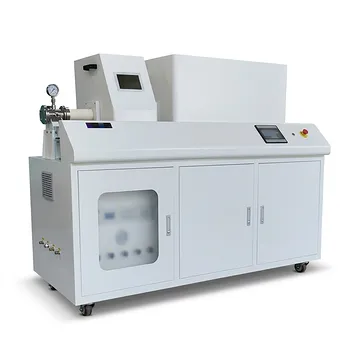
From high-precision CVD and PECVD systems designed for uniform heating to our robust crushing and milling systems for material preparation, KINTEK ensures your lab is equipped for excellence. Whether you are researching battery technologies using our electrolytic cells or requiring durable PTFE and ceramic consumables, our portfolio is tailored to the needs of modern scientists.
Ready to optimize your thin-film deposition or high-temperature processes?
Contact KINTEK today to discuss your equipment needs!
References
- Thong Le Ba, Imre Miklós Szilágyi. Review on the recent progress in the preparation and stability of graphene-based nanofluids. DOI: 10.1007/s10973-020-09365-9
This article is also based on technical information from Kintek Solution Knowledge Base .
Related Products
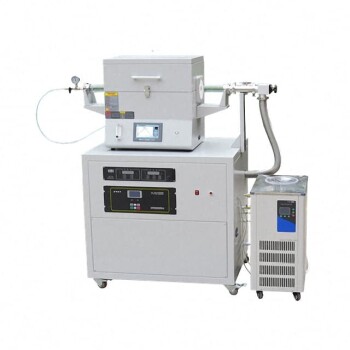
- Chemical Vapor Deposition CVD Equipment System Chamber Slide PECVD Tube Furnace with Liquid Gasifier PECVD Machine
- Customer Made Versatile CVD Tube Furnace Chemical Vapor Deposition Chamber System Equipment
- HFCVD Machine System Equipment for Drawing Die Nano-Diamond Coating
- Split Chamber CVD Tube Furnace with Vacuum Station Chemical Vapor Deposition System Equipment Machine
- Multi Heating Zones CVD Tube Furnace Machine Chemical Vapor Deposition Chamber System Equipment
People Also Ask
- What are the advantages of chemical vapor deposition? Achieve Superior Thin Films for Your Lab
- What types of substrates are used in CVD to facilitate graphene films? Optimize Graphene Growth with the Right Catalyst
- What is the chemical vapor deposition growth process? Build Superior Thin Films from the Atom Up
- How expensive is chemical vapor deposition? Understanding the True Cost of High-Performance Coating
- Why is Chemical Vapor Deposition (CVD) equipment uniquely suited for constructing hierarchical superhydrophobic structures?