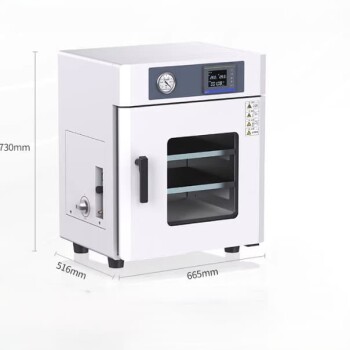
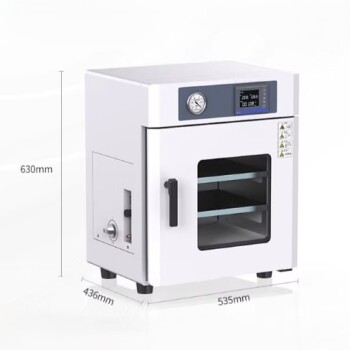
The decisive role of a vacuum drying oven in the post-treatment of PEO-based polymer electrolyte membranes is to rigorously eliminate trace organic solvents and moisture that would otherwise compromise the battery's performance. By subjecting the membrane to controlled heat and negative pressure, the oven ensures the material achieves the high chemical purity required for a wide electrochemical window and long-term cycling stability.
Core Insight: The vacuum drying oven is not merely a drying tool; it is a critical purification instrument. Its primary function is to prevent side reactions caused by residual impurities, thereby transforming a raw cast film into a chemically stable, electrochemically efficient solid-state electrolyte.
The Imperative for Chemical Purity
The primary reference highlights that the preparation of PEO-based membranes inevitably introduces organic solvents and exposes the material to moisture. The vacuum oven addresses the "deep need" of chemical inertness through two specific mechanisms.
Widening the Electrochemical Window
The presence of residual solvents, such as acetonitrile or DME, can be catastrophic for a solid-state battery. These residues often have lower electrochemical stability than the polymer itself.
If left in the membrane, they trigger side reactions during battery operation. By thoroughly removing these solvents, the vacuum oven prevents these reactions, directly resulting in a wider electrochemical stability window.
Neutralizing Moisture Sensitivity
PEO (Polyethylene Oxide) is inherently hygroscopic, meaning it readily absorbs water from the atmosphere. Furthermore, the lithium salts used in these electrolytes are highly sensitive to moisture.
Even minute amounts of water can react violently with lithium metal anodes. The vacuum drying oven creates an environment that extracts this trace moisture, ensuring the safety of the interface between the electrolyte and the anode.
Optimizing Physical Structure and Integrity
Beyond chemical purity, the vacuum environment plays a vital role in determining the physical architecture of the membrane.
Preventing Bubble Formation
When solvents evaporate at standard atmospheric pressure, they can become trapped, creating voids or bubbles within the membrane.
Vacuum drying lowers the boiling point of the solvent, accelerating evaporation in a controlled manner. This prevents the entrapment of air or vapor, resulting in a dense, bubble-free membrane with a smooth surface and uniform thickness.
Preserving the Polymer Matrix
High temperatures can degrade the polymer matrix of PEO-based electrolytes. Because the vacuum environment lowers the solvent's boiling point, drying can occur at moderate temperatures (typically 45°C to 60°C).
This allows for the complete removal of stubborn solvents without subjecting the polymer to thermal damage, preserving the mechanical stability necessary for a self-supporting membrane.
Common Pitfalls in Post-Treatment
While vacuum drying is essential, incorrect parameters can lead to suboptimal results. It is critical to understand the balance between time, temperature, and pressure.
The Risk of Incomplete Drying
Process duration is as critical as temperature. Supplementary data indicates that effective drying often requires extended periods, sometimes up to 48 hours. Rushing this process leaves behind residual solvents that act as electrochemical poisons, regardless of the temperature used.
Thermal-Vacuum Balance
Applying a vacuum allows for lower temperatures, but setting the temperature too low—even under vacuum—may fail to drive off the final trace molecules of solvent trapped deep within the polymer chains. Conversely, excessive heat can compromise the mechanical flexibility of the membrane, making it brittle.
Making the Right Choice for Your Goal
To maximize the performance of your PEO-based electrolyte, tailor your drying protocol to your specific performance metrics.
- If your primary focus is Electrochemical Stability: Prioritize extended drying times (e.g., 48 hours) to ensure the absolute removal of solvent residues that cause side reactions.
- If your primary focus is Mechanical Integrity: maintain moderate temperatures (approx. 45-50°C) to prevent thermal degradation while relying on high vacuum to achieve dryness.
- If your primary focus is Safety: Ensure the protocol specifically targets moisture removal to prevent reactivity with lithium metal anodes.
Ultimately, the vacuum drying oven serves as the final quality control gate, ensuring the membrane is physically uniform and chemically pure enough to survive the rigorous demands of solid-state battery cycling.
Summary Table:
| Feature | Impact on PEO-Based Membranes | Benefit to Battery Performance |
|---|---|---|
| Solvent Removal | Eliminates residual acetonitrile/DME | Widens electrochemical stability window |
| Moisture Control | Neutralizes hygroscopic PEO/Lithium salts | Prevents violent reactions with lithium metal anodes |
| Low-Temp Vacuum | Accelerates evaporation at 45°C - 60°C | Preserves polymer matrix and mechanical stability |
| Controlled Pressure | Prevents trapped air and vapor voids | Results in dense, bubble-free, and uniform membranes |
Elevate Your Solid-State Battery Research with KINTEK
Precision post-treatment is the difference between a failing cell and a high-performance solid-state battery. KINTEK specializes in advanced laboratory equipment designed for the rigorous demands of material science. Our high-performance vacuum drying ovens and high-temperature furnaces provide the thermal accuracy and vacuum stability essential for purifying PEO-based electrolytes.
From battery research tools and electrolytic cells to milling systems and pellet presses, KINTEK delivers the comprehensive solutions needed to optimize your membrane's chemical purity and mechanical integrity.
Ready to achieve a wider electrochemical window? Contact KINTEK today to find the perfect equipment for your lab!
Related Products
- 56L Vertical Laboratory Vacuum Drying Oven
- 23L Laboratory Vacuum Drying Oven
- Laboratory Scientific Electric Heating Blast Drying Oven
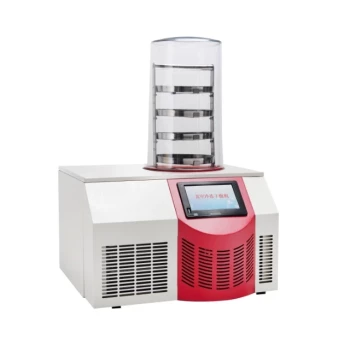
- Benchtop Laboratory Vacuum Freeze Dryer
- Vacuum Heat Treat Sintering Brazing Furnace
People Also Ask
- Why is a laboratory vacuum drying oven recommended for rice straw residues? Protect Your Biomass Integrity
- What role does a laboratory vacuum drying oven play in the preparation of modified multi-walled carbon nanotubes?
- What is the importance of using a laboratory vacuum drying oven? Preserving Slow-Release Microcapsule Integrity
- Why is a Laboratory Vacuum Drying Oven recommended for PBAT microspheres? Protect Sensitive Polymer Integrity
- What role does a laboratory vacuum drying oven play in processing nanoparticle powder samples? Protect Sample Integrity