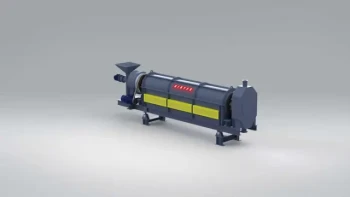
Knowledge What is the difference between an industrial furnace and a laboratory electric furnace? Choose the Right Heating System
Author avatar

Tech Team · Kintek Solution

Updated 5 days ago

What is the difference between an industrial furnace and a laboratory electric furnace? Choose the Right Heating System


The fundamental distinction lies in the operational workflow. An industrial furnace is primarily defined as a continuous furnace, designed for ongoing, high-volume processing. In contrast, a laboratory electric furnace is technically classified as a discontinuous electric furnace, intended for stop-and-start usage.

Core Insight: While size is the most visible difference, the defining engineering characteristic is the workflow. Industrial furnaces are built for dedicated, continuous throughput in a workshop setting, whereas laboratory furnaces are compact units designed for small-scale, discontinuous experimentation.

Operational Workflow: Continuous vs. Discontinuous

The Industrial "Continuous" Approach

The primary reference identifies an industrial furnace as a continuous furnace.

This means the system is designed to handle materials constantly moving through the heating process. It is optimized for efficiency and volume, maintaining specific conditions over long periods to support mass production.

The Laboratory "Discontinuous" Approach

Conversely, a laboratory electric furnace operates on a discontinuous basis.

These units are designed to heat a single batch, complete the cycle, and then shut down or be reset. This stop-and-start nature makes them ideal for testing specific variables without the commitment of a continuous production line.

Size and Installation Requirements

Workshop vs. Benchtop

The physical footprint is the most immediate visual difference.

Industrial furnaces require significant space and are typically installed permanently in a workshop or factory floor. They often require specialized infrastructure to operate safely.

Laboratory furnaces are significantly smaller and more compact. They are specifically engineered to fit within a standard laboratory environment, often on a benchtop, making them accessible for researchers with limited space.

Volume Capacity

Because of their intended setting, the internal volume differs drastically.

Industrial units are spacious, allowing for large batches or large individual components. Laboratory units generally feature small heating chambers (such as tube or small box designs) strictly for processing small samples or crucibles.

Purpose and Flexibility

Dedicated Production vs. Experimental Research

Industrial-scale furnaces are typically utilized for a dedicated application.

They often run one or two specific programs repeatedly for batch production. While they offer some flexibility to optimize processes, their primary goal is consistency and repeatability for a specific output.

R&D Versatility

Laboratory furnaces are categorized by their ability to handle varied experimental parameters.

They allow researchers to frequently change temperature zones, heating rates, and dwell times. This versatility is essential for defining the parameters that might later be scaled up to an industrial continuous furnace.

Understanding the Trade-offs

The Rigidness of Industrial Scale

While industrial furnaces offer high throughput, they lack agility.

Changing a process in a continuous, industrial system consumes time and resources. They are not suitable for environments where the "recipe" changes daily.

The Throughput Ceiling of Laboratory Models

Laboratory furnaces offer precision, but they cannot handle volume.

Attempting to use a discontinuous laboratory unit for small-scale production often leads to bottlenecks. They are not designed for the thermal stress of constant, 24/7 operation.

Making the Right Choice for Your Goal

To select the correct furnace type, you must evaluate your immediate throughput needs against your long-term process goals.

  • If your primary focus is Mass Production: You require an industrial continuous furnace to handle high volumes with dedicated, repeatable programming.
  • If your primary focus is Material Research: You require a laboratory discontinuous furnace to allow for compact, flexible testing of small samples.
  • If your primary focus is Process Definition: Start with a laboratory unit to establish the thermal recipe before investing in industrial infrastructure.

Select the tool that matches your workflow: continuous flow for production, or discontinuous precision for discovery.

Summary Table:

Feature Industrial Furnace Laboratory Electric Furnace
Workflow Continuous (Ongoing high-volume) Discontinuous (Stop-and-start batches)
Installation Permanent workshop/factory floor Compact benchtop/lab environment
Primary Goal Mass production & consistency R&D, testing, & process discovery
Capacity Large volume for big batches Small chamber for samples/crucibles
Flexibility Low (Optimized for specific programs) High (Frequent parameter changes)

Scale Your Thermal Processing with KINTEK Precision

Whether you are refining a new material recipe in the lab or scaling up for industrial production, KINTEK provides the high-performance thermal solutions you need. From compact muffle, tube, and vacuum furnaces for precise R&D to robust systems for specialized applications, our equipment is engineered for reliability and accuracy.

Our portfolio includes:

  • High-Temperature Furnaces: Muffle, tube, rotary, CVD/PECVD, and induction melting systems.
  • Pressure & Reaction Vessels: High-temperature high-pressure reactors and autoclaves.
  • Sample Preparation: Crushing, milling, sieving, and hydraulic presses (pellet, isostatic).
  • Lab Essentials: ULT freezers, electrolytic cells, and high-quality ceramic crucibles.

Don't let the wrong equipment bottleneck your innovation. Contact the KINTEK experts today to find the perfect furnace for your specific workflow.

Contact Us Today for a Consultation

Related Products

People Also Ask

Related Products

Laboratory Rapid Thermal Processing (RTP) Quartz Tube Furnace

Laboratory Rapid Thermal Processing (RTP) Quartz Tube Furnace

Get lightning-fast heating with our RTP Rapid Heating Tube Furnace. Designed for precise, high-speed heating and cooling with convenient sliding rail and TFT touch screen controller. Order now for ideal thermal processing!

1700℃ Muffle Oven Furnace for Laboratory

1700℃ Muffle Oven Furnace for Laboratory

Get superior heat control with our 1700℃ Muffle Furnace. Equipped with intelligent temperature microprocessor, TFT touch screen controller & advanced insulation materials for precise heating up to 1700C. Order now!

1400℃ Muffle Oven Furnace for Laboratory

1400℃ Muffle Oven Furnace for Laboratory

Get precise high-temperature control up to 1500℃ with KT-14M Muffle furnace. Equipped with a smart touch screen controller and advanced insulation materials.

1800℃ Muffle Oven Furnace for Laboratory

1800℃ Muffle Oven Furnace for Laboratory

KT-18 muffle furnace with Japan Al2O3 polycrystalline fibe and Silicon Molybdenum heating element, up to 1900℃, PID temperature control and 7" smart touch screen. Compact design, low heat loss, and high energy efficiency. Safety interlock system and versatile functions.

1400℃ Laboratory High Temperature Tube Furnace with Alumina Tube

1400℃ Laboratory High Temperature Tube Furnace with Alumina Tube

Looking for a tube furnace for high-temperature applications? Our 1400℃ Tube Furnace with Alumina Tube is perfect for research and industrial use.

1700℃ Laboratory High Temperature Tube Furnace with Alumina Tube

1700℃ Laboratory High Temperature Tube Furnace with Alumina Tube

Looking for a high-temperature tube furnace? Check out our 1700℃ Tube Furnace with Alumina Tube. Perfect for research and industrial applications up to 1700C.

Multi Heating Zones CVD Tube Furnace Machine Chemical Vapor Deposition Chamber System Equipment

Multi Heating Zones CVD Tube Furnace Machine Chemical Vapor Deposition Chamber System Equipment

KT-CTF14 Multi Heating Zones CVD Furnace - Precise Temperature Control and Gas Flow for Advanced Applications. Max temp up to 1200℃, 4 channels MFC mass flow meter, and 7" TFT touch screen controller.

1200℃ Split Tube Furnace with Quartz Tube Laboratory Tubular Furnace

1200℃ Split Tube Furnace with Quartz Tube Laboratory Tubular Furnace

KT-TF12 split tube furnace: high-purity insulation, embedded heating wire coils, and max. 1200C. Widely used for new materials and chemical vapour deposition.

Vacuum Sealed Continuous Working Rotary Tube Furnace Rotating Tube Furnace

Vacuum Sealed Continuous Working Rotary Tube Furnace Rotating Tube Furnace

Experience efficient material processing with our vacuum-sealed rotary tube furnace. Perfect for experiments or industrial production, equipped with optional features for controlled feeding and optimized results. Order now.

Laboratory Vacuum Tilt Rotary Tube Furnace Rotating Tube Furnace

Laboratory Vacuum Tilt Rotary Tube Furnace Rotating Tube Furnace

Discover the versatility of Laboratory Rotary Furnace: Ideal for calcination, drying, sintering, and high-temperature reactions. Adjustable rotating and tilting functions for optimal heating. Suitable for vacuum and controlled atmosphere environments. Learn more now!

Electric Rotary Kiln Continuous Working Small Rotary Furnace Heating Pyrolysis Plant

Electric Rotary Kiln Continuous Working Small Rotary Furnace Heating Pyrolysis Plant

Efficiently calcine and dry bulk powder and lump fluid materials with an electric heating rotary furnace. Ideal for processing lithium ion battery materials and more.

Laboratory Muffle Oven Furnace Bottom Lifting Muffle Furnace

Laboratory Muffle Oven Furnace Bottom Lifting Muffle Furnace

Efficiently produce batches with excellent temperature uniformity using our Bottom Lifting Furnace. Features two electric lifting stages and advanced temperature control up to 1600℃.

Horizontal High Temperature Graphite Vacuum Graphitization Furnace

Horizontal High Temperature Graphite Vacuum Graphitization Furnace

Horizontal Graphitization Furnace: This type of furnace is designed with the heating elements placed horizontally, allowing for uniform heating of the sample. It's well-suited for graphitizing large or bulky samples that require precise temperature control and uniformity.

1200℃ Controlled Atmosphere Furnace Nitrogen Inert Atmosphere Furnace

1200℃ Controlled Atmosphere Furnace Nitrogen Inert Atmosphere Furnace

Discover our KT-12A Pro Controlled atmosphere furnace - high precision, heavy duty vacuum chamber, versatile smart touch screen controller, and excellent temperature uniformity up to 1200C. Ideal for both laboratory and industrial application.

Mesh belt controlled atmosphere furnace

Mesh belt controlled atmosphere furnace

Discover our KT-MB mesh belt sintering furnace - perfect for high-temperature sintering of electronic components & glass insulators. Available for open air or controlled atmosphere environments.

Ultra-High Temperature Graphite Vacuum Graphitization Furnace

Ultra-High Temperature Graphite Vacuum Graphitization Furnace

The ultra-high temperature graphitization furnace utilizes medium frequency induction heating in a vacuum or inert gas environment. The induction coil generates an alternating magnetic field, inducing eddy currents in the graphite crucible, which heats up and radiates heat to the workpiece, bringing it to the desired temperature. This furnace is primarily used for graphitization and sintering of carbon materials, carbon fiber materials, and other composite materials.

1700℃ Controlled Atmosphere Furnace Nitrogen Inert Atmosphere Furnace

1700℃ Controlled Atmosphere Furnace Nitrogen Inert Atmosphere Furnace

KT-17A Controlled atmosphere furnace: 1700℃ heating, vacuum sealing technology, PID temperature control, and versatile TFT smart touch screen controller for laboratory and industrial use.

Vacuum Heat Treat Sintering Brazing Furnace

Vacuum Heat Treat Sintering Brazing Furnace

A vacuum brazing furnace is a type of industrial furnace used for brazing, a metalworking process that joins two pieces of metal using a filler metal that melts at a lower temperature than the base metals. Vacuum brazing furnaces are typically used for high-quality applications where a strong, clean joint is required.

Controlled Nitrogen Inert Hydrogen Atmosphere Furnace

Controlled Nitrogen Inert Hydrogen Atmosphere Furnace

KT-AH Hydrogen atmosphere furnace - induction gas furnace for sintering/annealing with built-in safety features, dual housing design, and energy-saving efficiency. Ideal for lab and industrial use.

Vacuum Heat Treat and Molybdenum Wire Sintering Furnace for Vacuum Sintering

Vacuum Heat Treat and Molybdenum Wire Sintering Furnace for Vacuum Sintering

A vacuum molybdenum wire sintering furnace is a vertical or bedroom structure, which is suitable for withdrawal, brazing, sintering and degassing of metal materials under high vacuum and high temperature conditions. It is also suitable for dehydroxylation treatment of quartz materials.


Leave Your Message