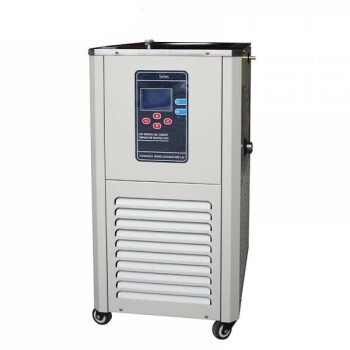
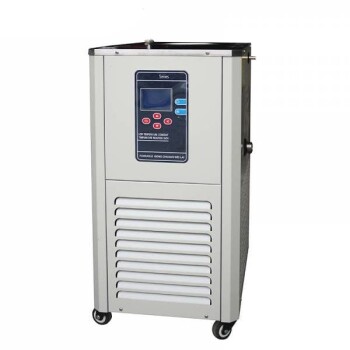
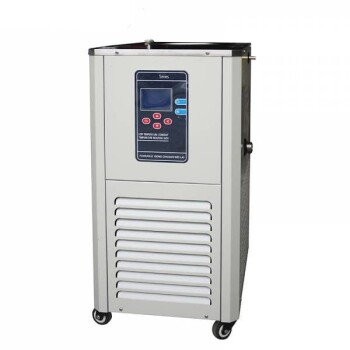
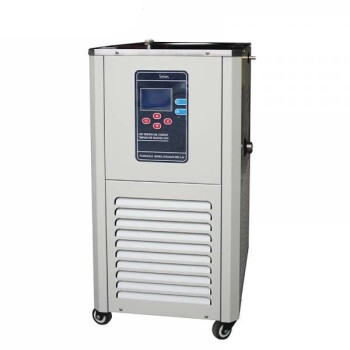
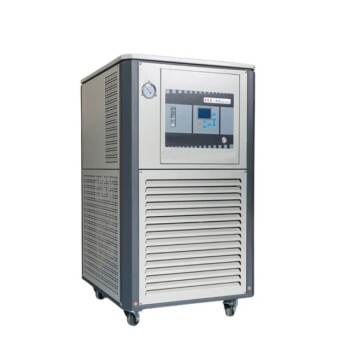
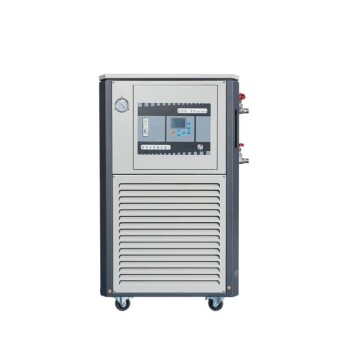
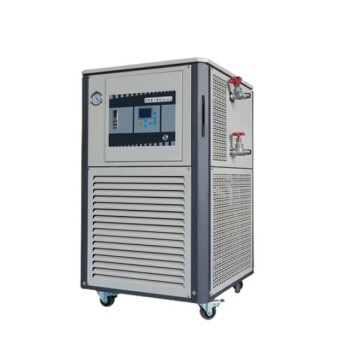
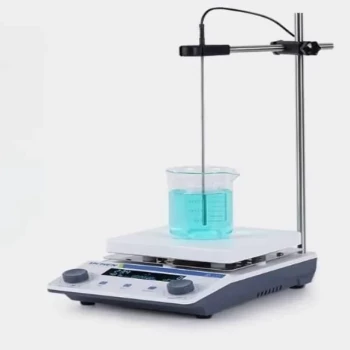
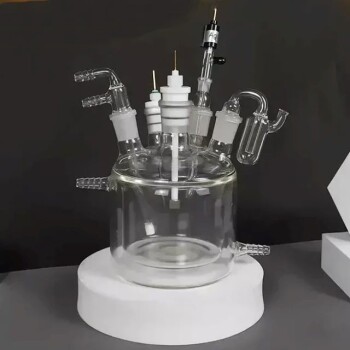
The function of a constant temperature water bath is to provide a precise, stable thermal environment that drives the sol-gel reaction. Specifically, during the preparation of Magnesium Aluminum Spinel (MgAl2O4) precursors, this apparatus maintains the mixed solution at a targeted temperature—often 90℃—to simultaneously facilitate the reaction between metal cations and complexing agents while promoting controlled solvent evaporation.
Core Takeaway The water bath is not merely for heating; it is a tool for homogeneity control. By stabilizing the temperature, it ensures the formation of a uniform, transparent gel, which is the critical prerequisite for obtaining high-quality, pure ceramic powders in subsequent processing stages.
The Critical Role of Thermal Stability
The sol-gel method relies on precise chemical kinetics. The water bath serves as the control mechanism for two distinct physical and chemical processes required to form a viable precursor.
Facilitating Complexation Reactions
The primary goal at this stage is to bond metal cations with complexing agents, such as citric acid.
The constant temperature provided by the water bath ensures that this reaction occurs completely and uniformly throughout the solution. Without this steady heat, the interaction between the magnesium/aluminum ions and the citric acid may remain partial, leading to inconsistencies in the final material structure.
Controlling Solvent Evaporation
As the reaction progresses, the solvent must be removed to transition from a liquid solution ("sol") to a semi-solid network ("gel").
The water bath promotes evaporation at a controlled, gradual rate. Unlike direct heating methods which might cause rapid boiling or sputtering, the water bath ensures the solvent creates the necessary pore structure within the gel without collapsing the network prematurely.
Achieving Gel Uniformity
The ultimate visual and chemical indicator of success in this step is the formation of a transparent gel.
The constant thermal environment prevents thermal gradients (hot spots) within the beaker. This ensures that the gelation occurs evenly across the entire volume of the mixture, preventing the precipitation of unwanted salts or the segregation of components.
Understanding the Trade-offs
While the water bath is essential for quality, it introduces specific constraints that must be managed.
Precision vs. Speed
Using a water bath is generally slower than direct heating methods like a hot plate or Bunsen burner.
However, this trade-off is non-negotiable for high-quality MgAl2O4. Direct heating creates aggressive thermal gradients that can cause local precipitation rather than gelation, ruining the homogeneity of the precursor.
Temperature Limitations
Water baths are limited by the boiling point of water (100℃) or the bath fluid used.
For the MgAl2O4 sol-gel process, a target of 90℃ is effective. Attempting to accelerate the process by pushing the temperature higher (closer to boiling) can introduce turbulence in the water bath, potentially disturbing the gelation process or causing uneven evaporation rates.
Making the Right Choice for Your Goal
To ensure the highest quality Magnesium Aluminum Spinel precursors, you must prioritize stability over speed.
- If your primary focus is Gel Homogeneity: Maintain the water bath strictly at 90℃ to guarantee the formation of a transparent gel, avoiding any cloudiness that indicates precipitation.
- If your primary focus is Stoichiometric Accuracy: Allow the solution to remain in the bath until the complexing reaction with citric acid is chemically complete, ensuring no metal cations are left unbonded.
Success in the sol-gel method is defined by patience; the uniformity of your gel dictates the quality of your final ceramic.
Summary Table:
| Feature | Role in MgAl2O4 Sol-Gel Process | Impact on Quality |
|---|---|---|
| Temperature Stability | Maintains a precise 90℃ environment | Ensures complete complexation between metal ions and citric acid |
| Uniform Heating | Eliminates thermal gradients/hot spots | Prevents precipitation and promotes a transparent, uniform gel |
| Controlled Evaporation | Gradual removal of solvent | Preserves the delicate pore structure of the semi-solid network |
| Kinetics Control | Drives chemical reactions at a steady rate | Guarantees stoichiometric accuracy and chemical purity |
Elevate Your Material Research with KINTEK Precision
Achieving the perfect MgAl2O4 precursor requires more than just heat; it requires absolute control. KINTEK specializes in high-performance laboratory equipment designed for rigorous chemical synthesis. From constant temperature cooling and heating solutions to advanced high-temperature furnaces (muffle, tube, and vacuum) for final calcination, our tools ensure your sol-gel processes are repeatable and precise.
Whether you are developing advanced ceramics or conducting battery research, our comprehensive range of high-pressure reactors, crushing systems, and specialized consumables (PTFE, ceramics, and crucibles) provides the reliability your lab demands.
Ready to optimize your synthesis workflow? Contact KINTEK today to discover how our tailored equipment solutions can enhance your research outcomes!
Related Products
- High Temperature Constant Temperature Heating Circulator Water Bath Chiller Circulator for Reaction Bath
- 50L Chiller Water Bath Cooling Circulator Low Temperature Constant Temperature Reaction Bath
- 10L Chilling Circulator Cooling Water Bath Low Temperature Constant Temperature Reaction Bath
- 30L Chiller Water Bath Cooling Circulator Low Temperature Constant Temperature Reaction Bath
- 40L Chiller Water Bath Cooling Circulator Low Temperature Constant Temperature Reaction Bath
People Also Ask
- What is the necessity of a circulating water bath in chlorate production? Optimize Yield & Purity with Precision
- How do constant temperature circulators impact weight-loss immersion tests? Ensure Precision in Corrosion Analysis
- How does a constant temperature circulator support the leaching reaction of gold scrap? Optimize Gold Recovery Results
- Why is a constant temperature water bath used for precursor storage in CVD? Achieve Stable Nanocrystalline SiC Deposition
- Why is a high-precision constant temperature water bath necessary for anaerobic digestion? Ensure Success at 37±0.02°C