Knowledge What is the function of a high-energy ball mill in the post-treatment of calcium-based adsorbents? Enhance CO2 Capture
Author avatar

Tech Team · Kintek Solution

Updated 1 day ago

What is the function of a high-energy ball mill in the post-treatment of calcium-based adsorbents? Enhance CO2 Capture


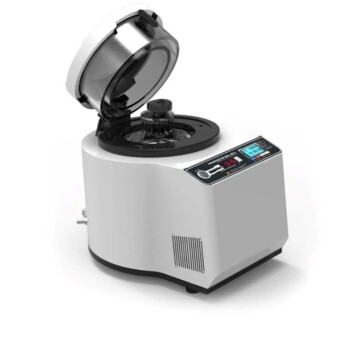
High-energy ball milling functions as a critical mechanical activation step in the post-treatment of synthesized calcium-based adsorbents. Through high-frequency mechanical impacts, this process refines the grain size of the powder and significantly increases the number of available active sites. This physical transformation directly improves the chemical adsorption kinetics, allowing the material to capture carbon dioxide effectively even at lower reaction temperatures.

High-energy ball milling does not merely grind the material; it mechanically activates the adsorbent surface, bridging the gap between a synthesized raw powder and a highly reactive, kinetically efficient capture agent.

The Mechanics of Physical Refinement

Reduction of Grain Size

The primary mechanism of the ball mill is the application of intense impact and shear forces.

When applied to calcium oxide powders prepared via sol-gel, the milling media breaks down the synthesized particles. This results in a significant reduction in grain size, moving the material toward the nanometer scale.

Generation of Active Sites

Beyond simple size reduction, the high-energy impacts introduce structural defects and fresh surfaces to the crystal lattice.

These newly exposed surfaces act as "active sites." Increasing the density of these sites is essential for facilitating the chemical interactions required for gas adsorption.

Breaking of Agglomerates

Sol-gel synthesis can sometimes result in particle clustering or agglomeration.

Ball milling effectively breaks these agglomerates apart. This ensures the material is chemically accessible rather than locked inside larger, fused clusters.

Impact on Carbon Capture Capabilities

Enhanced Adsorption Kinetics

The refinement of grain size shortens the diffusion path for gas molecules.

According to the primary technical data, this mechanical activation significantly improves chemical adsorption kinetics. The adsorbent can react with and capture carbon dioxide much faster than untreated powders.

Performance at Lower Temperatures

Standard calcium-based adsorbents often require high temperatures to achieve maximum capture capacity.

However, the increased reactivity provided by high-energy ball milling allows these adsorbents to maintain high initial capture capacities even when reaction temperatures are lower. This widens the operational window for the capture process.

Uniform Dispersion of Components

If the post-treatment involves adding stabilizers (such as inert metal oxides) to prevent degradation, ball milling ensures a homogeneous mix.

As seen in similar material processing contexts, this uniform dispersion is critical for preventing sintering (the fusing of particles) during repeated heating and cooling cycles.

Understanding the Trade-offs

Risk of Contamination

High-energy milling involves abrasive contact between grinding media (balls) and the jar lining.

There is a risk of media wear, which can introduce trace impurities into your calcium adsorbent. This must be monitored, as impurities can affect the chemical purity of the final product.

Structural Integrity vs. Reactivity

While reducing particle size increases reactivity, there is a limit.

Excessive milling time or energy can lead to "over-milling," potentially creating an amorphous structure that may behave differently than the desired crystalline phase. The process requires precise control over time and rotation speed to balance refinement with structural stability.

Making the Right Choice for Your Project

High-energy ball milling is a potent tool, but its application depends on your specific performance bottlenecks.

  • If your primary focus is Reaction Speed (Kinetics): Utilize ball milling to maximize surface area and active sites, ensuring rapid CO2 uptake.
  • If your primary focus is Low-Temperature Operation: Employ mechanical activation to lower the activation energy barrier, allowing efficient capture in cooler environments.
  • If your primary focus is Cycle Stability: Use the milling step to intimately mix stabilizers, which helps prevent particle sintering over repeated use.

Mechanical activation transforms the potential energy of a synthesized powder into the kinetic reality of a high-performance adsorbent.

Summary Table:

Feature Impact of High-Energy Ball Milling
Particle Size Significant reduction to nanometer scale for faster diffusion
Active Sites Increases surface defects and reactive surface area
Kinetics Accelerates chemical adsorption speed (CO2 uptake)
Temperature Enables high capture capacity at lower operating temperatures
Dispersion Ensures homogeneous mixing of stabilizers to prevent sintering
Agglomeration Effectively breaks down clusters from the sol-gel process

Maximize Your Material Reactivity with KINTEK

Transform your synthesized powders into high-performance capture agents. KINTEK specializes in advanced laboratory equipment, offering industry-leading high-energy ball mills, crushing and milling systems, and sieving equipment designed for precise grain size control and mechanical activation.

Whether you are refining calcium-based adsorbents or developing the next generation of battery materials, our comprehensive portfolio—including high-temperature furnaces, hydraulic presses, and high-pressure reactors—provides the reliability your research demands.

Ready to optimize your adsorption kinetics and cycle stability? Contact our technical experts today to find the perfect milling solution for your laboratory.

References

  1. Donata Konopacka-Łyskawa, Andrzej Szefer. CaO-based high temperature CO2 sorbents – Literature review. DOI: 10.24425/cpe.2021.138938

This article is also based on technical information from Kintek Solution Knowledge Base .

Related Products

People Also Ask

Related Products

High Energy Planetary Ball Mill Milling Machine for Laboratory

High Energy Planetary Ball Mill Milling Machine for Laboratory

The biggest feature is that the high energy planetary ball mill can not only perform fast and effective grinding, but also has good crushing ability

High Energy Planetary Ball Mill for Laboratory Horizontal Tank Type Milling Machine

High Energy Planetary Ball Mill for Laboratory Horizontal Tank Type Milling Machine

KT-P4000H uses the unique Y-axis planetary motion trajectory, and utilizes the collision, friction and gravity between the sample and the grinding ball to have a certain anti-sinking ability, which can obtain better grinding or mixing effects and further improve the sample output.

Laboratory Single Horizontal Jar Mill

Laboratory Single Horizontal Jar Mill

KT-JM3000 is a mixing and grinding instrument for placing a ball milling tank with a volume of 3000ml or less. It adopts frequency conversion control to realize timing, constant speed, direction change, overload protection and other functions.

Laboratory Ten-Body Horizontal Jar Mill for Lab Use

Laboratory Ten-Body Horizontal Jar Mill for Lab Use

The Ten-body horizontal jar mill is for 10 ball mill pots (3000ml or less). It has frequency conversion control, rubber roller movement, and PE protective cover.

Powerful Plastic Crusher Machine

Powerful Plastic Crusher Machine

KINTEK's powerful plastic crusher machines process 60-1350 KG/H of diverse plastics, ideal for labs and recycling. Durable, efficient, and customizable.

Small Lab Rubber Calendering Machine

Small Lab Rubber Calendering Machine

Small lab rubber calendering machine is used for producing thin, continuous sheets of plastic or rubber materials. It is commonly employed in laboratories, small-scale production facilities, and prototyping environments to create films, coatings, and laminates with precise thickness and surface finish.

Manual High Temperature Heated Hydraulic Press Machine with Heated Plates for Lab

Manual High Temperature Heated Hydraulic Press Machine with Heated Plates for Lab

The High Temperature Hot Press is a machine specifically designed for pressing, sintering and processing materials in a high temperature environment. It is capable of operating in the range of hundreds of degrees Celsius to thousands of degrees Celsius for a variety of high temperature process requirements.

Lab Plastic PVC Calender Stretch Film Casting Machine for Film Testing

Lab Plastic PVC Calender Stretch Film Casting Machine for Film Testing

The cast film machine is designed for the molding of polymer cast film products and has multiple processing functions such as casting, extrusion, stretching, and compounding.

Single Punch Tablet Press Machine and Mass Production Rotary Tablet Punching Machine for TDP

Single Punch Tablet Press Machine and Mass Production Rotary Tablet Punching Machine for TDP

Rotary tablet punching machine is an automatic rotating and continuous tableting machine. It is mainly used for tablet manufacturing in the pharmaceutical industry, and is also suitable for industrial sectors such as food, chemicals, batteries, electronics, ceramics, etc. to compress granular raw materials into tablets.

Heated Hydraulic Press Machine with Integrated Manual Heated Plates for Lab Use

Heated Hydraulic Press Machine with Integrated Manual Heated Plates for Lab Use

Efficiently process heat-pressing samples with our Integrated Manual Heated Lab Press. With a heating range up to 500°C, it's perfect for various industries.

Laboratory Test Sieves and Vibratory Sieve Shaker Machine

Laboratory Test Sieves and Vibratory Sieve Shaker Machine

Efficiently process powders, granules, and small blocks with a high-frequency vibration sieve. Control vibration frequency, screen continuously or intermittently, and achieve accurate particle size determination, separation, and classification.

Small Injection Molding Machine for Lab Use

Small Injection Molding Machine for Lab Use

The small injection molding machinehas fast and stable movements; good controllability and repeatability, super energy saving; the product can be automatically dropped and formed; the machine body is low, convenient for feeding, easy to maintain, and no height restrictions on the installation site.

Metallographic Specimen Mounting Machine for Laboratory Materials and Analysis

Metallographic Specimen Mounting Machine for Laboratory Materials and Analysis

Precision metallographic mounting machines for labs—automated, versatile, and efficient. Ideal for sample prep in research and quality control. Contact KINTEK today!

Rubber Vulcanizer Vulcanizing Machine Plate Vulcanizing Press for Lab

Rubber Vulcanizer Vulcanizing Machine Plate Vulcanizing Press for Lab

The Plate vulcanizing press is a kind of equipment used in the production of rubber products, mainly used for the vulcanization of rubber products. Vulcanization is a key step in rubber processing.

Lab Internal Rubber Mixer Rubber Kneader Machine for Mixing and Kneading

Lab Internal Rubber Mixer Rubber Kneader Machine for Mixing and Kneading

Lab internal rubber mixer is suitable for mixing, kneading and dispersing various chemical raw materials such as plastics, rubber, synthetic rubber, hot melt adhesive and various low-viscosity materials.

12 Inch 24 Inch High Precision Automatic Diamond Wire Cutting Machine Laboratory Saw Precision Wire EDM Cutting Machine

12 Inch 24 Inch High Precision Automatic Diamond Wire Cutting Machine Laboratory Saw Precision Wire EDM Cutting Machine

The high precision automatic diamond wire cutting machine is a versatile cutting tool that uses a diamond wire to cut through a wide range of materials, including conductive and non-conductive materials, ceramics, glass, rocks, gems, jade, meteorites, monocrystalline silicon, silicon carbide, polycrystalline silicon, refractory bricks, epoxy boards, and ferrite bodies. It is especially suitable for cutting various brittle crystals with high hardness, high value, and easy to break.

Laboratory Vibratory Sieve Shaker Machine for Dry and Wet Three-Dimensional Sieving

Laboratory Vibratory Sieve Shaker Machine for Dry and Wet Three-Dimensional Sieving

KT-VD200 can be used for sieving tasks of dry and wet samples in the laboratory. The screening quality is 20g-3kg. The product is designed with a unique mechanical structure and an electromagnetic vibrating body with a vibration frequency of 3000 times per minute.

Automatic Heated Hydraulic Press Machine with Heated Plates for Laboratory Hot Press 25T 30T 50T

Automatic Heated Hydraulic Press Machine with Heated Plates for Laboratory Hot Press 25T 30T 50T

Efficiently prepare your samples with our Automatic Heated Lab Press. With a pressure range up to 50T and precise control, it's perfect for various industries.

Single Punch Electric Tablet Press Machine Laboratory Powder Tablet Punching TDP Tablet Press

Single Punch Electric Tablet Press Machine Laboratory Powder Tablet Punching TDP Tablet Press

The single-punch electric tablet press is a laboratory-scale tablet press suitable for corporate laboratories in pharmaceutical, chemical, food, metallurgical and other industries.

Electric Split Lab Cold Isostatic Press CIP Machine for Cold Isostatic Pressing

Electric Split Lab Cold Isostatic Press CIP Machine for Cold Isostatic Pressing

Split cold isostatic presses are capable of providing higher pressures, making them suitable for testing applications that require high pressure levels.


Leave Your Message