A K-type thermocouple functions as the primary feedback sensor for regulating thermal conditions during diamond film deposition. Positioned directly beneath the sample holder, it monitors the substrate's temperature in real-time, sending data to the control system to dynamically adjust heating power and maintain precise environmental conditions.
The success of diamond synthesis relies on thermal stability. The K-type thermocouple provides the essential data link between the physical deposition environment and the power supply, ensuring the temperature remains within the narrow window required for high-quality diamond crystallization.
The Mechanics of Thermal Control
Real-Time Monitoring
The K-type thermocouple is strategically placed beneath the sample holder.
This specific location allows it to continuously track the actual heating temperature applied to the substrate, rather than relying on theoretical set points or external estimates.
The Feedback Loop
The data collected by the thermocouple serves as the input for the system's power regulation.
If the temperature deviates even slightly from the target, the system uses this feedback to immediately modulate the heating power. This active loop prevents thermal drift during the long durations often required for film growth.
Impact on Diamond Quality
Optimizing the Carbon Structure
The most critical role of temperature control is determining the chemical structure of the deposited film.
Carbon can form as diamond (sp3 hybridization) or graphite (sp2 hybridization). Precise temperature feedback helps maintain the environment necessary to maximize the sp3 content and minimize graphitic impurities.
Regulating Growth Rates
Diamond crystal growth is highly sensitive to thermal fluctuations.
By ensuring the substrate stays at the optimal temperature, the thermocouple enables consistent growth rates. This consistency is vital for achieving uniform film thickness and structural integrity.
Understanding the Limitations
Indirect Measurement
Because the thermocouple is located beneath the sample holder, it measures the temperature of the holder, not the exposed surface of the diamond film.
There is often a slight thermal lag or gradient between the back of the holder and the growth surface. Operators must account for this offset when setting process parameters.
Sensitivity Constraints
While K-type thermocouples are robust, they must be properly shielded and calibrated.
Inaccurate readings due to degradation or poor contact can lead to incorrect power adjustments, inadvertently shifting the deposition into a regime that favors graphite (sp2) formation over diamond (sp3).
Making the Right Choice for Your Goal
To leverage the K-type thermocouple effectively for your specific deposition targets:
- If your primary focus is Crystal Purity: Prioritize stability over speed; use the thermocouple feedback to minimize temperature variance, which ensures the highest possible sp3 to sp2 ratio.
- If your primary focus is Growth Rate: Calibrate the temperature offset carefully to push the thermal limits of the holder without overheating the substrate surface.
Precise temperature feedback is the difference between a high-quality diamond film and a graphitic carbon coating.
Summary Table:
| Feature | Function in Deposition | Impact on Diamond Quality |
|---|---|---|
| Placement | Beneath the sample holder | Monitors real-time substrate heating accurately |
| Feedback Loop | Adjusts power supply dynamically | Prevents thermal drift for stable long-term growth |
| Phase Control | Maintains optimal thermal window | Maximizes sp3 (diamond) vs. sp2 (graphite) content |
| Growth Rate | Regulates consistent heat levels | Ensures uniform film thickness and structural integrity |
Elevate Your Diamond Synthesis Precision with KINTEK
Achieving the perfect sp3 carbon structure requires more than just a sensor—it requires a high-performance thermal environment. KINTEK specializes in advanced laboratory equipment, including CVD, MPCVD, and high-temperature vacuum furnaces designed for rigorous diamond film deposition and material research.
From our precision-engineered high-temperature high-pressure reactors to essential consumables like crucibles and ceramic components, we provide the tools you need for consistent, high-purity results. Don't let thermal fluctuations compromise your research.
Contact our technical experts today to discover how our comprehensive range of furnaces and deposition systems can optimize your laboratory’s efficiency and output.
References
- William de Melo Silva, Deílson Elgui de Oliveira. Fibroblast and pre-osteoblast cell adhesive behavior on titanium alloy coated with diamond film. DOI: 10.1590/1980-5373-mr-2016-0971
This article is also based on technical information from Kintek Solution Knowledge Base .
Related Products
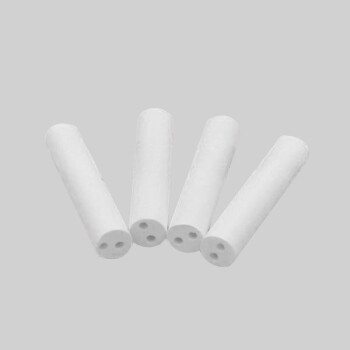
- Hexagonal Boron Nitride HBN Thermocouple Protection Tube
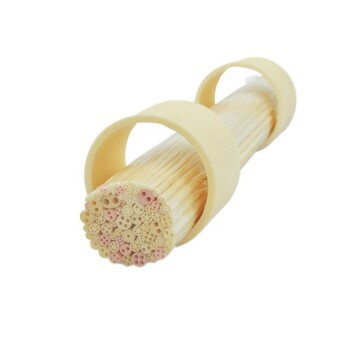
- High Temperature Aluminum Oxide (Al2O3) Protective Tube for Engineering Advanced Fine Ceramics
People Also Ask
- Why are Boron Nitride Tubes selected as reaction vessels for Na3SbS4? Ensure Purity in High-Temp Synthesis
- What are the symptoms of a bad thermocouple? Diagnose a Pilot Light That Won't Stay Lit
- What information does a thermocouple at the substrate bottom provide in LCVD? Master Precise Temperature Control
- What are the specific temperature control requirements for high-precision thermocouples? Achieve ±0.3°C Precision
- What is the most common type of temperature sensor? The Unmatched Versatility of Thermocouples