In the sol-gel synthesis of calcium oxide (CaO) nanocatalysts, the laboratory drying oven functions as the critical mechanism for phase transition, converting the wet gel network into a handleable solid. Its primary purpose is to evaporate the water layer and remove residual solvents from the precursor materials.
The Core Takeaway The laboratory drying oven bridges the gap between chemical synthesis and thermal activation. By maintaining a constant temperature (typically 105°C), it removes moisture to create a dry, uniform solid, preventing structural damage that would occur if a wet precursor were immediately subjected to high-temperature calcination.
The Role of Controlled Drying in Sol-Gel Synthesis
Transitioning from Gel to Solid
The sol-gel process results in a porous matrix filled with solvent (usually water or alcohol). The drying oven is utilized specifically to evaporate the water layer trapped within this gel structure.
This step gently removes the liquid phase without collapsing the delicate pore structure of the material.
Ensuring Precursor Uniformity
According to standard protocols, the oven is set to maintain a constant temperature, generally around 105°C.
This steady heat ensures that the drying is uniform throughout the sample. The result is a consistent solid mixture, rather than a material with a dry "skin" and a wet core.
Preparation for Calcination
The ultimate goal of the drying phase is to prepare the precursor for high-temperature calcination.
Calcination involves extreme heat to crystallize the catalyst. If the material is not thoroughly dried first in the oven, the rapid vaporization of remaining moisture during calcination could destroy the material's structure.
Why Precision Matters
Prevention of Structural Defects
While the primary focus is removing water, the "why" is rooted in structural integrity.
As seen in similar synthesis workflows (such as Ni-Al2O3-TiO2 composites), removing volatile substances prevents cracks or pores from forming. If moisture expands rapidly during later high-heat stages, it can fracture the catalyst's body.
Accuracy in Quantification
Thorough drying is required to obtain an accurate mass measurement of the precursor.
If the drying is incomplete, the weight of the sample will include water mass, leading to errors in stoichiometric calculations for subsequent reactions or dosing.
Understanding the Trade-offs
The Risk of Excessive Heat
While it might be tempting to increase the temperature to speed up drying, this can be detrimental to nanomaterials.
Excessive temperatures during the drying phase can lead to undesirable growth of crystal grains or the loss of structural water (as observed in zinc borate synthesis). This reduces the surface area of the nanocatalyst, potentially lowering its reactivity.
The Risk of Incomplete Drying
Conversely, insufficient drying time or temperature leaves residual solvent in the pores.
This residue can cause dangerous pressure buildup during calcination or interfere with the chemical composition of the final oxide, leading to impurities in the CaO nanocatalyst.
Making the Right Choice for Your Goal
To maximize the quality of your calcium oxide nanocatalysts, align your drying protocol with your specific physical requirements:
- If your primary focus is Structural Integrity: Ensure the temperature ramp-up is gradual and holds steady at 105°C to prevent rapid evaporation from cracking the gel structure.
- If your primary focus is High Surface Area: Avoid exceeding the standard drying temperature, as overheating at this stage can induce early sintering and reduce the reactive surface area of the particles.
Precise drying is not just about removing water; it is the safeguard that ensures your chemical synthesis translates into a high-performance physical structure.
Summary Table:
| Process Phase | Function of Drying Oven | Key Benefit |
|---|---|---|
| Phase Transition | Evaporates water layer and residual solvents | Converts wet gel into a handleable solid |
| Structural Control | Maintains constant 105°C temperature | Prevents cracks and pores from rapid vaporization |
| Pre-Calcination | Prepares dry, uniform precursor | Protects structural integrity during high-heat stages |
| Quantification | Ensures thorough moisture removal | Allows for accurate stoichiometric mass measurement |
Elevate Your Nanomaterial Synthesis with KINTEK
Precision is the foundation of high-performance catalyst production. At KINTEK, we provide specialized laboratory equipment designed to meet the rigorous demands of sol-gel synthesis and material science.
Whether you need precise laboratory drying ovens for uniform moisture removal, high-temperature muffle or vacuum furnaces for calcination, or crushing and milling systems to achieve perfect particle size, our solutions ensure your research is accurate and repeatable. Our portfolio also includes high-temperature high-pressure reactors, PTFE products, and crucibles tailored for advanced chemical processing.
Ready to optimize your lab's performance? Contact us today to find the perfect equipment for your research goals!
References
- Hammad Ahmad Jan, Raja Alotaibi. Synthesis of Biodiesel from Ricinus communis L. Seed Oil, a Promising Non-Edible Feedstock Using Calcium Oxide Nanoparticles as a Catalyst. DOI: 10.3390/en15176425
This article is also based on technical information from Kintek Solution Knowledge Base .
Related Products
- Laboratory Scientific Electric Heating Blast Drying Oven
- 56L Vertical Laboratory Vacuum Drying Oven
- 23L Laboratory Vacuum Drying Oven
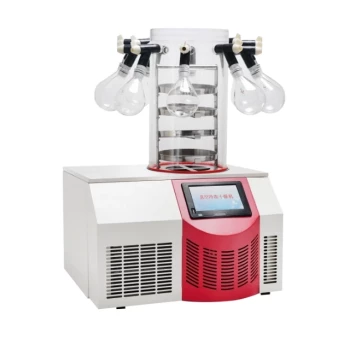
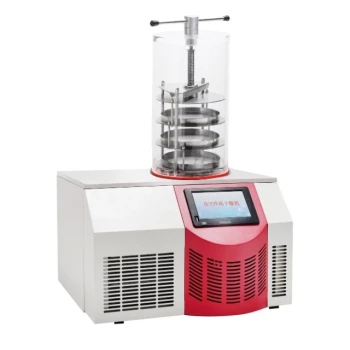
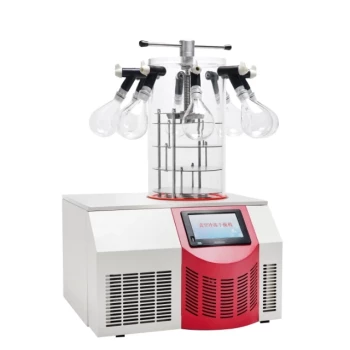
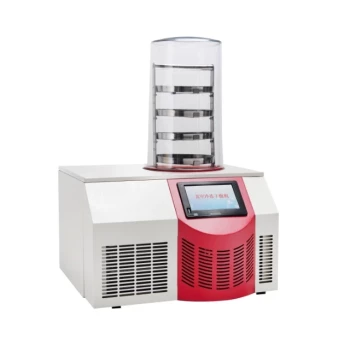
- High Performance Laboratory Freeze Dryer
- High Performance Laboratory Freeze Dryer for Research and Development
People Also Ask
- How does a laboratory electric drying oven contribute to the formation of the initial coating? Expert Insights
- What role does a precision laboratory drying oven play in the synthesis of GO-PANI nanocomposites? Protect Material Integrity
- What role does a laboratory drying oven play in the preparation of zinc oxide nanoparticle precursors?
- What is the necessity of using a laboratory drying oven when processing MoO3/GO composite nanopowders? Find out here.
- What is the role of a laboratory drying oven in cellulose citrate production? Ensure Material Stability & Purity