The primary function of a laboratory reactor in this context is to establish a strictly controlled physical environment that guarantees both chemical uniformity and thermal safety. By integrating active cooling systems with continuous mechanical stirring, the reactor allows for the precise execution of polycondensation reactions, which are fundamental to synthesizing high-quality intumescent fire-retardant coatings.
Success in synthesizing intumescent coatings is less about mixing ingredients and more about managing energy and distribution. The reactor's cooling and stirring mechanisms are essential control points that prevent thermal instability and ensure the homogeneous dispersion of nano-fillers, directly determining the final performance of the coating.
Managing Thermodynamics and Reaction Stability
Controlling Exothermic Energy
The synthesis of these coatings involves polycondensation reactions, specifically utilizing urea, melamine, and formaldehyde. These chemical transformations are exothermic, meaning they release energy in the form of heat.
Without intervention, this heat accumulates within the reaction vessel. A specialized cooling system is critical to actively remove this excess energy.
By managing heat accumulation, the reactor maintains a stable temperature profile. This prevents the reaction from accelerating uncontrollably, ensuring the polymer forms correctly.
Establishing a Stable Physical Environment
Stability is the foundation of reproducible chemistry. The reactor acts as a stabilizer, shielding the sensitive urea-melamine-formaldehyde mixture from environmental fluctuations.
The cooling system does not just lower temperature; it modulates the reaction rate. This control allows researchers to dictate the precise speed of polymerization.
Achieving Chemical and Physical Uniformity
The Role of Continuous Stirring
Intumescent coatings are complex mixtures that require absolute homogeneity to function. Continuous stirring is the mechanism used to achieve this state.
It prevents the separation of distinct liquid phases during the reaction. This ensures that every molecule of urea, melamine, and formaldehyde has equal opportunity to interact.
Dispersion of Nano-Silica Fillers
A critical challenge in this synthesis is the incorporation of solid additives, specifically nano-silica fillers.
These fillers tend to agglomerate (clump together) if not mechanically agitated. The reactor’s stirring system breaks these agglomerates apart.
This ensures the nano-silica is highly dispersed throughout the polymer matrix. High dispersion is non-negotiable for ensuring the final coating has uniform fire-retardant properties across its entire surface.
Common Pitfalls in Process Control
The Risk of Thermal Accumulation
If the cooling system is undersized or improperly engaged, heat accumulation leads to thermal runaway.
This excess heat can degrade the polymer chains before they fully form. The result is a coating with unpredictable physical properties and reduced thermal stability.
The Consequences of Poor Dispersion
If stirring is intermittent or lacks sufficient torque, the chemical uniformity of the matrix is compromised.
"Hot spots" of high reactant concentration may form, while other areas remain unreacted. Furthermore, poorly dispersed nano-silica leads to structural weak points, rendering the fire-retardant coating ineffective in real-world applications.
Optimizing Your Synthesis Process
To ensure the production of a reliable intumescent coating, you must tune your reactor's parameters to the specific needs of the chemistry.
- If your primary focus is chemical safety and reaction control: prioritize the thermal capacity of your cooling system to handle the peak exotherm of the urea-melamine-formaldehyde reaction.
- If your primary focus is mechanical performance and consistency: maximize the efficiency of your stirring mechanism to guarantee the complete dispersion of nano-silica fillers within the matrix.
Precise control over thermal energy and physical mixing is the defining factor that transforms raw chemical ingredients into a stable, life-saving product.
Summary Table:
| Feature | Function in Synthesis | Impact on Final Coating |
|---|---|---|
| Cooling System | Manages exothermic heat from polycondensation | Prevents thermal runaway and polymer degradation |
| Continuous Stirring | Maintains phase homogeneity | Ensures uniform reaction rates and chemical stability |
| Mechanical Agitation | Disperses nano-silica fillers | Eliminates agglomerates for consistent fire resistance |
| Temperature Control | Modulates polymerization speed | Guarantees reproducibility and material structural integrity |
Elevate Your Material Synthesis with KINTEK Precision
At KINTEK, we understand that the difference between a failed reaction and a breakthrough material lies in precise control. Our advanced high-temperature high-pressure reactors and autoclaves are specifically designed to handle the rigorous demands of intumescent coating research, offering the thermal stability and high-torque stirring required for uniform nano-filler dispersion.
Whether you are developing fire-retardant polymers or conducting complex battery research, KINTEK provides the comprehensive laboratory equipment—from cooling solutions (ULT freezers and chillers) to crushing and milling systems—needed to ensure your success.
Ready to optimize your laboratory's efficiency and safety?
Contact KINTEK today to discuss your equipment needs
References
- Kajetan Pyrzyński, Agnieszka Michalska. New intumescent coatings for protection flammable materials interior and outside buildings. DOI: 10.14314/polimery.2023.7.8
This article is also based on technical information from Kintek Solution Knowledge Base .
Related Products
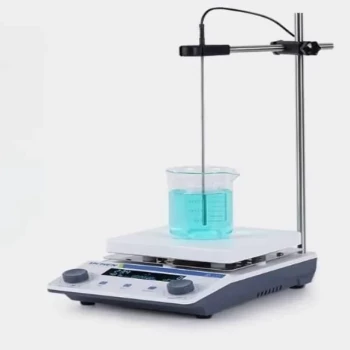
- Laboratory Small Constant Temperature Heated Magnetic Stirrer Heater and Stirrer
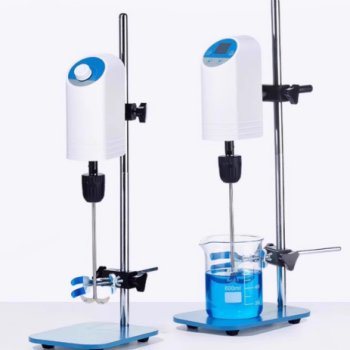
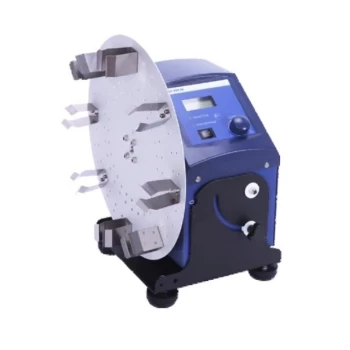
- High Performance Laboratory Stirrers for Diverse Applications
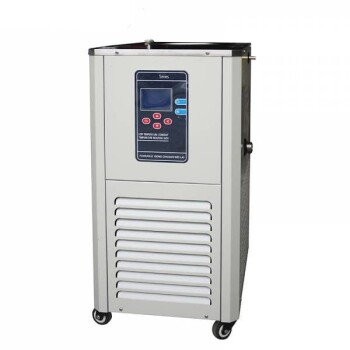
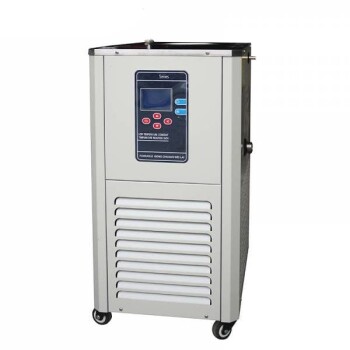
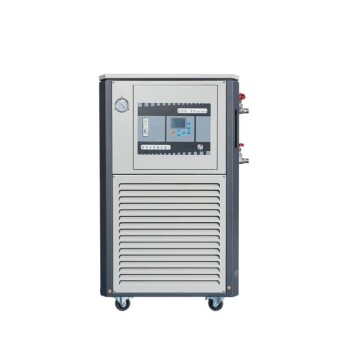
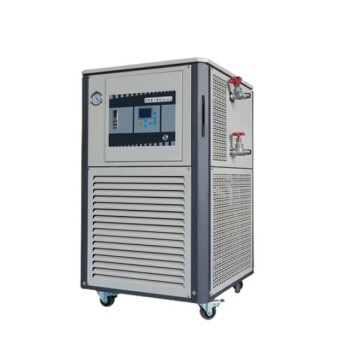
- 5L Chilling Circulator Cooling Water Bath Circulator for Low Temperature Constant Temperature Reaction Bath
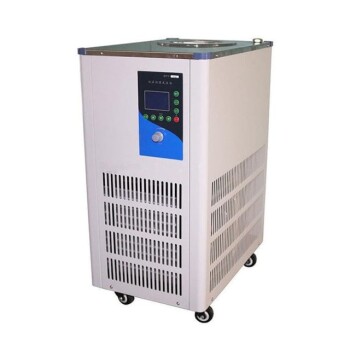
- 100L Chilling Circulator Cooling Water Circulator for Low Temperature Constant Temperature Reaction Bath Water Bath Cooling
- Stainless High Pressure Autoclave Reactor Laboratory Pressure Reactor
People Also Ask
- What role does a magnetic stirrer with heating play in ZnO nanoparticle synthesis? Precision Control for Quality Results
- What role does a constant temperature heating magnetic stirrer play in MFC-HAp synthesis? Achieve Material Homogeneity
- What is the function of a laboratory magnetic stirrer in Ni–Cr–P electrodeposition? Optimize Ion Transport & Coating
- Why is a laboratory magnetic stirrer required for benzoic acid esters? Boost Reaction Speed & Yield with High RPM
- What role does a laboratory magnetic stirrer play in TiO2 and TiO2-Ag sol preparation? Master Chemical Kinetics