The primary function of a PTFE-lined high-pressure reactor is to create a sealed, containment system that allows solvents to remain liquid at temperatures and pressures significantly exceeding their atmospheric boiling points. This superheated environment dramatically increases the solubility of precursors and accelerates reaction kinetics, enabling the synthesis of high-purity perovskite oxides at lower temperatures than traditional methods.
By decoupling temperature from evaporation, this reactor transforms standard solvents into highly reactive fluids, allowing for precise control over crystal purity, shape, and growth rates.
Creating a Superheated Reaction Zone
Bypassing Boiling Points
In an open vessel, a solvent boils and evaporates once it hits its boiling point (e.g., 100°C for water). A high-pressure reactor creates a sealed environment that prevents this evaporation.
Achieving Supercritical-Like Conditions
By confining the liquid, the reactor allows temperatures to rise well above normal limits. This generates high internal pressure, which keeps the solvent in a liquid or fluid state, often mimicking subcritical or supercritical conditions.
Enhancing Solvation Capacity
The high-pressure environment increases the density of water or organic solvents. This physical change significantly enhances their solvation capacity, allowing them to dissolve solid precursors that would remain insoluble under standard atmospheric conditions.
The Critical Role of the PTFE Liner
Ensuring Chemical Purity
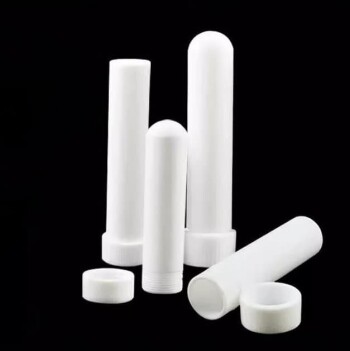
The stainless steel shell provides structural strength, but it introduces a risk of contamination. The PTFE (polytetrafluoroethylene) liner acts as an inert barrier, preventing metal ions from the steel from leaching into the reaction mixture.
Preventing Corrosion
Hydrothermal synthesis often involves aggressive chemical environments, including changes in pH (acidic or alkaline). The PTFE liner possesses excellent chemical inertness, protecting the pressure vessel from corrosion and ensuring the reaction proceeds without damaging the hardware.
Advantages for Perovskite Synthesis
Lowering Crystallization Temperatures
The enhanced solubility and reaction kinetics provided by the high-pressure environment allow perovskite oxides to crystallize at temperatures much lower than those required by solid-state methods.
Controlling Morphology
Because the reaction occurs in a liquid phase rather than a solid phase, you gain directional control over crystal growth. This allows you to tune the final product to specific shapes, such as nanorods or nanoparticles, and expose specific crystal facets for better performance.
Understanding the Trade-offs
Batch Processing Limitations
These reactors operate as closed systems, making them inherently batch-oriented. This limits your ability to perform continuous processing or modify reactants mid-reaction, which can be a bottleneck for high-throughput synthesis.
Thermal Constraints of the Liner
While the stainless steel shell can handle extreme conditions, the PTFE liner introduces a thermal ceiling. You must operate within the temperature limits of the polymer (typically distinct from the much higher limits of the steel), requiring careful thermal management to avoid deforming the liner.
Making the Right Choice for Your Goal
To maximize the utility of a PTFE-lined reactor in your perovskite research, align your setup with your specific objectives:
- If your primary focus is High Purity: Rely on the PTFE liner's inertness to prevent metal ion contamination, which is critical for electronic or optical applications.
- If your primary focus is Specific Morphology: Leverage the high-pressure environment to promote directional growth, creating nanorods or facets that solid-state methods cannot achieve.
- If your primary focus is Energy Efficiency: Utilize the enhanced kinetics to crystallize oxides at lower temperatures, saving energy compared to high-heat calcination.
The PTFE-lined reactor is not just a vessel; it is a precision tool for accessing chemical pathways that are thermodynamically impossible at atmospheric pressure.
Summary Table:
| Feature | Function in Synthesis | Benefit for Perovskite Oxides |
|---|---|---|
| Sealed Environment | Prevents solvent evaporation at high heat | Enables liquid-phase reactions above boiling points |
| High Pressure | Increases solvent density and solvation | Dissolves precursors that are insoluble at 1 atm |
| PTFE Liner | Provides an inert chemical barrier | Ensures zero metal contamination and corrosion resistance |
| Enhanced Kinetics | Accelerates chemical reaction rates | Facilitates crystallization at lower temperatures |
Elevate Your Material Research with KINTEK
Unlock the full potential of hydrothermal and solvothermal synthesis with KINTEK’s premium PTFE-lined high-pressure reactors. Designed for precision and durability, our equipment ensures your perovskite oxides achieve the highest purity and specific morphologies required for cutting-edge electronic and optical applications.
Why Choose KINTEK?
- Advanced Reactor Technology: Our high-temperature, high-pressure reactors and autoclaves provide the stable environment needed for subcritical and supercritical synthesis.
- Comprehensive Lab Solutions: From crushing and milling systems for precursor preparation to specialized furnace systems and electrolytic cells, we support your entire workflow.
- Quality You Can Trust: We offer essential high-purity consumables, including PTFE liners, ceramics, and crucibles, to prevent contamination.
Ready to optimize your lab's efficiency and synthesis results? Contact KINTEK today to find the perfect solution for your research!
References
- Lin‐Bo Liu, Subiao Liu. Perovskite Oxides Toward Oxygen Evolution Reaction: Intellectual Design Strategies, Properties and Perspectives. DOI: 10.1007/s41918-023-00209-2
This article is also based on technical information from Kintek Solution Knowledge Base .
Related Products
- Custom PTFE Teflon Parts Manufacturer for Hydrothermal Synthesis Reactor Polytetrafluoroethylene Carbon Paper and Carbon Cloth Nano-growth
- Custom PTFE Teflon Parts Manufacturer for Reagent Wide Mouth Fine Mouth Sample High Temperature Bottles
- Stainless High Pressure Autoclave Reactor Laboratory Pressure Reactor
- Customizable High Pressure Reactors for Advanced Scientific and Industrial Applications
- Custom PTFE Teflon Parts Manufacturer for Microwave Digestion Tank
People Also Ask
- What is the function of a PTFE reactor in MXene etching? Ensure Safe, High-Purity MAX Phase Conversion
- Why is a PTFE reactor required for titanium-based nano-ceramic coating solutions? Ensure Chemical Inertness & Purity
- Why must a Polytetrafluoroethylene (PTFE) reactor be used for Ti3C2TX MXene etching? Ensure Safety and Purity
- Why are PTFE reactors preferred for silver phosphate glass testing? Ensure Purity and Kinetic Accuracy
- What are the advantages of using polytetrafluoroethylene (PTFE) liners in hydrothermal synthesis reactors? High Purity