The primary function of a stainless steel high-pressure reactor in the hydrothermal synthesis of Cd-doped Ag2O is to generate and maintain a sealed, high-temperature, and high-pressure environment. By securing the precursor solution within a closed system, the reactor allows the temperature to reach 180°C without the solvent boiling away, a condition essential for the thorough reaction of silver nitrate and cadmium nitrate.
The reactor serves as a thermodynamic tool that elevates the solvent's boiling point, facilitating the energy-intensive substitution of silver atoms with cadmium atoms to ensure high crystallinity and phase purity.
Establishing Critical Thermodynamic Conditions
Achieving Temperatures Above Boiling Point
In standard atmospheric conditions, aqueous solutions boil near 100°C, limiting the kinetic energy available for the reaction.
A stainless steel high-pressure reactor creates a sealed system that prevents evaporation. This allows the reaction medium to be heated to 180°C, significantly exceeding the normal boiling point of water.
Generating Autogenous Pressure
As the temperature rises within the confined volume, the internal pressure increases naturally (autogenous pressure).
This high-pressure environment forces the reactants—silver nitrate and cadmium nitrate—to remain in the liquid phase, increasing their interaction rate and solubility beyond what is possible in open-vessel synthesis.
Facilitating the Doping Mechanism
Enabling Lattice Substitution
The core challenge in synthesizing Cd-doped Ag2O is effectively replacing silver atoms in the Ag2O lattice with cadmium atoms.
The specific combination of 180°C heat and high pressure provides the necessary activation energy to overcome the atomic forces resisting this substitution. This ensures the cadmium is integrated uniformly into the crystal structure rather than forming separate impurities.
Ensuring Phase Purity and Crystallinity
The stability of the reactor environment allows for a consistent, uninterrupted reaction timeline.
This controlled environment promotes the growth of high phase purity nanoparticles, ensuring that the resulting material has the ordered crystalline structure required for advanced applications.
Understanding the Trade-offs
Risk of Contamination
While the stainless steel shell handles the pressure, direct contact between the steel and corrosive precursors can introduce iron or chromium impurities into the sample.
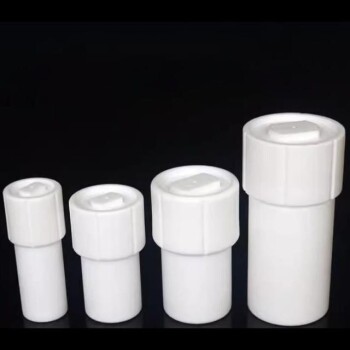
To mitigate this, these reactors almost always utilize an inert inner vessel, typically a PTFE (Teflon) liner. This prevents the reactants from touching the steel, ensuring the chemical purity of the final Cd-doped Ag2O.
Safety and Control Limitations
High-pressure reactors act as "black boxes" during the synthesis; you cannot visually monitor the reaction progress or stir the solution easily once sealed.
Furthermore, the process requires strict adherence to temperature limits. Overheating beyond the reactor's rating can lead to dangerous over-pressurization or seal failure.
Making the Right Choice for Your Goal
To maximize the effectiveness of your hydrothermal synthesis, consider your specific objectives:
- If your primary focus is high doping efficiency: Ensure the reactor is rated for temperatures well above 180°C to guarantee the pressure required for lattice substitution is maintained safely.
- If your primary focus is material purity: Verify that the reactor includes a high-quality, chemically inert liner (such as PTFE) to prevent metal ion leaching from the stainless steel shell.
The stainless steel reactor is not merely a vessel; it is the physical enabler of the thermodynamic state required to force cadmium into the silver oxide lattice.
Summary Table:
| Key Feature | Function in Cd-doped Ag2O Synthesis |
|---|---|
| Sealed Stainless Steel Shell | Maintains high autogenous pressure for lattice substitution. |
| Temperature Elevation | Allows solvent heating to 180°C without evaporation. |
| PTFE (Teflon) Liner | Prevents metal contamination and ensures chemical phase purity. |
| Thermodynamic Control | Provides activation energy to integrate Cadmium into Ag2O lattices. |
Elevate Your Material Research with KINTEK Precision
Precision and purity are paramount when performing complex hydrothermal synthesis like Cd-doped Ag2O. KINTEK specializes in advanced laboratory solutions designed to meet the rigorous demands of modern research.
Our premium range of high-temperature high-pressure reactors and autoclaves—equipped with high-quality PTFE liners—ensures uniform heat distribution and zero contamination. Whether you are scaling up battery research, optimizing high-temperature furnaces, or utilizing isostatic hydraulic presses, KINTEK provides the durable tools needed for high-crystallinity results.
Ready to optimize your synthesis process? Contact us today to find the perfect reactor for your lab!
References
- Arup Kumar De, Indrajit Sinha. Cd-doped Ag<sub>2</sub>O/BiVO<sub>4</sub> visible light Z-scheme photocatalyst for efficient ciprofloxacin degradation. DOI: 10.1039/d2ra07200a
This article is also based on technical information from Kintek Solution Knowledge Base .
Related Products
- Stainless High Pressure Autoclave Reactor Laboratory Pressure Reactor
- Mini SS High Pressure Autoclave Reactor for Laboratory Use
- Customizable High Pressure Reactors for Advanced Scientific and Industrial Applications
- Customizable Laboratory High Temperature High Pressure Reactors for Diverse Scientific Applications
- High Pressure Laboratory Autoclave Reactor for Hydrothermal Synthesis
People Also Ask
- Why is a laboratory high-pressure reactor used in the hydrothermal synthesis of hydroxyapatite catalysts?
- Why is a laboratory high-pressure reactor necessary for synthesizing fly ash-based zeolite? Achieve Pure Crystallization
- What role does a laboratory high-pressure reactor play in the leaching process of spent cathode materials? Optimize Recovery
- What conditions do laboratory high-pressure reactors provide for HTC? Optimize Your Biochar Production Processes
- How are high-pressure reactors used to prepare metaphosphate electrocatalysts? Master In-Situ Precursor Growth