The primary function of a temperature-controlled heated bubbler is to significantly increase the volatility of the TDMAT precursor. Because TDMAT exhibits low vapor pressure at room temperature, the bubbler provides the thermal energy necessary to generate a sufficient and stable molecular flux, ensuring the precursor can be effectively transported into the reaction chamber.
Core Takeaway Without precise thermal control, low-vapor-pressure precursors like TDMAT cannot achieve the saturation levels needed for high-quality deposition. The heated bubbler transforms a sluggish liquid source into a consistent vapor stream, which is the foundational requirement for uniform Titanium Dioxide (TiO2) film growth.
The Physics of Precursor Delivery
Overcoming Low Vapor Pressure
Metal-organic precursors, such as TDMAT, often exist as liquids with low volatility at standard room temperatures.
This physical property restricts the natural evaporation rate, making it difficult to extract enough vapor for the deposition process.
A heated bubbler actively combats this by applying regulated heat, raising the vapor pressure to a level where the precursor can be picked up by a carrier gas.
Ensuring Molecular Flux
The "flux" refers to the quantity of precursor molecules entering the reaction chamber per unit of time.
For a successful reaction, you need a high volume of these molecules to be available instantly.
The heated bubbler ensures that the carrier gas is fully saturated with precursor vapor, delivering a robust dose to the substrate.
Impact on Process Stability and Film Quality
Achieving Surface Saturation
In high-quality film deposition, the goal is often to coat the surface completely with a single layer of molecules.
This is known as a saturated surface chemical reaction.
If the bubbler does not provide enough vapor, the surface will not be fully saturated, leading to uneven coverage.
Stabilizing the Pulse Phase
Deposition processes frequently rely on pulsing the precursor into the chamber.
The heated bubbler maintains a stable vapor concentration throughout the entire duration of the pulse.
This stability eliminates fluctuations in precursor delivery, ensuring that every pulse is identical and effective.
Driving Uniform Growth
Ultimately, the uniformity of the TiO2 film is dictated by the consistency of the chemical reaction.
By ensuring the reaction is limited only by the surface chemistry—and not by a lack of precursor—the heated bubbler facilitates perfectly uniform film growth across the substrate.
Critical Considerations and Trade-offs
The Risk of Thermal Decomposition
While heating is essential for volatility, metal-organic precursors are often sensitive to high temperatures.
There is a precise window of operation; if the bubbler is set too high, the TDMAT may begin to decompose inside the container.
This degrades the precursor quality before it ever reaches the reaction chamber, leading to impurities in the film.
Managing Downstream Temperatures
Raising the temperature of the source creates a dependency on the temperature of the delivery lines.
If the bubbler is hotter than the tubes connecting it to the chamber, the vapor will re-condense back into a liquid / solid inside the lines.
This can cause clogging and particle contamination, requiring the entire delivery path to be heated to match or exceed the bubbler temperature.
Optimizing Your Deposition Strategy
To ensure high-quality Titanium Dioxide films, you must balance vapor generation with precursor integrity.
- If your primary focus is Film Uniformity: Increase the bubbler temperature cautiously to maximize vapor pressure, ensuring you are achieving full surface saturation during every pulse.
- If your primary focus is Precursor Lifespan: Keep the temperature at the lowest effective point to minimize the risk of thermal decomposition and waste.
Precise thermal management of your precursor source is the invisible variable that separates a patchy coating from a perfect thin film.
Summary Table:
| Feature | Function in TDMAT/TiO2 Deposition | Impact on Film Quality |
|---|---|---|
| Thermal Energy | Increases precursor vapor pressure | Ensures consistent molecular flux |
| Saturated Flux | Provides high volume of molecules | Achieves complete surface saturation |
| Pulse Stability | Maintains vapor concentration | Eliminates delivery fluctuations |
| Thermal Control | Prevents precursor decomposition | Minimizes impurities and waste |
| Line Matching | Prevents downstream condensation | Reduces clogging and particles |
Elevate Your Thin Film Deposition with KINTEK Precision
Achieving perfect TiO2 film uniformity requires more than just high-quality precursors; it demands precise thermal control and reliable delivery systems. KINTEK specializes in advanced laboratory equipment designed to master these variables.
From our high-performance high-temperature furnaces (CVD/PECVD) and high-pressure reactors to specialized heating solutions and PTFE consumables, we provide the tools necessary for stable, reproducible research. Whether you are optimizing battery materials or advanced ceramics, our team is ready to support your lab's specific needs.
Ready to stabilize your deposition process? Contact KINTEK today to discover how our specialized equipment and expertise can enhance your material science workflows!
References
- Véronique Cremers, Christophe Detavernier. Corrosion protection of Cu by atomic layer deposition. DOI: 10.1116/1.5116136
This article is also based on technical information from Kintek Solution Knowledge Base .
Related Products
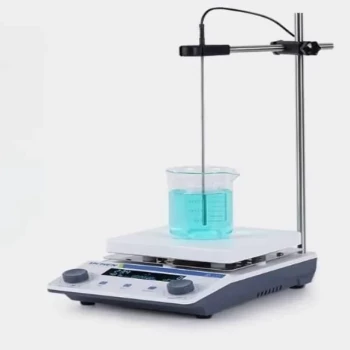
- Laboratory Small Constant Temperature Heated Magnetic Stirrer Heater and Stirrer
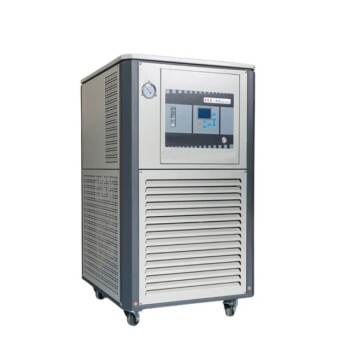
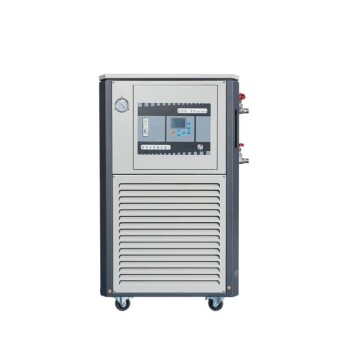
- High Temperature Constant Temperature Heating Circulator Water Bath Chiller Circulator for Reaction Bath
- Automatic High Temperature Heated Hydraulic Press Machine with Heated Plates for Lab
- Manual High Temperature Heated Hydraulic Press Machine with Heated Plates for Lab
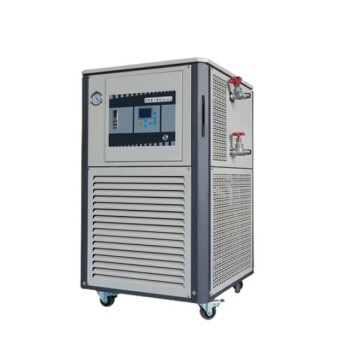
- 20L Heating Chilling Circulator Cooling Water Bath Circulator for High and Low Temperature Constant Temperature Reaction
People Also Ask
- What role does a magnetic stirrer with heating play in ZnO nanoparticle synthesis? Precision Control for Quality Results
- What role does a constant temperature heating magnetic stirrer play in MFC-HAp synthesis? Achieve Material Homogeneity
- What is the function of a laboratory magnetic stirrer in Ni–Cr–P electrodeposition? Optimize Ion Transport & Coating
- Why is a laboratory magnetic stirrer required for benzoic acid esters? Boost Reaction Speed & Yield with High RPM
- What role does a laboratory magnetic stirrer play in TiO2 and TiO2-Ag sol preparation? Master Chemical Kinetics