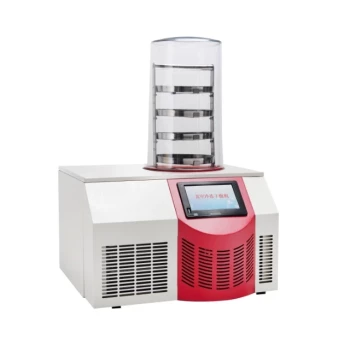
The primary function of a vacuum drying oven in processing Polyethylene Oxide (PEO) is the deep removal of trace moisture and residual solvents.
Because PEO is a highly hygroscopic polymer, it naturally absorbs water from the environment. The vacuum drying oven eliminates this moisture—typically at a controlled temperature of 60°C—to prevent it from interfering with the electrolyte’s ionic conductivity and electrochemical stability.
Core Insight: Moisture is the enemy of solid-state battery performance. The vacuum drying oven is not just a heating tool; it is a stabilization device that utilizes low pressure to dehydrate PEO without thermally degrading the polymer, ensuring that subsequent electrochemical reactions are not compromised by water-induced side reactions.
The Critical Necessity of Dehydration
Combating Hygroscopicity
Polyethylene Oxide (PEO) is inherently hygroscopic, meaning it aggressively absorbs moisture from the surrounding air. Even a minimal amount of environmental exposure can introduce significant water content into the raw material.
Preventing Side Reactions
Water is detrimental to lithium battery chemistry. If trace moisture remains in the PEO when it is formed into an electrolyte, it can trigger harmful secondary reactions within the battery cell.
Ensuring Experimental Reproducibility
Variation in moisture content leads to inconsistent data. By thoroughly drying the PEO, you establish a consistent baseline for your materials, ensuring that any changes in performance are due to your experimental variables, not random moisture contamination.
The Mechanism of Vacuum Drying
Lowering the Boiling Point
The "vacuum" component is the key differentiator. By reducing the pressure inside the chamber, the boiling point of water and solvents is significantly lowered.
Enabling Low-Temperature Efficiency
Because the boiling point is lowered, moisture can be evaporated efficiently at 60°C. This allows for deep drying without subjecting the PEO to high temperatures that might otherwise melt or degrade the polymer chains.
Deep Solvent Removal
If the PEO was processed using solution casting (often involving solvents like DMF), vacuum drying ensures these volatile components are fully extracted. Residual solvents can otherwise react with lithium metal anodes and reduce the cycling stability of the battery.
Understanding the Trade-offs
While vacuum drying is essential, it requires careful parameter control to be effective.
Temperature vs. Integrity
Applying too much heat in an attempt to dry the material faster can be disastrous. PEO has a relatively low melting point; exceeding the recommended 60°C range significantly risks altering the physical structure of the polymer or causing decomposition.
Vacuum Depth vs. Evaporation Rate
A weak vacuum will not lower the boiling point sufficiently, leading to incomplete drying or requiring longer heating times. Conversely, rapid pressure drops can sometimes cause "bumping" or splashing if the material contains significant solvent volume.
Time Constraints
Thorough vacuum drying is rarely an instant process. It often requires sustained periods to ensure that moisture trapped deep within the polymer matrix has diffused to the surface and evaporated.
Making the Right Choice for Your Goal
To maximize the effectiveness of your PEO preparation, align your drying parameters with your specific objective.
- If your primary focus is Raw Material Preparation: Prioritize a steady 60°C temperature under vacuum to remove absorbed environmental moisture without melting the PEO powder.
- If your primary focus is Post-Casting Membrane Treatment: Ensure the vacuum level is sufficient to remove high-boiling-point solvents (like DMF) to prevent anode corrosion and expand the electrochemical stability window.
- If your primary focus is Reproducibility: Standardize the drying time and vacuum pressure across every batch to eliminate moisture content as a hidden variable in your data.
By strictly controlling the vacuum drying environment, you transform PEO from a variable, moisture-laden risk into a stable, high-performance electrolyte foundation.
Summary Table:
| Feature | Function in PEO Processing | Benefit to Electrolyte |
|---|---|---|
| Vacuum Pressure | Lowers boiling points of water/solvents | Deep dehydration at safe temperatures |
| Temperature Control | Maintains steady 60°C heat | Prevents polymer melting and degradation |
| Moisture Removal | Eliminates hygroscopic water content | Inhibits side reactions with lithium anodes |
| Solvent Extraction | Removes residual DMF or casting solvents | Enhances electrochemical stability window |
Elevate Your Battery Research with KINTEK Precision
Don't let trace moisture compromise your solid-state electrolyte performance. KINTEK provides specialized laboratory solutions designed for the rigorous demands of battery material processing. From high-performance vacuum drying ovens that ensure consistent PEO dehydration to our comprehensive range of glove boxes, high-temperature reactors, and planetary ball mills, we equip your lab with the tools needed for breakthrough results.
Our value to you:
- Precision Control: Maintain polymer integrity with industry-leading thermal stability.
- Integrated Solutions: Full support for battery research, including hydraulic pellet presses, electrolytic cells, and high-purity crucibles.
- Expert Reliability: Trusted by top research institutions for durable and repeatable experimental setups.
Ready to optimize your drying protocols?
→ Contact KINTEK Experts Today
Related Products
- 56L Vertical Laboratory Vacuum Drying Oven
- 23L Laboratory Vacuum Drying Oven
- Laboratory Scientific Electric Heating Blast Drying Oven
- Benchtop Laboratory Vacuum Freeze Dryer
- Dental Porcelain Zirconia Sintering Ceramic Vacuum Press Furnace
People Also Ask
- Why is a laboratory vacuum drying oven recommended for rice straw residues? Protect Your Biomass Integrity
- What role does a laboratory vacuum drying oven play in the preparation of modified multi-walled carbon nanotubes?
- What is the importance of using a laboratory vacuum drying oven? Preserving Slow-Release Microcapsule Integrity
- Why is a Laboratory Vacuum Drying Oven recommended for PBAT microspheres? Protect Sensitive Polymer Integrity
- What role does a laboratory vacuum drying oven play in processing nanoparticle powder samples? Protect Sample Integrity