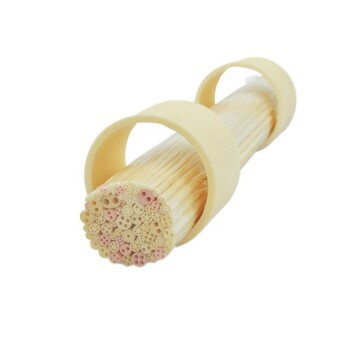
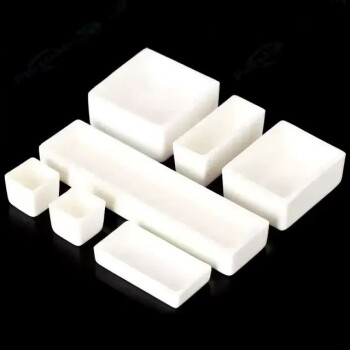
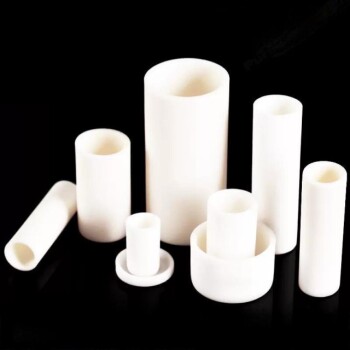
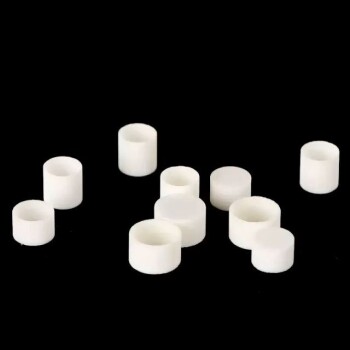
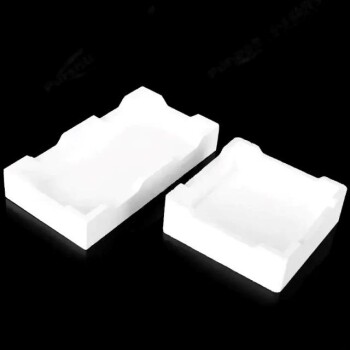
The alumina filter serves as a high-temperature particulate barrier and structural support for the sample. Positioned within the quartz basket of a vertical tube furnace, it holds the biomass in place while allowing combustion flue gases to pass through. This configuration is essential for trapping solid ash particles, which prevents the contamination of downstream cooling systems and ensures a stable interface for gas-solid reactions.
The primary role of the alumina filter is to provide a thermally stable foundation for combustion samples while acting as a selective membrane. It ensures that only gaseous products exit the reaction zone, protecting the integrity of the furnace’s analytical and cooling hardware.
The Essential Roles of Alumina in Combustion
Providing Structural Support under Extreme Heat
The filter acts as a robust platform for biomass or other samples during the combustion process. Unlike many materials that soften at high temperatures, alumina (Al2O3) maintains its structural integrity, ensuring the sample remains positioned correctly within the reaction zone.
Facilitating Gas Flow and Particle Capture
The porous nature of the filter allows for the efficient passage of flue gases generated during combustion. Simultaneously, it traps fine ash particles within the basket, preventing them from being carried away by the gas stream.
Protecting Downstream Infrastructure
By sequestering solid debris, the filter prevents particulate matter from entering the cooling systems or gas analyzers located further down the line. This reduces the risk of hardware clogs and ensures the accuracy of the data collected from the gaseous products.
Material Properties and System Synergy
High-Temperature Thermal Stability
Alumina is chosen for this application because of its exceptional high-temperature resistance. In a vertical tube furnace, where temperatures can fluctuate rapidly, the filter must resist melting or warping to maintain a consistent reaction environment.
Chemical Inertness in Reactive Environments
The filter remains chemically stable, meaning it does not react with the biomass or the oxygen-rich atmosphere during combustion. This ensures that the resulting ash and flue gases are a direct product of the sample itself, free from contamination by the filter material.
Maintaining the Gas-Solid Interface
By holding the sample in a localized area while allowing gas to permeate, the filter optimizes the gas-solid reaction interface. This allows for a more uniform combustion process and more reliable kinetic data.
Understanding the Trade-offs
Pore Size vs. Pressure Drop
A common challenge involves balancing the filter's pore size; if the pores are too small, they may trap more ash but cause a significant pressure drop that hinders gas flow. Conversely, larger pores allow easier gas passage but may permit fine particles to escape into the cooling system.
Thermal Shock and Material Fatigue
While alumina is heat-resistant, it can be susceptible to thermal shock if cooled or heated too rapidly. Repeated cycles of intense combustion can lead to micro-cracks, eventually requiring the replacement of the filter to prevent structural failure.
Clogging and "Blinding"
Over time, the accumulation of trapped ash can lead to filter blinding, where the pores become completely blocked. This increases resistance within the furnace and may require frequent cleaning or replacement to maintain experimental consistency.
Optimizing Your Furnace Configuration
When selecting or maintaining an alumina filter for your vertical tube furnace, consider how your specific sample type influences the system's performance.
- If your primary focus is maximizing particle capture: Select a filter with a finer pore structure and monitor the system pressure to ensure gas flow remains within operational limits.
- If your primary focus is high-throughput gas analysis: Utilize a more porous alumina filter to minimize resistance, ensuring that flue gases reach the analyzers quickly and accurately.
- If your primary focus is long-term hardware durability: Regularly inspect the filter for signs of thermal fatigue or cracks to prevent sample leakage into the furnace chamber.
The proper use of an alumina filter ensures that your combustion experiments remain clean, controlled, and technically accurate.
Summary Table:
| Key Function | Primary Benefit | Material Property |
|---|---|---|
| Structural Support | Holds sample/biomass securely in the reaction zone | High thermal stability (Al2O3) |
| Particulate Barrier | Traps solid ash to prevent downstream contamination | Porous and permeable structure |
| System Protection | Protects cooling systems and gas analyzers from clogs | Exceptional chemical inertness |
| Interface Stability | Optimizes gas-solid reactions for reliable data | Resistance to thermal warping |
Optimize Your Combustion Research with KINTEK
Achieving precise and repeatable results in high-temperature combustion requires more than just a furnace—it requires high-quality, reliable components. KINTEK specializes in advanced laboratory equipment, offering a comprehensive range of vertical and horizontal tube furnaces, atmosphere-controlled systems, and essential consumables like high-purity alumina filters, ceramic crucibles, and quartzware.
Whether you are performing biomass analysis or material synthesis, our solutions ensure the integrity of your analytical hardware and the accuracy of your data. Beyond furnaces, our portfolio includes high-pressure reactors, cooling solutions (ULT freezers), and hydraulic presses tailored for the most demanding lab environments.
Ready to enhance your lab's efficiency and hardware durability? Contact our technical experts today to find the perfect configuration for your specific application!
References
- Feng Zhang, Lei Deng. Release Characteristics of Potassium during Biomass Combustion. DOI: 10.3390/en16104107
This article is also based on technical information from Kintek Solution Knowledge Base .
Related Products
- High Temperature Alumina (Al2O3) Furnace Tube for Engineering Advanced Fine Ceramics
- 1400℃ Laboratory High Temperature Tube Furnace with Alumina Tube
- 1700℃ Laboratory High Temperature Tube Furnace with Alumina Tube
- High Temperature Aluminum Oxide (Al2O3) Protective Tube for Engineering Advanced Fine Ceramics
- Engineering Advanced Fine Alumina Al2O3 Ceramic Crucible for Laboratory Muffle Furnace
People Also Ask
- What is the primary function of an Alumina (Al2O3) tube in LLZTO sintering? Optimize Your Thermal Processing
- What role does a high-alumina furnace tube play in high-temperature nickel slag reduction? Ensure 1400°C Precision
- How does an alumina tube furnace with a controlled atmosphere simulate conditions in CSP environments? Master Accuracy.
- How do you clean an alumina tube furnace? Extend Tube Life with Proper Maintenance
- How to clean an alumina tube furnace? Extend Tube Life and Ensure Experimental Purity