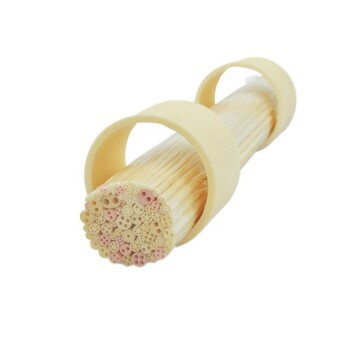
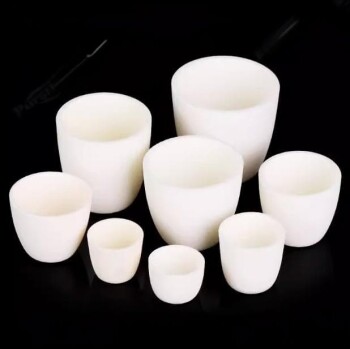
The primary function of an Alumina (Al2O3) tube within a high-temperature furnace is to serve as the core, high-purity heating chamber that isolates and supports the sintering process. It acts as a structural foundation, physically holding the internal Magnesium Oxide (MgO) crucibles and LLZTO samples while ensuring that heat radiating from the furnace elements is distributed uniformly across the materials.
Core Takeaway: The Alumina tube acts as the "clean channel" of the furnace system. It provides the necessary physical stability and thermal uniformity required to drive the solid-state reactions that transform precursor powders into high-quality LLZTO ceramics.
The Mechanics of the Sintering Chamber
Structural Integrity and Support
The Alumina tube forms the backbone of the heating zone. Its most immediate role is to support the weight and position of the MgO crucibles which contain the LLZTO samples.
This setup creates a stable physical environment. The tube withstands extreme temperatures without deforming, ensuring the sample remains in the optimal position throughout the firing schedule.
Facilitating Uniform Heat Transfer
Beyond physical support, the tube serves as a thermal medium. It acts as a conduit for the heat generated by the external heating elements.
The tube ensures this heat is radiated uniformly onto the samples. This consistency is critical for preventing thermal shock or uneven reaction rates within the ceramic material.
The Role in LLZTO Formation
Creating a Clean Processing Channel
Sintering LLZTO requires a high-purity environment to prevent contamination. The Alumina tube provides a "clean channel" that isolates the sample from the heating elements and insulation materials.
This isolation is vital for maintaining the chemical integrity of the material. It allows for the precise atmospheric control often required in tube furnaces, such as maintaining an inert atmosphere.
Enabling Phase Transformation
The ultimate goal of the furnace setup is to facilitate a specific solid-state reaction. The thermal stability provided by the tube drives the precursor powders toward densification.
This controlled high-temperature treatment is required to form the cubic phase structure. Achieving this phase is essential for maximizing the intrinsic ionic conductivity of the final garnet-type ceramic.
Understanding the Operational Constraints
Sample Size Limitations
While effective for research and testing, Alumina tube furnaces are specifically designed for small samples.
The geometry of the tube limits the volume of material that can be processed at one time compared to larger box furnaces.
The Necessity of Crucibles
It is important to note that the Alumina tube supports the sample, but rarely holds the LLZTO directly.
The primary reference notes the use of MgO crucibles inside the tube. This suggests that while the tube provides the environment, secondary containment is often necessary to prevent direct chemical reactions between the LLZTO and the Alumina tube itself.
Making the Right Choice for Your Goal
To maximize the effectiveness of your sintering process, consider how the tube functions relative to your specific objectives:
- If your primary focus is maximizing ionic conductivity: Ensure the tube is positioned to leverage the precise temperature control needed to achieve the high-crystallinity cubic phase structure.
- If your primary focus is material testing or calibration: Utilize the tube's ability to create a "clean channel" to eliminate environmental variables and ensure data consistency.
The Alumina tube is not just a container; it is the stabilizing thermal interface that makes high-quality solid-state synthesis possible.
Summary Table:
| Feature | Function in LLZTO Sintering |
|---|---|
| Material | High-purity Alumina (Al2O3) for thermal stability |
| Structural Role | Supports MgO crucibles and maintains sample positioning |
| Thermal Transfer | Facilitates uniform radiant heat distribution to prevent thermal shock |
| Environment | Creates a "clean channel" to isolate samples from contamination |
| Objective | Enables densification and formation of the high-conductivity cubic phase |
Elevate Your Advanced Material Research with KINTEK
Precision in LLZTO sintering requires more than just high temperatures—it demands the right environment. KINTEK specializes in providing high-performance laboratory equipment and consumables designed for rigorous solid-state synthesis. From our ultra-stable high-temperature tube furnaces and vacuum/atmosphere systems to essential high-purity ceramics, crucibles, and Alumina tubes, we provide the tools necessary to achieve maximum ionic conductivity and phase purity.
Whether you are scaling battery research or refining ceramic production, our team is ready to equip your lab with professional-grade crushing systems, hydraulic presses, and thermal solutions.
Ready to optimize your sintering results? Contact KINTEK today to find the perfect equipment for your application!
Related Products
- High Temperature Alumina (Al2O3) Furnace Tube for Engineering Advanced Fine Ceramics
- 1700℃ Laboratory High Temperature Tube Furnace with Alumina Tube
- 1400℃ Laboratory High Temperature Tube Furnace with Alumina Tube
- High Temperature Aluminum Oxide (Al2O3) Protective Tube for Engineering Advanced Fine Ceramics
- High Temperature Wear-Resistant Alumina Al2O3 Plate for Engineering Advanced Fine Ceramics
People Also Ask
- What role does a high-alumina furnace tube play in high-temperature nickel slag reduction? Ensure 1400°C Precision
- How does an alumina tube furnace with a controlled atmosphere simulate conditions in CSP environments? Master Accuracy.
- How do you clean an alumina tube furnace? Extend Tube Life with Proper Maintenance
- How to clean an alumina tube furnace? Extend Tube Life and Ensure Experimental Purity
- What is the material used in high temperature furnace? Selecting the Right Ceramic for Extreme Heat