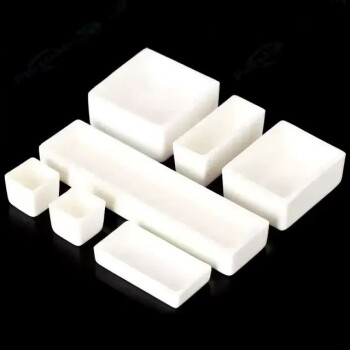
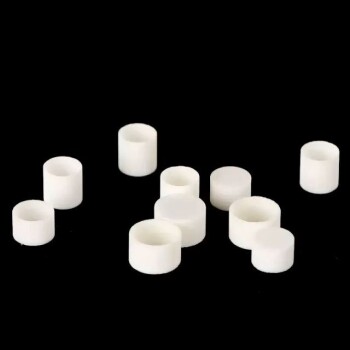
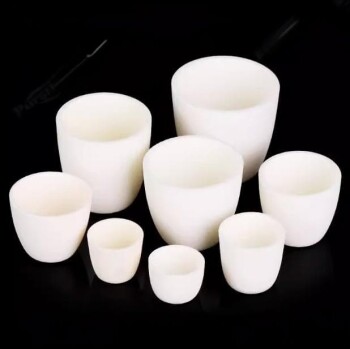
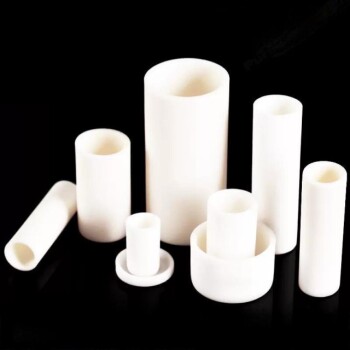
High-purity alumina ceramic tube supports are strictly required for high-temperature oxidation experiments to maintain a chemically neutral environment and structural integrity at extreme heat. At 1100°C, these supports prevent the apparatus from reacting with the specimen or deforming, ensuring that any measured changes are due solely to the oxidation process of the sample itself.
The integrity of your data relies on the inertness of your support structure. Alumina ceramic acts as a "blank canvas," eliminating chemical interference and thermal distortion to guarantee that oxidation kinetics data is accurate, reproducible, and valid.
The Critical Role of Chemical Inertness
Preventing Specimen Contamination
At elevated temperatures like 1100°C, materials become highly reactive. Using standard metal or lower-grade ceramic supports risks cross-contamination.
High-purity alumina is chemically inert. This property ensures that impurities from the support tube do not migrate into the test specimen, which would compromise the chemical analysis of the oxide scale.
Eliminating False Reactions
In oxidation experiments, the objective is to measure how the specimen reacts with the atmosphere.
If the support material reacts with the specimen, it creates a parasitic mass gain or loss. Alumina supports remain stable, ensuring that the weight change recorded is exclusively from the specimen's oxidation.
Achieving Structural Stability at 1100°C
Maintaining Dimensional Accuracy
Many materials soften, warp, or creep under the thermal stress of 1100°C, especially during long-term testing.
Alumina ceramic offers excellent thermal stability. It maintains its rigid structure without deformation, keeping the specimen in the precise position required for consistent exposure.
Facilitating Uniform Heating
Accurate kinetics data depends on the sample experiencing the exact same temperature across its entire surface.
Because the alumina tube does not warp or sag, it ensures the specimen remains in the uniform temperature zone of the furnace. This prevents thermal gradients across the sample, which could skew oxidation rates and lead to misleading results.
Understanding the Trade-offs
Thermal Shock Sensitivity
While alumina is excellent at high steady-state temperatures, it can be brittle.
Rapid heating or cooling rates can cause thermal shock, potentially cracking the tube. Care must be taken to ramp temperatures up and down gradually to preserve the integrity of the support.
Handling Fragility
Unlike metallic supports, ceramic tubes have low fracture toughness.
They require careful handling during setup and sample loading. A minor physical impact that might dent a metal tube could shatter an alumina support, potentially ruining a long-term experiment.
Making the Right Choice for Your Goal
To ensure your high-temperature oxidation tests yield publication-quality data, align your equipment choice with your specific experimental needs:
- If your primary focus is accurate oxidation kinetics: Use high-purity alumina to prevent chemical reactions between the support and the sample, ensuring the mass change data is valid.
- If your primary focus is long-term durability testing: Rely on alumina’s creep resistance to support 360 to 700-hour cycles without structural failure or warping.
- If your primary focus is reproducing jet engine conditions: Utilize alumina to maintain a contaminant-free environment that accurately simulates the thermal stress on turbine blades.
By selecting the correct support material, you transform the furnace from a simple heater into a precision instrument for material science.
Summary Table:
| Feature | High-Purity Alumina Support | Potential Risks Without Support |
|---|---|---|
| Chemical Stability | Chemically inert; prevents cross-contamination | Material reactions; parasitic mass gain/loss |
| Structural Integrity | Excellent creep resistance; no warping at 1100°C | Softening or sagging; specimen displacement |
| Thermal Performance | Ensures uniform heating in the furnace zone | Thermal gradients; inconsistent oxidation rates |
| Data Reliability | High; ensures reproducible kinetics data | Low; skewed results due to impurities |
Elevate Your Material Research with KINTEK Precision
Don’t let equipment interference compromise your high-temperature data. KINTEK specializes in advanced laboratory solutions, providing high-purity alumina ceramic tubes and crucibles specifically designed for the rigors of atmospheric heating furnaces.
Whether you are conducting long-term oxidation kinetics or simulating jet engine conditions, our comprehensive range of high-temperature furnaces (muffle, tube, and vacuum) and precision crushing, milling, and hydraulic press systems ensures your samples are prepared and tested to the highest standards.
Ready to achieve publication-quality results? Contact us today to find the perfect ceramic supports and furnace solutions for your lab!
References
- Dmitrii V. Sidelev, Egor Kashkarov. High-Temperature Oxidation of Cr-Coated Resistance Upset Welds Made from E110 Alloy. DOI: 10.3390/coatings11050577
This article is also based on technical information from Kintek Solution Knowledge Base .
Related Products
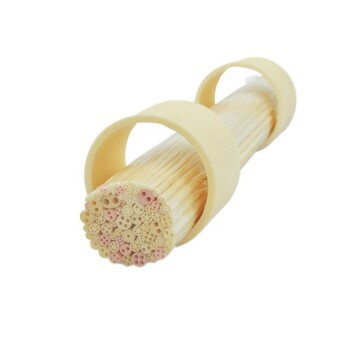
- High Temperature Alumina (Al2O3) Furnace Tube for Engineering Advanced Fine Ceramics
- High Temperature Aluminum Oxide (Al2O3) Protective Tube for Engineering Advanced Fine Ceramics
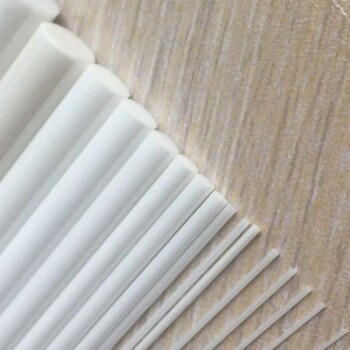
- Engineering Advanced Fine Alumina Al2O3 Ceramic Rod Insulated for Industrial Applications
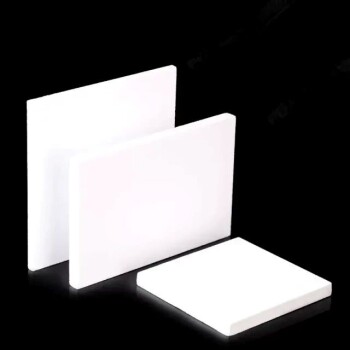
- High Temperature Wear-Resistant Alumina Al2O3 Plate for Engineering Advanced Fine Ceramics
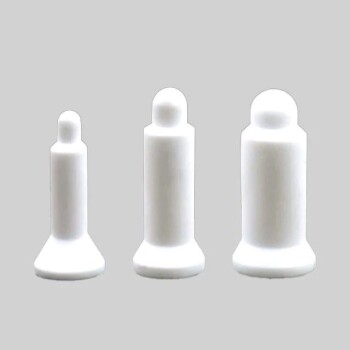
- Engineering Advanced Fine Alumina (Al₂O₃) Ceramic Positioning Pin Straight Bevel for Precision Applications
People Also Ask
- What is the primary function of an Alumina (Al2O3) tube in LLZTO sintering? Optimize Your Thermal Processing
- What role does a high-alumina furnace tube play in high-temperature nickel slag reduction? Ensure 1400°C Precision
- How does an alumina tube furnace with a controlled atmosphere simulate conditions in CSP environments? Master Accuracy.
- How do you clean an alumina tube furnace? Extend Tube Life with Proper Maintenance
- How to clean an alumina tube furnace? Extend Tube Life and Ensure Experimental Purity