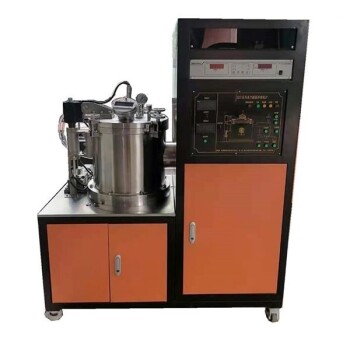
The primary function of an induction melting or electric arc furnace in red mud processing is to generate an ultra-high temperature environment, typically exceeding 1400°C. This extreme heat is the catalyst for reduction smelting, which converts iron oxides into metallic pig iron while concentrating the remaining titanium within the molten slag.
These furnaces serve as the critical phase-separation mechanism, transforming red mud from a raw waste product into two distinct value streams: metallic iron and titanium-rich slag ready for further refinement.
The Mechanics of Separation
Achieving Critical Reaction Temperatures
To successfully recover titanium, the red mud must undergo a fundamental chemical change. The furnace provides the ultra-high temperatures (often >1400°C) required to destabilize the chemical bonds within the material.
Without this specific thermal threshold, the physical separation of the valuable components is impossible.
Reduction of Iron Oxides
The intense heat facilitates the reduction of iron oxides found in the red mud. In this environment, the oxides are converted into molten pig iron.
This effectively removes the iron content from the mixture, which is crucial because iron is the primary "impurity" preventing access to the titanium.
Concentration of Titanium Slag
As the iron reduces and sinks due to density, the titanium does not reduce to metal. Instead, it concentrates in the lighter molten slag floating on top.
This slag becomes the feedstock for the next stage of the process, facilitating the subsequent acid leaching required to produce pure titanium dioxide.
Operational Advantages
Precise Process Control
Modern furnaces, particularly induction types, offer extensive control over the smelting environment. They allow operators to adjust temperatures almost instantaneously.
This ensures the system provides the precise amount of heat needed for melting without overheating, which minimizes energy waste and protects the integrity of the furnace lining.
Efficiency in Batch Processing
Induction furnaces are designed to be completely emptied of their contents post-smelting. This capability ensures a clean separation of the molten material from impurities between cycles.
Furthermore, this design reduces preparation time for the next batch, resulting in significant cost savings and higher throughput over time.
Understanding the Trade-offs
Energy Intensity vs. Separation Quality
The primary challenge in this process is the massive energy requirement. Maintaining temperatures above 1400°C is resource-intensive and costly.
However, failing to maintain this high temperature results in viscous slag. If the slag is too thick, the metallic iron cannot settle out effectively, leading to impure titanium slag and lower recovery rates.
Equipment Durability
The operating conditions required for titanium recovery are harsh. The combination of extreme heat and corrosive slag chemistry places immense stress on the furnace lining.
Operators must balance the need for high temperatures with the maintenance lifespan of the furnace refractories.
Making the Right Choice for Your Goal
The type of furnace and operating parameters you choose depend heavily on your specific recovery targets.
- If your primary focus is Iron Purity: Prioritize a furnace setup that maintains stable high temperatures to ensure complete reduction and settling of the pig iron.
- If your primary focus is Process Efficiency: Leverage induction technology for its ability to cycle batches quickly and adjust energy input dynamically.
By strictly controlling the thermal environment, you turn the complex chemistry of red mud into a manageable, dual-stream production line for iron and titanium.
Summary Table:
| Feature | Function in Red Mud Processing | Key Benefit |
|---|---|---|
| Temperature Range | Exceeds 1400°C | Enables iron oxide reduction and slag formation |
| Phase Separation | Converts waste into pig iron and slag | Isolates titanium into a concentrated feedstock |
| Atmosphere Control | Precise smelting environment | Optimizes chemical reduction efficiency |
| Batch Design | Complete emptying post-smelting | Minimizes cross-contamination and energy waste |
Maximize Your Material Recovery with KINTEK's Advanced Thermal Solutions
Transform industrial waste into valuable resources with KINTEK’s high-performance laboratory and industrial equipment. Whether you are refining titanium from red mud or developing new metallurgical processes, our specialized induction melting furnaces, crushing and milling systems, and high-temperature reactors provide the precision and durability required for extreme environments.
Why choose KINTEK?
- Unmatched Precision: Advanced temperature control for critical reduction smelting.
- Comprehensive Portfolio: From hydraulic presses for sample prep to cooling solutions and ceramics, we cover your entire workflow.
- Expert Support: Specialized tools designed for battery research, metallurgy, and material science.
Ready to enhance your lab’s efficiency and recovery rates? Contact our technical experts today to find the perfect solution!
References
- Xiaofei Li, Song Wang. Summary of Research Progress on Metallurgical Utilization Technology of Red Mud. DOI: 10.3390/min13060737
This article is also based on technical information from Kintek Solution Knowledge Base .
Related Products
- Lab-Scale Vacuum Induction Melting Furnace
- Vacuum Heat Treat Furnace and Levitation Induction Melting Furnace
- Non Consumable Vacuum Arc Induction Melting Furnace
- Vacuum Arc Induction Melting Furnace
- 600T Vacuum Induction Hot Press Furnace for Heat Treat and Sintering
People Also Ask
- How do vacuum induction or arc melting furnaces facilitate the synthesis of U-Al-C MAX phases? Precision Heat & Purity
- What types of metals are typically processed in a vacuum induction melting furnace? High-Purity Alloys for Critical Applications
- Why use VIM for rare earth steel? Essential Precision for Melting Reactive Lanthanum and Cerium
- What is the primary function of a vacuum induction melting furnace in Ni-Mo-Cr-Fe master alloy prep? Ensure High Purity
- What are the key components inside the vacuum chamber of a vacuum induction melting furnace? A Guide to the Core Melting Assembly