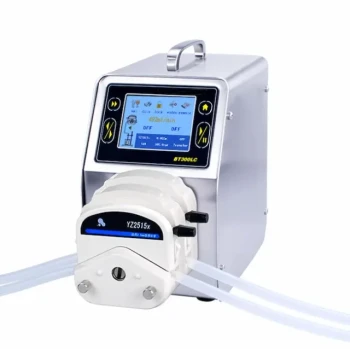
High-precision Mass Flow Controllers (MFCs) function as the central regulatory mechanism in cyclic experiments, strictly controlling the flow rates of hydrocarbon feedstocks and dilution steam. Beyond the primary reaction fluids, they also manage the supply of air or nitrogen required for critical support phases like pre-oxidation and decoking.
By maintaining stable feed ratios, MFCs provide the essential material basis for experimental reproducibility. They are the defining factor in ensuring that laboratory simulations accurately mirror industrial steam cracking conditions, specifically regarding dilution ratios and residence times.
The Role of MFCs in Process Simulation
Regulating Primary Feedstocks
The core function of the MFC is to manage the hydrocarbon feedstocks and dilution steam entering the reactor.
Precise control over these inputs is necessary to establish the correct chemical environment for cracking.
Managing Auxiliary Gases
Cyclic experiments involve more than just the cracking reaction; they require maintenance cycles.
MFCs regulate the air or nitrogen flow needed for pre-oxidation steps and the decoking processes that remove carbon buildup.
Why Precision is Critical for Validity
Ensuring Experimental Reproducibility
The primary reference establishes that stable feed ratios are the "essential material basis" for valid results.
Without the strict regulation provided by high-precision MFCs, data variances occur, making it impossible to replicate findings across different experimental runs.
Accurately Simulating Industrial Conditions
To translate lab results to the real world, the experiment must mimic the physics of industrial reactors.
MFCs ensure this by locking in exact dilution ratios and controlling the flow velocity, which dictates the fluid's residence time in the heated zone.
Understanding the Risks of Instability
The Cost of Flow Fluctuation
If an MFC fails to maintain high precision, feed ratios will drift during the experiment.
This drift fundamentally alters the residence time, rendering the simulation of industrial steam cracking conditions inaccurate.
Impact on Data Integrity
Inaccurate flow control compromises the entire dataset.
If the dilution steam ratio fluctuates, the partial pressure of hydrocarbons changes, producing data that does not reflect the intended industrial parameters.
Making the Right Choice for Your Goal
To ensure your cyclic experiments yield actionable industrial insights, prioritize your flow control strategy based on your specific simulation targets.
- If your primary focus is Reaction Kinetics: Ensure your MFCs strictly regulate hydrocarbon and steam ratios to maintain precise residence times.
- If your primary focus is Process Cycle Management: Verify that MFCs governing air and nitrogen are calibrated to accurately simulate pre-oxidation and decoking phases.
High-precision flow control is not merely an operational detail; it is the prerequisite for bridging the gap between laboratory experiments and industrial reality.
Summary Table:
| Function | Role in Cyclic Experiments | Impact on Simulation Accuracy |
|---|---|---|
| Feedstock Regulation | Controls hydrocarbon and steam flow | Maintains precise dilution ratios and residence times |
| Auxiliary Management | Regulates air and nitrogen supply | Ensures accurate pre-oxidation and decoking phases |
| Stability Control | Minimizes flow fluctuations | Provides the material basis for experimental reproducibility |
| Process Replication | Mimics industrial environments | Bridges the gap between lab-scale and real-world results |
Elevate Your Research with Precision Control
To accurately simulate complex industrial cracking processes, precision is non-negotiable. KINTEK specializes in providing high-performance laboratory solutions that ensure your experimental data is both reproducible and actionable. From high-temperature reactors and CVD systems to specialized crushing, milling, and hydraulic press equipment, our portfolio is designed to meet the rigorous demands of material science and process engineering.
Ready to enhance your lab's efficiency and simulation accuracy? Contact KINTEK today to discover how our high-precision equipment and comprehensive range of consumables can optimize your research outcomes.
References
- Stamatis A. Sarris, Kevin M. Van Geem. Evaluation of a Ti–Base Alloy as Steam Cracking Reactor Material. DOI: 10.3390/ma12162550
This article is also based on technical information from Kintek Solution Knowledge Base .
Related Products
- Variable Speed Peristaltic Pump
- Custom PTFE Teflon Parts Manufacturer for PTFE Measuring Cylinder 10/50/100ml
- Multi Heating Zones CVD Tube Furnace Machine Chemical Vapor Deposition Chamber System Equipment
- Chemical Vapor Deposition CVD Equipment System Chamber Slide PECVD Tube Furnace with Liquid Gasifier PECVD Machine
People Also Ask
- What is the core component of a peristaltic pump? The Flexible Tubing Explained
- How does a laboratory peristaltic pump contribute to the continuous operation of an electrochemical flow cell?
- What is sputtering rate? Master the Key to Controlling Thin Film Deposition Speed
- What is process monitoring in the context of a decontamination process? Ensure Safety and Compliance
- What chemicals are used in heat treatment? Master the Quenching Process for Optimal Metal Properties